
Chicago After Dark - Part 5: The Price of the Party
Apr 19, 2026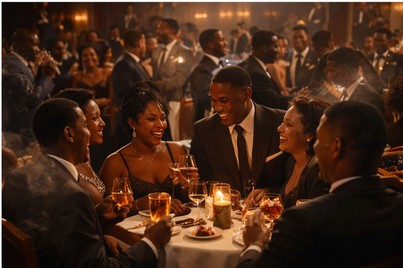
Jim Crow, Why the Stroll, and What It Cost to Have a Good Time
So, as we explore Chicago After Dark, we have made it from the Gilded Age through the Jim Crow era. Restricted from attending the general market establishments, Black folks in Chicago created their own nighttime entertainment, including musical entertainment that changed the way folks all over the world listened to music. From the early speakeasies during Prohibition to the elaborate formals and the sophisticated supper clubs and show lounges, we lead the way.
Putting it together though wasn't easy. We couldn't go into their Speakeasies — started during the Prohibition era — that were, in most cases, owned by or at least monitored by the local gang. Now, when I say gang, we're not talking Blackstone Rangers, the Latin Kings or the Disciples. Those came much later. We're talking organized crime, better known as The Syndicate or the Mob. In Chicago it was headed by guys like Al Capone, Bugs Moran, Dion O'Banion and John Dillinger, depending on what part of town you were in. The Speakeasy owner paid "insurance" to the gang to basically keep them from damaging their establishment. If you paid, you were safe. If you didn't, you woke up to someone knocking on your door to tell you your establishment was burned down or bombed.
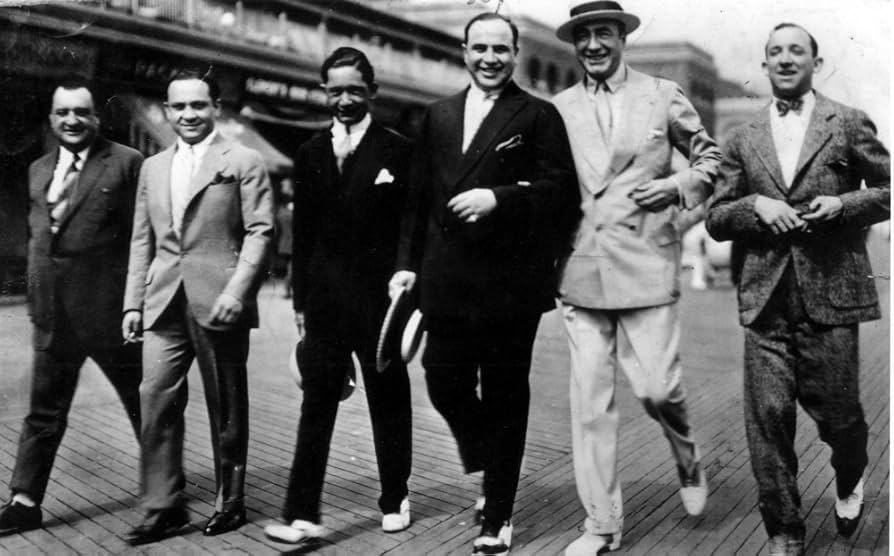
Well, on the South Side of Chicago, our folks had to deal with Al Capone and his minions. Now, we had our guys who ran the rackets on the South Side, but you didn't do anything without "paying" permission to Al Capone. If you wanted liquor for your establishment, even though you probably dealt with a "brother" to get your stuff, it all went back to the Mob. While many establishments were Black-owned, just as many were owned by white folks, many tied in directly with the Mob.
So, in addition to slipping a wad of cash on the regular to some wise guy from the Mob, you also had to slip a wad of cash to the city inspector who reviewed your place and gave permission for you to open and stay open. If you read Part 1 and Part 2, you may have noticed that many establishments endured fires and bombings and had to either rebuild or close. These were not accidents.
The Door Was Closed Before You Even Got There
But let's back up, because the story of The Stroll — that electric stretch of South State Street that became the entertainment capital of Black Chicago — doesn't begin with music. It begins with a door being slammed in your face.
Black Chicagoans were not welcome in the white establishments. Not the grand hotels along Michigan Avenue. Not the supper clubs in the Loop. Not the ballrooms that lined the lakefront. You could look through the window at the glittering chandeliers and the men in white tie and tails, but you were not getting through that door. This was not a matter of preference or neighborhood custom. This was the architecture of Jim Crow — enforced, deliberate, and in many places, violent.
And yet, the music filling those downtown rooms, that came from us. The Blues that had traveled up from Mississippi and Alabama, riding the Great Migration north in the hearts and hands of men like Muddy Waters and Howlin' Wolf. The Jazz — that wholly American invention, born in New Orleans and grown to full power in Chicago and New York — led by musicians like Louis Armstrong, Earl "Fatha" Hines, and the incomparable Count Basie and his Orchestra. Big bands led by Duke Ellington, Cab Calloway, and Lionel Hampton were packing houses from London to Hamburg to Paris. These were world figures. Internationally recognized artists. And in Chicago, if a white club owner could book them, he did — and the crowds came and the money flowed.
But when the last note played, those same artists could not sit down at a table. Could not order a drink. Could not spend the night in the hotel where they had just made that owner rich.
The Stroll existed because it had to. Because when the front door is locked, you build your own house. And what a house Black Chicago built.
Paying Twice to Stay Open: The Black Club Owner and the Mob
Running a nightclub on the South Side in the 1930s and 40s meant you were paying rent to two landlords simultaneously — and neither one of them owned the building.
One of the most direct examples of the Mob's reach into Black South Side entertainment was Joe Glaser, a white Chicago promoter who ran nightclubs on the South Side as part of operations connected directly to Al Capone's Chicago Outfit. Glaser oversaw the Sunset Café at 35th and Calumet beginning around 1927, where Jazz performances drew mixed crowds while gambling and bootleg liquor ran quietly in the back. Glaser later became the manager of Louis Armstrong — a complicated relationship, to say the least, between a man with Mob connections and the greatest trumpet player who ever lived. Armstrong, for his part, credited Glaser with making his international career possible. The truth, as it often was in that world, sat somewhere between gratitude and necessity.
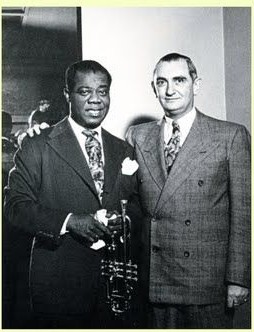
Louis Armstrong and Joe Glaser
For Black club owners who wanted to operate without a white intermediary, the calculus was harder. You needed to be connected enough to be left alone, visible enough to stay relevant, and careful enough not to draw the wrong kind of attention. Dave's Café, at 51st and Michigan, learned what happened when that balance broke — the Mob burned it down. It eventually relocated to Garfield Boulevard in 1934, reinvented itself, and kept going.
The Rhumboogie Club at 343 East Garfield Boulevard is a perfect example of what Black ownership could look like when it had the right name attached. Co-owned by Charlie Glenn and the heavyweight champion of the world — Joe Louis — the Rhumboogie opened in 1942 and instantly became a destination. If Joe Louis was behind the room, the room was serious. His fame attracted top talent, including T-Bone Walker, the electric guitar pioneer who spent a legendary nine-month run on that stage. The club even launched its own record label. Five years at full power. And then a fire on New Year's Eve, 1945. The Rhumboogie reopened in June 1946, but never fully recovered its original form. Whether the fire was an accident is a question the South Side knew better than to ask too loudly.
And then there was Joe's Deluxe, at 5524 South State Street — owned by Joe Hughes, a man who had been a fur salesman before he quit his job, looked at what was happening with Chicago's famous Drag Balls, and decided to build something that had never quite been built before: a show lounge centered on the art of female impersonation. This was not a fringe venue. Heterosexuals filled those seats — South Side families, working people, middle-class couples — all of them coming to watch performers who were, by any measure, extraordinary artists. Hughes was friends with Eddie "Rochester" Anderson, with Joe Louis, with the celebrities of his day. He understood his audience, built for all of them, and they came. Joe's Deluxe told a truth about Black Chicago's night world that the rest of America wouldn't be ready to hear for decades: that this community had always been more expansive, more human, and more complex than any single story could hold.
Stars Without a Room: The Entertainers and the Hotel Door
Now picture this. It is 1948. Billy Eckstine — "Mr. B," the man with the voice like warm dark velvet — has just finished a performance at one of the top rooms in Chicago. The crowd was on its feet. White, Black, it didn't matter who was in that room; they were all standing. Eckstine straightens his tie, accepts the applause, and walks off stage. And then he has to find somewhere to sleep.
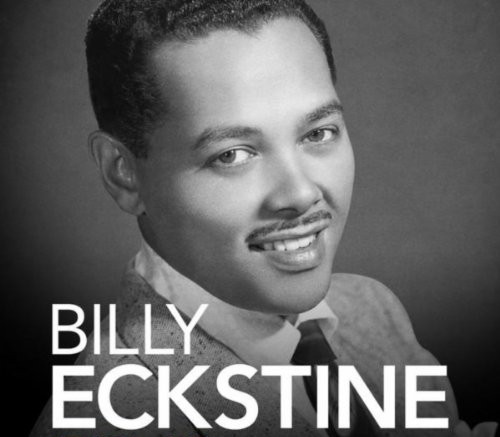
Not in the hotel where he just performed. Not at the bar where the club owner is still pouring drinks for white patrons who want to celebrate what they just witnessed. Billy Eckstine, one of the most celebrated baritone voices in the country — a man who would soon have young women fainting in the aisles at his shows, who had led a big band that launched the careers of Dizzy Gillespie, Charlie Parker, and Sarah Vaughan — had to figure out where a Black man could get a room.
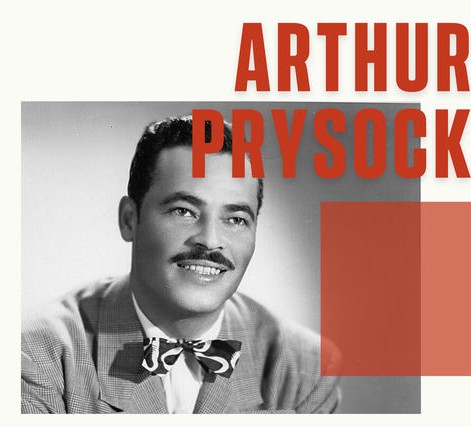
The same was true for Arthur Prysock, whose deep, smooth baritone had the power to stop a room cold. For Ella Fitzgerald, who could bend a note into something that defied human understanding. For Dinah Washington — the "Queen" — who performed with such command that she made every room feel like it was built for her, and then had to leave out the back of it. For Billie Holiday, Louis Armstrong, Count Basie, Duke Ellington, all of them carrying a quiet and exhausting fury at a country that would take their art and deny them a bed.
The tool that helped navigate this was a small, unassuming paperback — the Negro Motorist Green Book, first published in 1936 by Victor Hugo Green, a Black postal worker from Harlem who understood that knowledge was survival. Because segregation was pervasive not just in the South but throughout the country, Black travelers not only faced the inconvenience and humiliation of being turned away from businesses — they also had to be ever mindful of the threat of racist violence. The Green Book listed hotels, boarding houses, restaurants, beauty salons, barbershops, and service stations that would serve Black customers without humiliation or danger. The landscape was dotted with "sundown towns," where the presence of people of color was banned after nightfall. Over half the incorporated communities in Illinois were sundown towns. A Black traveler who didn't know which towns those were could end up in serious danger simply by driving through after dark.
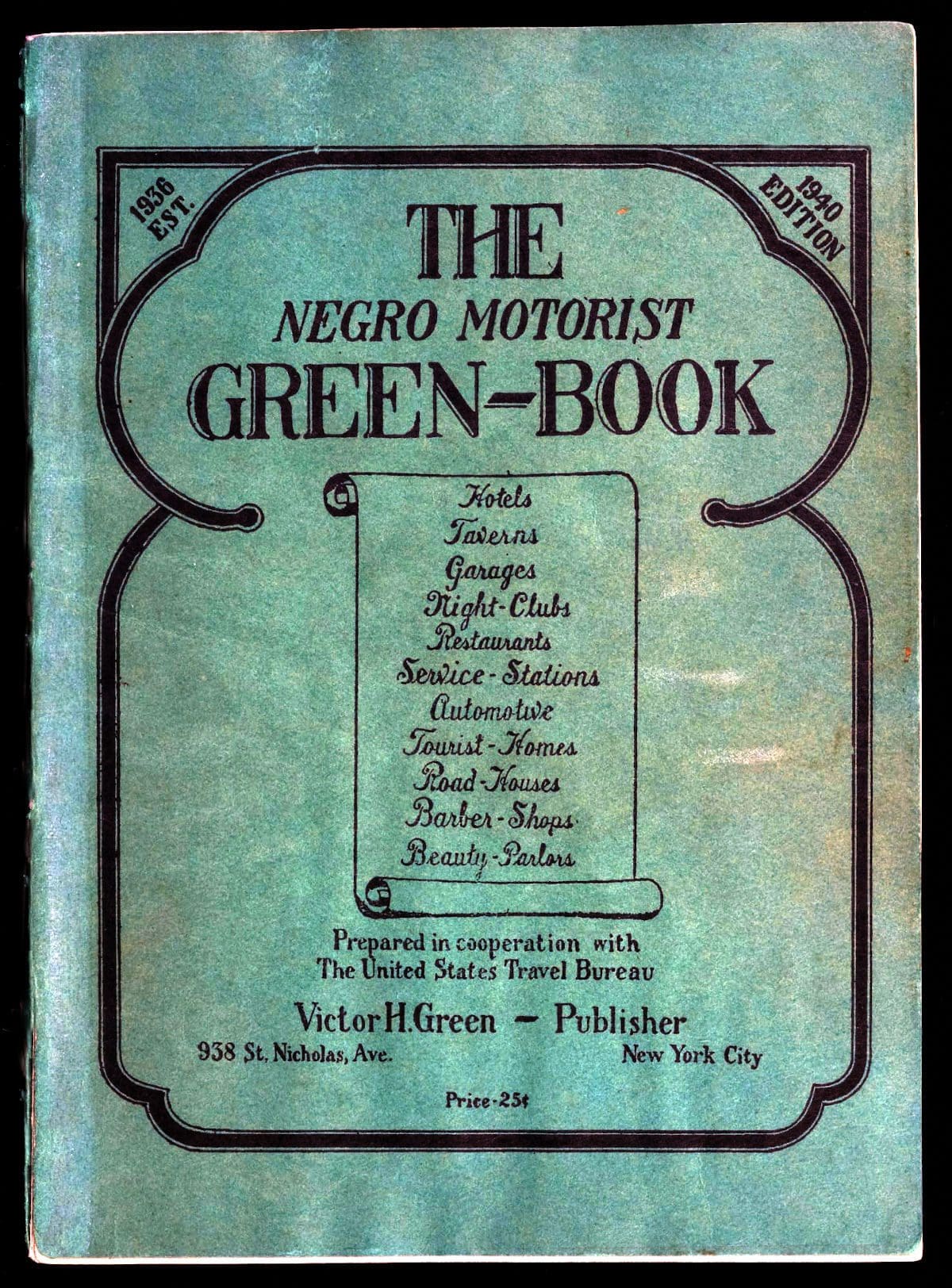
The Green Book was not just for entertainers. Regular Black families used it too. If your family took road trips in the 1950s and 60s — loading up the station wagon, mapping out the route, packing extra food and blankets because you never knew what you'd find — you may well have relied on it. It told you where you could stop, where you could eat, where you could use a restroom without being humiliated, where you could sleep. It was a survival guide dressed as a travel guide, and its very existence said something damning about the country it was published in.
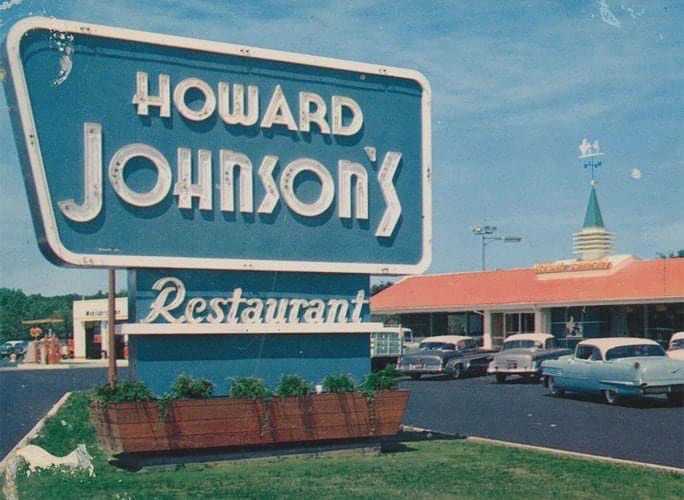
Now, I remember when my family traveled on the road, as instructed by President Kennedy, who told us to hit the road and to take advantage of the newly constructed interstates that President Eisenhower approved, always stayed at Howard Johnson's, the orange-roofed motor lodge that became a fixture of American highway travel. As a child, I knew finding safe accommodations was important and I thought it was because the owner was kind and on his own opened up his motel chain to all travelers no matter their skin color. The truth of its history is thornier than the warm memory might suggest. Segregation in Howard Johnson's restaurants even provoked an international crisis in 1957, when a Howard Johnson eatery in Dover, Delaware, refused service to Komla Agbeli Gbedemah, the finance minister of Ghana, prompting a public apology from President Dwight D. Eisenhower. Civil rights organizations staged major sit-ins and demonstrations at Howard Johnson locations, including Chicago. In December 1962, the company finally issued a policy statement that its restaurants were to serve customers without discrimination. After that — after protesters had marched and been arrested and come back and marched again — Howard Johnson's became one of the more reliably open chains on the road. And that's when Black families, including perhaps yours, made it a road trip staple. I know our family did. Not because the door had always been open but because people fought until it was.
For the entertainers, the Green Book and word-of-mouth networks pointed them to Black-owned hotels, rooming houses, and the homes of community members willing to host. In Chicago, the South Side had its own infrastructure — private homes, the YWCA on South Michigan Avenue for women traveling alone, Black-owned rooming houses along the major corridors. Female entertainers faced a particular double wall: even in cities where a Black man might eventually secure a room at a hotel, a woman traveling alone — Black or white — was often refused accommodation on the basis of gender alone. Sarah Vaughan, Dinah Washington, and Ella Fitzgerald, performing to sold-out rooms, frequently ended the night in someone's spare bedroom or a women's boarding house because there was simply nowhere else that would take them.
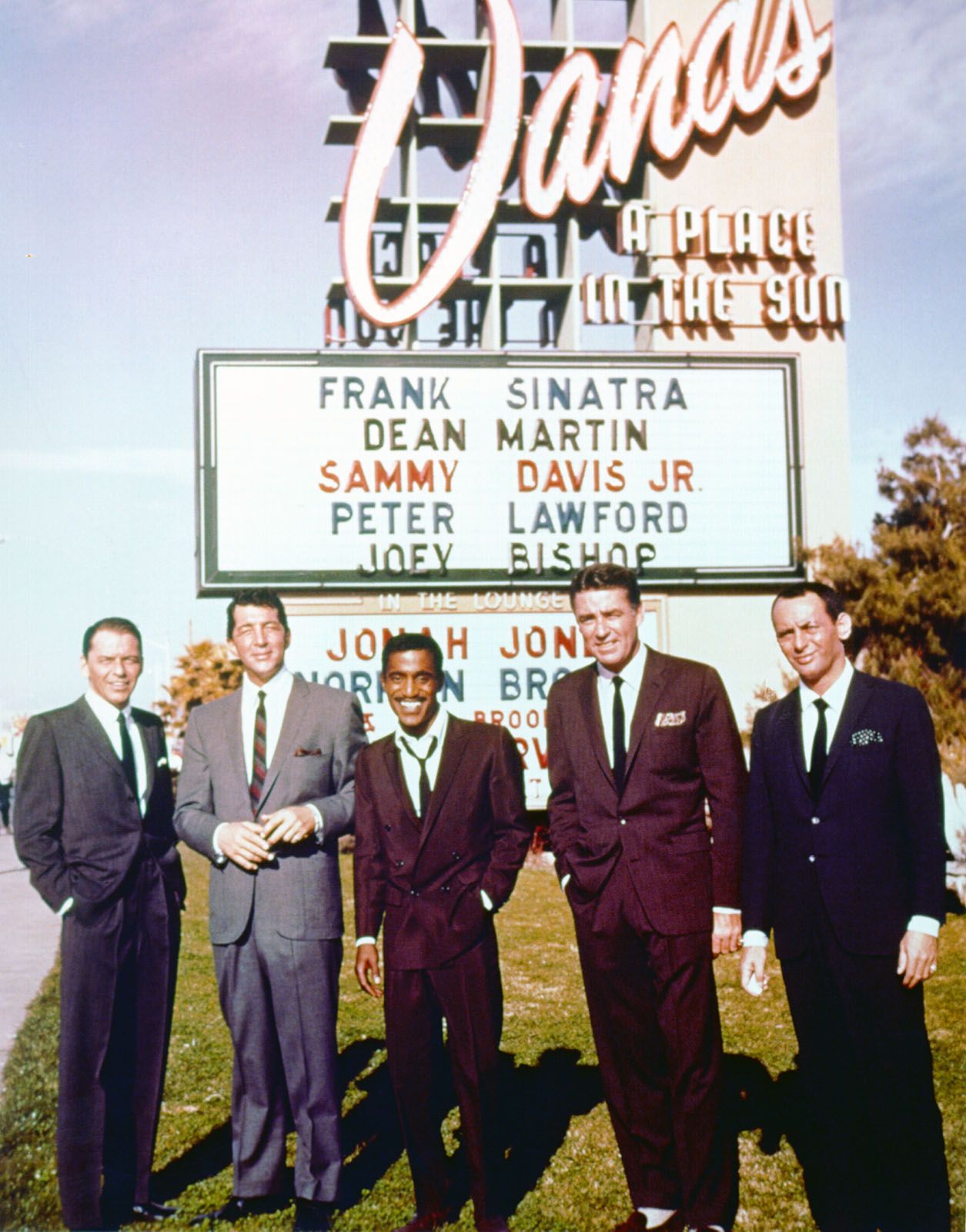
From left to right: Frank Sinatra, Dean Martin, Sammy Davis, Jr., Peter Lawford and Joey Bishop
And then there was Sammy Davis, Jr. Davis rolled with Frank Sinatra, Dean Martin, Peter Lawford, and Joey Bishop — the Rat Pack, the most famous entertainment collective in the country. He was, by any measure, the most electrifying performer among them. And when they played the Sands Hotel in Las Vegas — the room they made their home base — Sammy was not allowed to stay there. He performed, he killed the room, he made the audience love him, and then he left through a different door to find somewhere else to sleep. At some point, to their credit, Sinatra and Martin made a decision: they refused to perform at any venue that would not give Davis equal accommodation. Not because the law required it but because they decided it was wrong. That kind of solidarity, from two men who could have simply looked away, was not nothing. It didn't fix the system. But it meant something and told you about their friendship with Sammy Davis, Jr.
The Ritual of Getting Dressed: Silk, Studs, Satin, and the Seamstress on the Corner
Now. Let's talk about getting ready. Because if you want to understand what the formal balls and the supper clubs and the show lounges meant to Black Chicago — if you want to feel it rather than just know it — you have to start by seeing what it was like getting dressed.
This was not a casual operation. This was a ritual. And like all rituals, it had its ceremonies, its instruments, its high priests and priestesses. In this case, those priestesses worked out of storefronts on 47th Street, and those instruments included a good girdle, the right pair of silk stockings, and a daughter who knew how to work a zipper.
Getting There First: The Department Store Humiliation
If a woman on the South Side wanted a formal gown for one of the season's big events — a Boulé Ball, an Original Forty Club formal, a Links Cotillion — the obvious destination was one of Chicago's grand department stores. Marshall Field's on State Street. Carson Pirie Scott. Evans Furs. Bonwit Teller. These were the places where white women went to find the perfect dress, where a saleswoman would sweep toward you with a tape measure and a practiced smile and treat the whole transaction like the occasion it was.
For a Black woman, the experience was different.
First, you waited. You stood among the racks and you waited for someone to come ask if you needed help, because they were not rushing over. When someone finally arrived, you could point to a dress — could select the style, the color, the cut — and there it was. You found the one. The problem was what came next.
You could not try it on. Not in the fitting room. This was a firm policy, dressed up in unspoken rules: no Black woman would be allowed into the same fitting room space where white women undressed and were pinned and fitted by seamstresses. The dress would come to you over a counter, or held at arm's length, and you were expected to approximate how it might look on a body you couldn't actually see in a mirror, in a room you weren't allowed to enter.
Now, I went shopping for that dress with my mom on many an occasion and she was lucky enough to find a saleswoman at Bonwit Teller’s on North Michigan Avenue, along the Magnificent Mile, who realized my mother came in regularly. Not just for formals but for what was then called Italian knit suits, dresses for the Women’s Church Tea and other important occasions. She would sit my mom in the fitting room and they would talk about what she was looking for and the saleslady would bring dress after dress, suit after suit into the room until my mom found just the right outfit. The way they worked it was my mom would call the lady at the store and let her know she was coming and they’d set an appointment, so she’d always be the one to take care of her. Salespeople worked on commission only back then, and this lady was smart enough to know she could benefit from this relationship. Once the dress was picked, she would bring in the seamstress, who was usually a Black woman, to do the fitting. She would always give my mom a sly smile, as with pride she would make sure with the right tucks and pins, she would be able to fit the dress perfectly to my mom.
I also remember, if, during your time at Marshall Field's or Carson Pirie Scott, you needed to use the ladies' room, you encountered another carefully engineered humiliation. Public restrooms in many of the grand stores charged ten cents to open a stall door — a coin-operated mechanism that ensured every use was a transaction. Once a Black woman used a stall, the bathroom attendant — a woman whose entire working day was spent in that tiled room, handing out tissue, offering hairpins, spritzing perfume, keeping the space in order for the ladies — would not allow anyone else to enter that stall until she had cleaned it herself, thoroughly, pointedly, in a way that made the statement unmistakable. You have been here. We are removing the evidence.
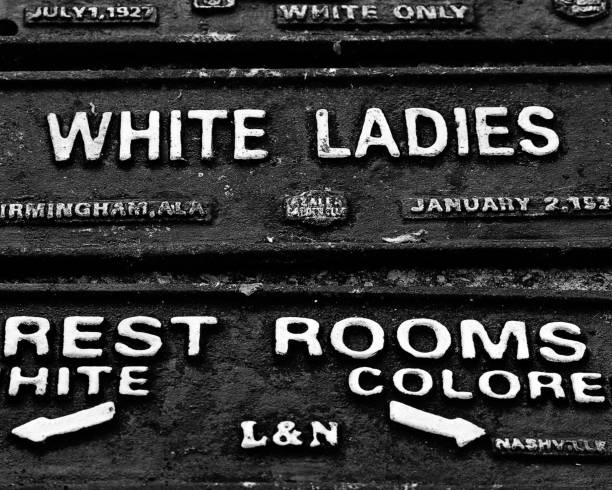
These were not random acts of rudeness. This was a system. Small, grinding, daily, and designed to remind you, no matter how beautifully you were dressed or how much money you had in your purse, exactly what they thought of you.
The Seamstress: The Alternative and the Art
So Black women on the South Side did what Black Chicago always did when the door was closed. They went around it.
On nearly every major block in Bronzeville, there was a woman — sometimes working out of her front room, sometimes with a proper shop — who could make you a dress that no department store carried. These seamstresses were not just talented. They were extraordinary. They could look at a picture cut from a magazine, or simply listen to a woman describe what she imagined, and translate that into something real, something fitted, something that moved the right way when you walked into a room. You came for a fitting, you came back for adjustments, and when the final garment was ready and you slipped into it, it was yours in a way that no off-the-rack gown could ever be — because it was built for your body, your occasion, your moment.
If you had the time and could afford it, this was always the better choice. Not just practically. Spiritually.
The Getting Ready
Now let's get into the house, because this is where the story lives.
The preparation for a formal event — a Boulé Ball, a supper club evening, a big night at Roberts Show Club or the Rhumboogie — began not on the night itself but often the day before. A woman had an appointment at the beauty salon. I remember going to the salon with my mom and sitting and watching as the beautician (what we called them then), prepared her hair for the occasion. Not a quick trim — a full appointment, the kind where you sat for hours while your beautician worked through the heat and the pressing comb and the setting pins to create something architectural. An upsweep. Finger waves. A French roll. Whatever the dress called for, whatever the occasion demanded. The hair had to be right because everything was built from the hair down.
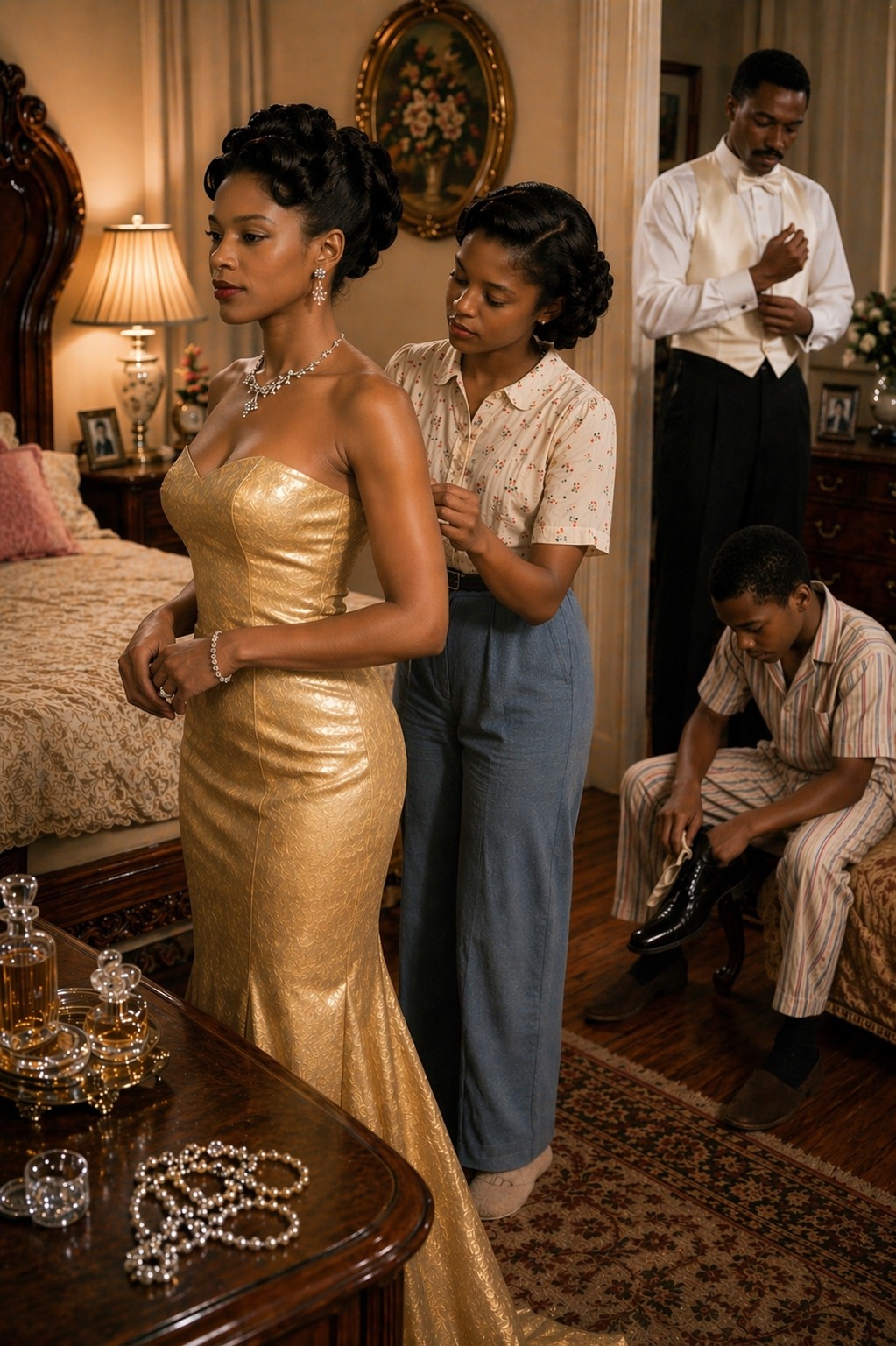
The evening of the event, the bedroom became a sanctuary. The dress, already fitted, already pressed, waited on the door or draped carefully over the chair. And then the underpinnings came first, because in those days the underpinnings were a whole thing.
This was the era before pantyhose. I remember my mom wiggling into first the girdle — a firm, structured garment designed to smooth and shape and hold everything in its proper place. From the girdle hung garters, small metal clasps attached to elastic straps, whose sole purpose was to hold up the silk stockings that came next. Now, if a lady was lucky and her figure cooperated, she might wear just a garter belt instead of a full girdle — a more delicate structure of satin and elastic that did the same job with considerably more elegance. Either way, the silk stockings had to be rolled carefully up the leg and attached to those garters just so, because a stocking that twisted or bunched or — heaven forbid — ran, was a catastrophe. In some cases, stockings had a seam that ran up the back of your leg, and you also had to be sure it was straight and in the center of your leg.
Then the dress. And this is where I came in.
I helped zip up the back — carefully, slowly, making sure the fabric didn't catch — and at the very top of the zipper, there was a small hook-and-eye closure that secured everything. A tiny thing, but it had to be fastened or the whole effect was undone. Then came the jewelry. The right earrings first — clip-ons, in that era, because pierced ears were not yet standard. Then the bracelet. Then the necklace, which I’d help her out on as well. I held it up while she tilted her head forward so you could work the clasp. If the evening called for a tiara — and some evenings called for a tiara — you placed it carefully into the upsweep, adjusting until it sat perfectly level, neither too far forward nor too far back.
The shoes and the evening bag had almost certainly been dyed to match the dress — a service offered by neighborhood shoe repair shops that was so common it barely registered as remarkable, though it is worth registering now. You brought in your plain satin pumps and your simple clutch, you chose the dye from a palette of colors, and when you came back they were transformed, coordinated perfectly with whatever gown waited at home. Nothing was left to chance. Everything matched.
The perfume was last. A dab at the wrists. At the neck. And then she was ready.
The Men's Side of the Room
The men had their own ritual, and it was no less exacting.
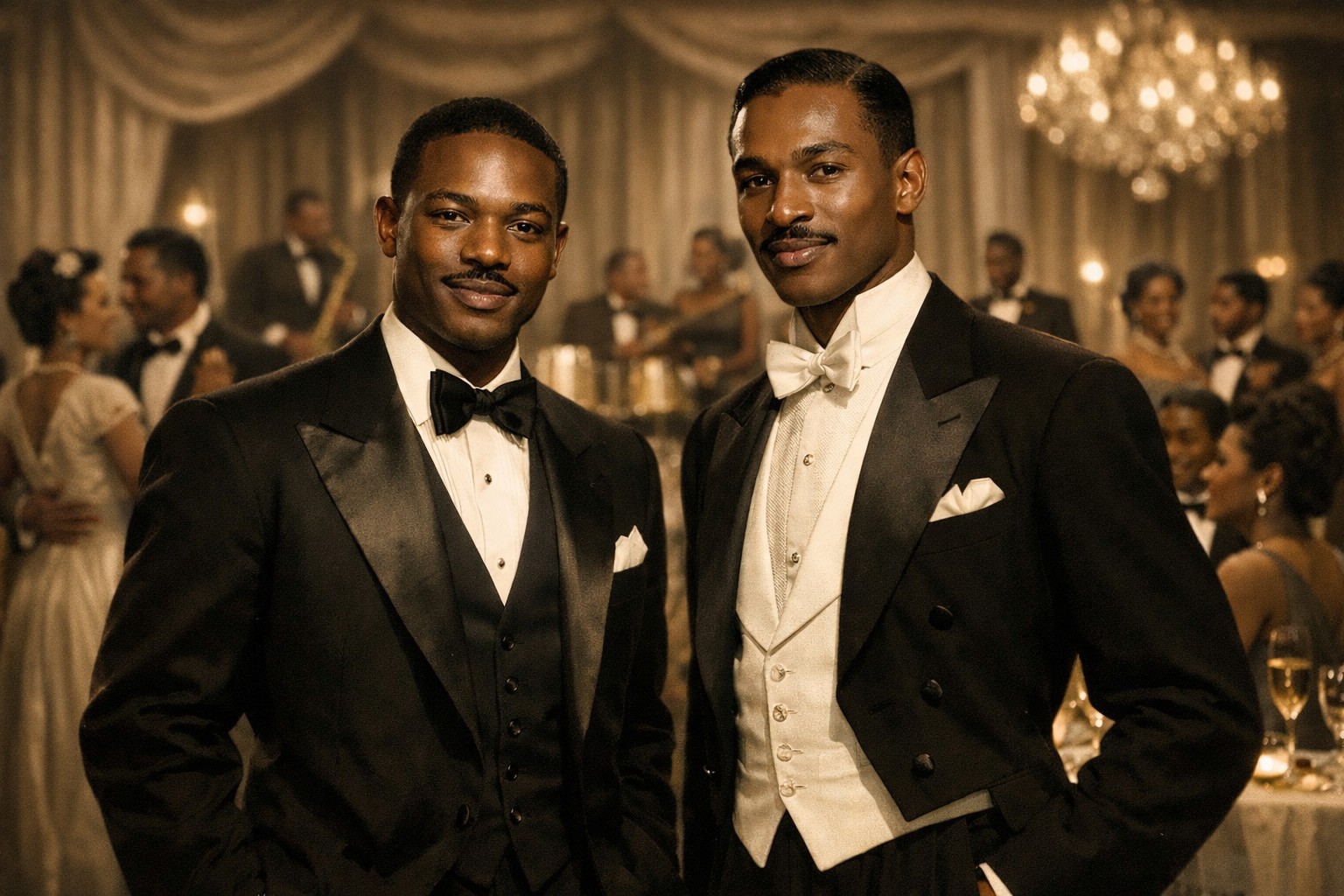
For a black-tie evening — a formal gala, a big social club ball — the choices were clear: black tuxedo with black bow tie, or white tie and tails for the most formal occasions. White tie and tails was the pinnacle of evening dress, and if you wore it, you wore it correctly: a tailcoat cut high in the front with long tapered tails behind, a white waistcoat, a white wing-collar shirt with a white bow tie, and formal black trousers with a silk or satin stripe down each leg.
Getting the shirt right was its own ceremony. Formal evening shirts in that era did not have regular buttons down the front. Instead, the shirt placket took studs — small, decorative fasteners, often gold or silver, sometimes set with onyx or mother-of-pearl — that had to be pushed through the buttonholes one by one. At the cuffs, cufflinks performed the same function, holding the double-folded French cuff together. My brother helped with the studs and cufflinks and I always fastened the cumberbund around his waist.
Then came the suspenders — braces, if you were being formal about it — which held up the trousers with a clean, unbroken line that a belt could never quite achieve. And at the bottom of each trouser leg, another period detail: leg garters. These were elastic bands worn just below the knee, designed to hold up dress socks that didn't have enough elastic of their own to stay put. Fashion required that the sock lie perfectly smooth against the leg, without a wrinkle or a sag, and the garter made sure of it.
The shoes were the foundation. On a really formal night, patent leather — that mirror-bright, lacquered leather that reflected the chandelier light from the floor. Patent leather didn't need polish the way regular leather did; it needed buffing, a vigorous, circular buffing with a soft cloth until the surface threw back your reflection. Of course, my brother handled this the evening of because it was understood that a man's shoes told the room everything it needed to know before he said a word.

Some men topped the shoes off with a pair of spats. Let's talk about the spats. A spat — short for "spatterdash" — was a cloth covering, usually white or gray, that buttoned over the top of the shoe and wrapped around the ankle. It protected the shoe from the street, yes, but its real purpose was aesthetic: it gave the foot a clean, elegant line, separated the shoe from the trouser with a precise visual boundary, and said, in the wordless language of dress, that the man wearing them had taken the time to get it exactly right. By the late 1940s spats were becoming less common, but in their heyday on the South Side, a man in a sharp suit, patent leather shoes, and a crisp pair of white spats was a man who had made a statement before he crossed the threshold.
The bow tie was last, and the bow tie was an art. Not the pre-tied clip-on — a real bow tie, tied by hand, from a length of silk. The technique required patience: the same basic motion as tying a shoe, but with a strip of fabric that didn't always cooperate, translated to a level of precision that allowed no sloppiness and no asymmetry. You got someone to help if you needed to. There was no shame in it. The point was that it was right.
They Showed Up Anyway
After all of that — after navigating the Mob's protection racket and the city inspector's palm, after finding a room in a city full of slammed doors, after enduring the department store counter and the coin-operated bathroom stall and the calculated small humiliations of a Jim Crow world determined to remind you of your place — after all of it, Black Chicago dressed up, showed up, and showed out.
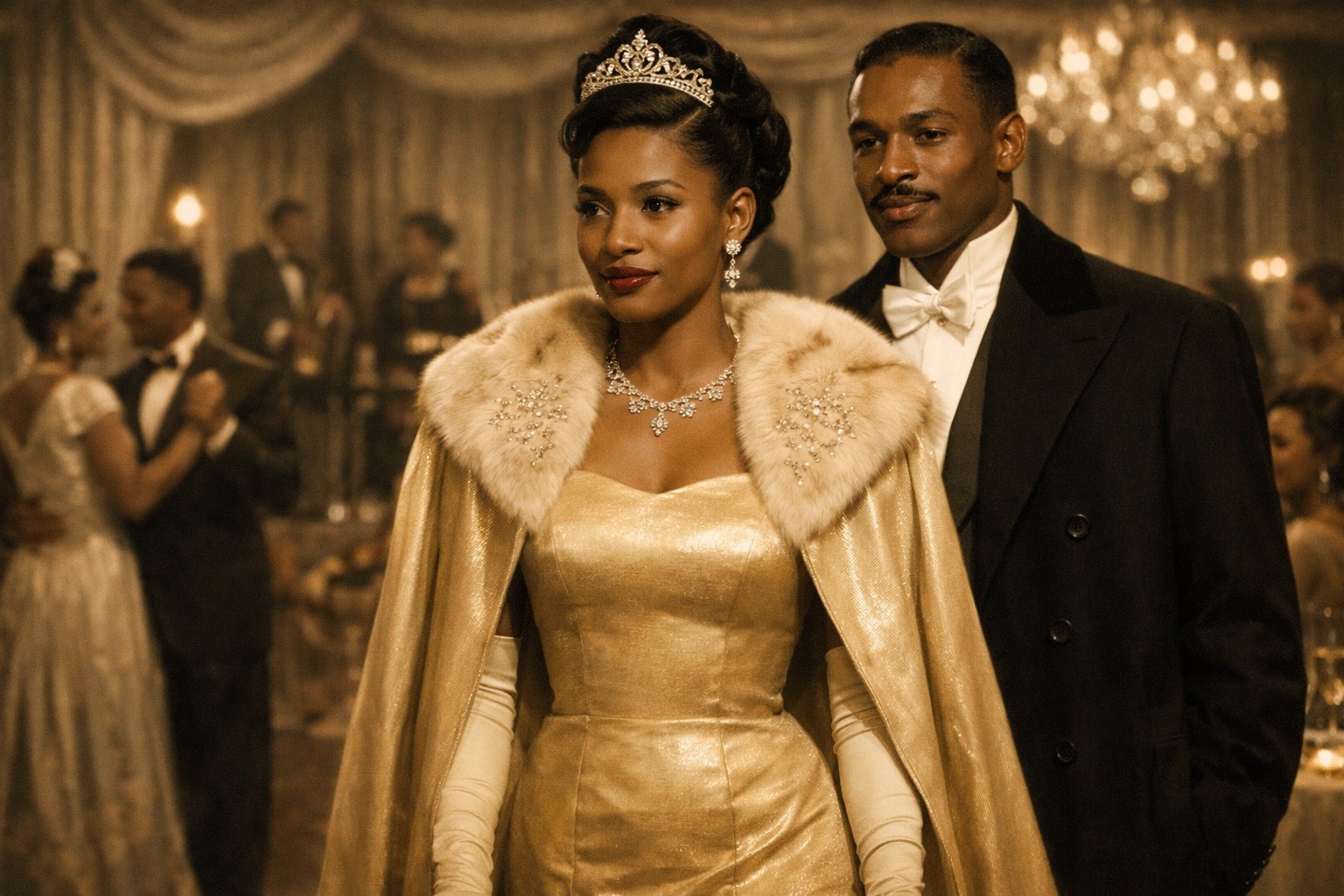
They filed into the Regal Theater on 47th Street to hear Duke Ellington and Louis Armstrong when those men were in town, because those men always made it back to the South Side. They danced at the Savoy Ballroom. They dressed in their finest for the Boulé Balls and the Original Forty Club galas and the Links Cotillions. They filled Roberts Show Club while Jimmy Carter and Harold Washington and Ralph Metcalfe sat in those same seats and watched the same stages. They took their children to Howard Johnson's after the chain was finally, grudgingly, forced open, and they made a tradition out of it because they were going to find joy wherever there was space to put it.
The Blues and the Jazz they made — and it was made here, shaped here, sent out into the world from this very community — did not stay on the South Side. It crossed the ocean. It changed the way the world heard music, the way the world felt music. Muddy Waters and Louis Armstrong and Billie Holiday and Count Basie and all those brilliant, beautiful, underpaid, underhoused, over-restricted artists did something that cannot be taken back: they created a sound that became the DNA of nearly every popular music form that followed. Rock and roll. R&B. Soul. Hip-hop. All of it rooted in what came up from the South and found its voice on the South Side of Chicago. One thing is clear, they built a world inside a world and it turned out to be bigger than the outside world ever expected.
Before Day in the Morning: The Real After Party
The night didn’t end when the music stopped.
For many, the real closing chapter of an evening out began before day in the morning — that quiet stretch of time when the sky was still dark but the night had already given way to something softer. The chandeliers were behind you. The band had played its last note. The formal was over. But nobody was quite ready to go home.
That’s when the crowd made its way to Gladys’ Luncheonette.
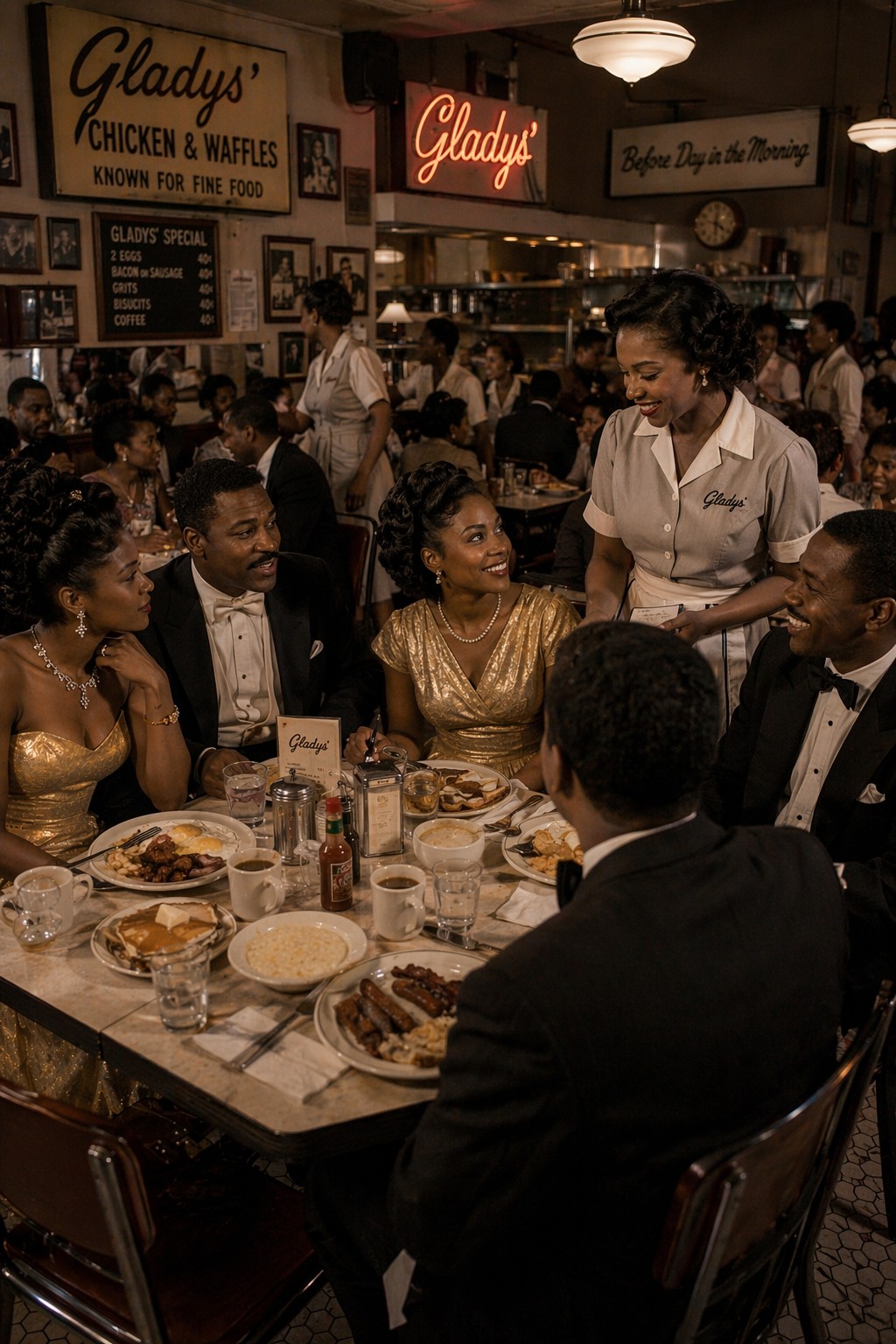
Originally opened by Gladys Holcomb in the mid-1940s, the restaurant began on State Street before eventually settling in Bronzeville on South Indiana Avenue, right in the heart of Black Chicago’s cultural life. It was not a fancy place. It didn’t need to be. What it had was something no ballroom could manufacture — the particular warmth of a room where everybody was welcome, the food was real, and nobody was performing for anybody.
By the time the gala crowd arrived — still dressed in tuxedos, gowns, gloves, and pearls — the place was already alive. The air carried the smell of biscuits, coffee, and something sizzling on the grill. Waitresses moved with purpose and familiarity, greeting regulars by name, sliding plates onto tables without a word of ceremony, because ceremony was something you left at the door.
And the food. Lord, the food.
This was not a light meal. This was not a suggestion. Fried chicken with a crust that crackled when you touched it. Smothered pork chops buried under gravy that had been tended to with patience and intention. Salmon croquettes golden at the edges. Eggs the way you liked them. Grits that were smooth and rich and exactly right. Biscuits so soft they barely held their shape — the kind that dissolved the moment they hit your tongue and made you close your eyes for just a second. And if you had any room left — and somehow, people always found room — there was peach cobbler waiting. Warm, sweet, unhurried.
Jackets came off. Gloves slipped into purses. The careful posture of the evening relaxed into something easier, something real. People laughed — not the polished laughter of the ballroom, but the deep, free laughter of people who had let their guard all the way down. Stories got retold. The night was relived in real time, table by table. Did you see her dress? Did you hear that band? Did you see him on the dance floor? The performance of the evening gave way to something more honest — community, connection, and the shared understanding that nights like that didn’t come around often, but when they did, you held onto every last minute.
This was the exhale after the elegance.
Gladys Holcomb ran her restaurant for decades, and in that time it became one of the most beloved soul food destinations on the South Side — drawing everyday folks and well-known figures alike, because good food and a good welcome have never cared much about the difference. Gladys eventually stepped away due to health, and though the business changed hands and finally closed in the late 1990s, the loss was felt far beyond the neighborhood.
Because Gladys’ wasn’t just a place to eat after a big night out. It was the place where the night became a memory. Where the tuxedo and the tiara gave way to the real you — fork in hand, plate full, surrounded by your people in the early quiet hours before the city woke back up.
They dressed up. They showed up. They danced and laughed and filled those rooms with a joy that Jim Crow tried its best to make impossible.
And then they went to Gladys’ — and they held onto the night just a little while longer.
That was Chicago After Dark.
Coming Up Next: The Circuit
The story isn’t over. Not even close.
Next week, in Part 6, we’re taking you into the South Side nightclub and bar circuit — the rooms that carried the torch into the 1960s and beyond, as Jim Crow cracked and the Civil Rights Movement reshaped what was possible. Some of these clubs are still standing and still playing music on a Friday night to this day.
And after that, Part 7, we’re going to talk about the last great music genre invented in Chicago — one that started in a single room on the South Side in the early 1980s and ended up on dance floors in Ibiza, London, Detroit, and New York. You already know what it is. House music. Chicago made it. We’ll tell you how.
Check back next week for Part 6, The Circuit. You don’t want to miss it.
Meanwhile, if you haven’t read the series yet, or you missed one, here they are: the Introduction, Part 1, Part 2, Part 3, and Part 4.
Stay connected with news and updates!
Join our mailing list to receive the latest news and updates from our team.
Don't worry, your information will not be shared.
We hate SPAM. We will never sell your information, for any reason.
