Chicago After Dark, Part 2: The Stroll—The Street That Built the Sound
Apr 01, 2026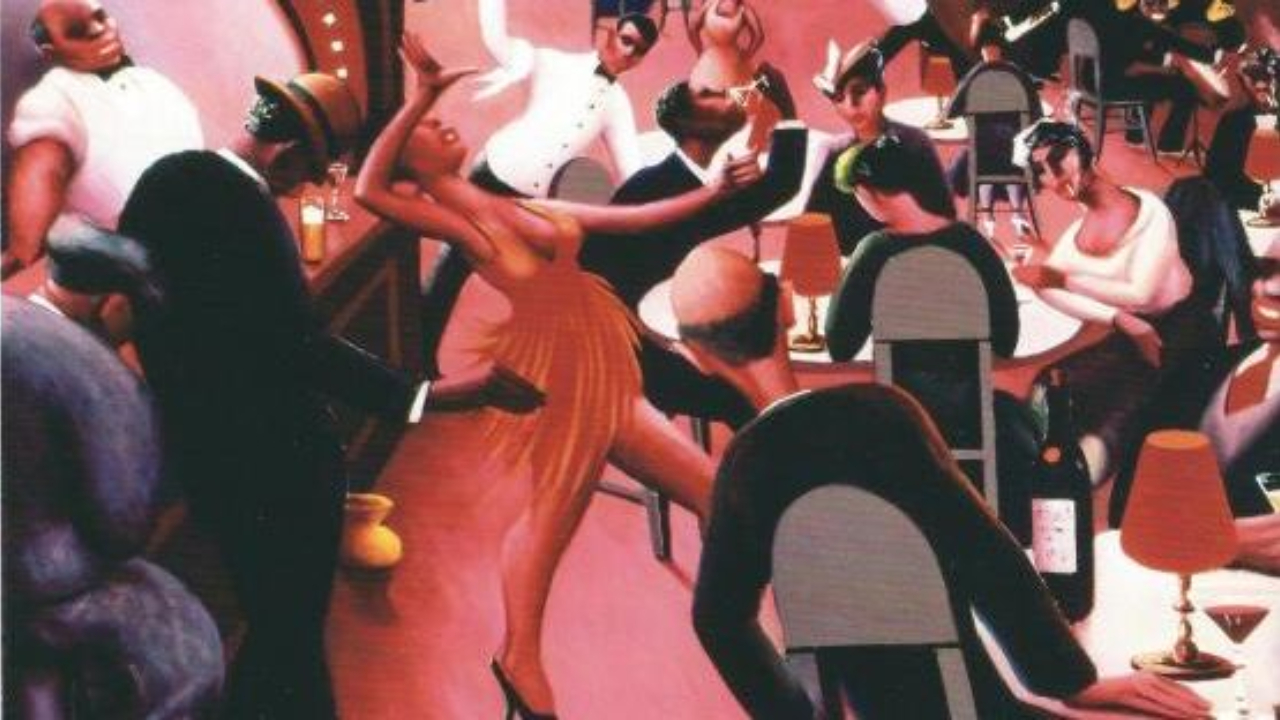
Painting by Archibald Motley, 1935
By the time you reach South State Street, you already know you’re close. You don’t need directions. You follow the sound. A trumpet cries out ahead of you. A piano answers from somewhere down the block. Laughter spills into the street as doors swing open and closed. Every few steps, the rhythm shifts—but it never stops.
This stretch—31st to 39th Street—was known as The Stroll.
And for a time, it was one of the most important Black entertainment districts in America, with more than 70 clubs, theaters, and ballrooms packed into just a few blocks. The Stroll didn’t just happen. It grew out of the Great Migration, when Black families brought Southern blues, jazz, church rhythms, and storytelling traditions into Chicago—and transformed the South Side into a cultural capital. What they built wasn’t just nightlife. It was a system. A community. A force.
Every Door Told a Different Story - Walking the Stroll meant choices. Not one destination—but many. Here we highlight some of the most popular clubs.
The Sunset Café – Where Jazz Dressed Up
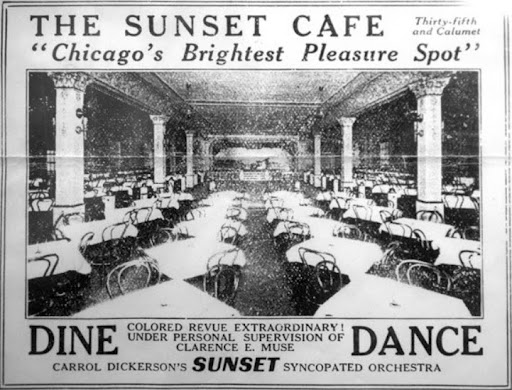
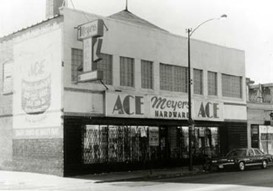
The Sunset Cafe Building today
If you stepped into the Sunset Café, you stepped into one of the most important jazz clubs in America, especially during the period between 1917 and 1928 when Chicago became a creative capital of jazz innovation and again during the emergence of bebop in the early 1940s. The Sunset Cafe, also known as The Grand Terrace Cafe or simply Grand Terrace, originally a converted garage, it became a glamorous room filled with tables, a dance floor, and a stage where legends were made. This was where jazz was refined. Where musicians like Louis Armstrong rose into national prominence. Where orchestras were tight, polished, and precise. Where the crowd came dressed to match the moment. And in a rare break from the times, it was known as a “black and tan” club, where Black and white patrons could mingle together. Many important musicians developed their careers at the Sunset/Grand Terrace Cafe.
The building still stands today at 315 E. 35th St. and on September 9, 1998, the former The Grand Terrace building received Chicago Landmark status, and while the structure is now a former hardware store, the murals from the club still remain for all to see.
Bottom’s Dreamland Café – Where Jazz Was Alive
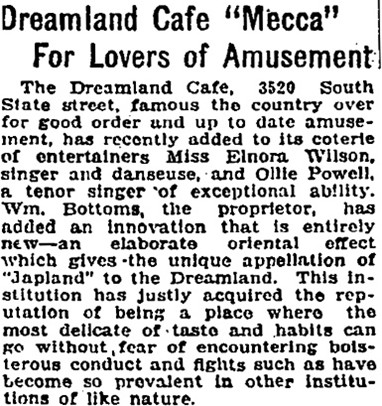
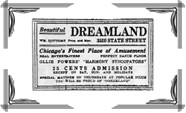
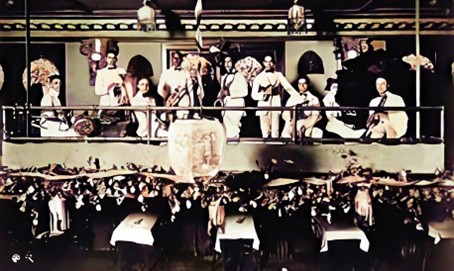
Just down the street, Dreamland Café gave you something else. When Black businessman Billy Bottom, gained ownership of the Dreamland Cafe, he opened the Bronzeville jazz club in October 1917 with an 800-person dance floor. This was not about polish. This was about energy. Known as another “black and tan” club, Dreamland brought together interracial crowds and some of the most influential musicians of the early jazz era, including King Oliver and later Louis Armstrong. This is where jazz wasn’t performed. It was created. Armstrong, who transformed jazz from ensemble music to a soloist’s art form, was featured at the Dreamland Cafe in 1925.
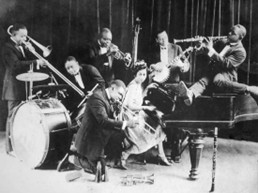
Joe “King” Oliver’s Creole Jazz Band in Chicago, 1923. Honore Dutry (trombone), Baby Dodds (drums), Louis Armstrong (second cornet), King Oliver (cornet), Lil Hardin (piano), Bill Johnson (bass, banjo), and Johnny Dodds (clarinet).
Not only did Billy Bottoms hire Black musicians, entertainers, and service workers, he was considered a prominent African American business owner and community leader in the developing Bronzeville neighborhood who helped create a safe space for his Black clientele to socialize. Called "a first-class resort owned by a member of the Race" by the Chicago Defender, the Dreamland remains an iconic ballroom. Dreamland moved up the street in the mid-1930s before closing in 1946.
The Regal Theater – Where Legends Took the Stage
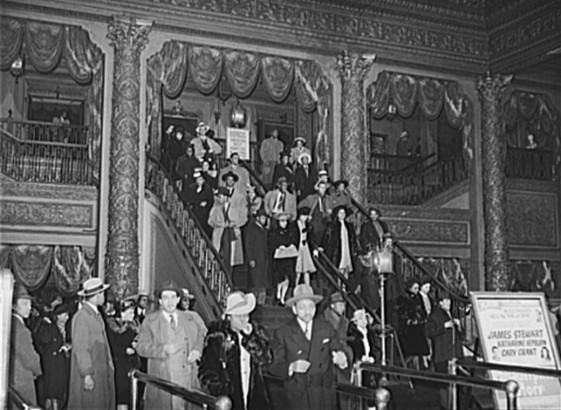
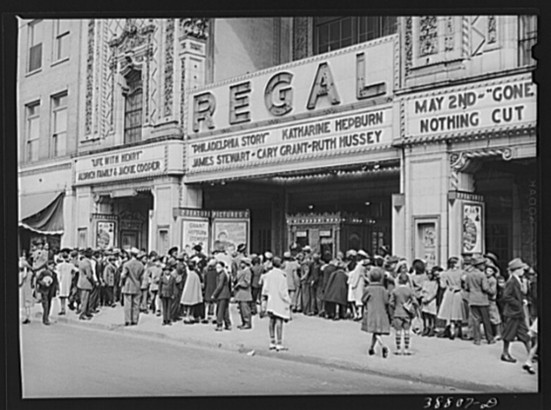
Further down, the lights of the Regal Theater, 4719 South Parkway (now Martin Luther King Drive) drew crowds from across the city. Opened in 1928, this massive, beautifully designed venue seated thousands and hosted the biggest names in Black entertainment—from Duke Ellington to Ella Fitzgerald to Nat King Cole. The Regal Theater was a night club, theater, and music venue, popular among African Americans, located in Bronzeville. The theater was opened in February 1928. It closed in 1968 and was demolished in 1973. Often compared to the Apollo in Harlem, the Regal actually opened six years earlier and had double the seating capacity. Both theaters were able to attract several big names but, due to its size and central location, the Regal was arguably able to book bigger acts.
In its early years, the Regal featured silent films, well-known black musicians of all genres, though mainly jazz and blues. Typically shows consisted of an opening musical act followed by a film. The theater was situated near two popular black venues: both a nightclub (the Savoy Ballroom) and a major retailer (the South Center Department store).
The Regal was lavishly decorated, featuring velvet seating, large pillars, and grand spaces. Costing $1.5 million (in 1928 dollars) to construct, it was a venue that opened new doors for African Americans in the entertainment business.
Part of the Balaban and Katz chain, the venue featured some of the most celebrated African American entertainers in America. On what for a time was known as the Chitlin’ Circuit, the Regal also featured motion pictures and live stage shows. Nat “King” Cole, Cab Calloway, Louis Armstrong, Ella Fitzgerald, Sarah Vaughan, Lena Horne, Dinah Washington, Ethel Waters, Miles Davis, Sammy Davis, Jr., Bill Robinson, Moms Mabley, Lionel Hampton, Dizzy Gillespie and Duke Ellington performed frequently at the theater from the 1920s through the 1940s.
The Savoy Ballroom
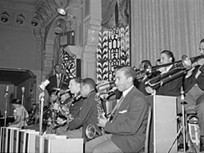
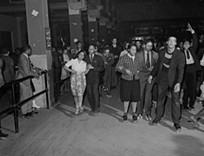
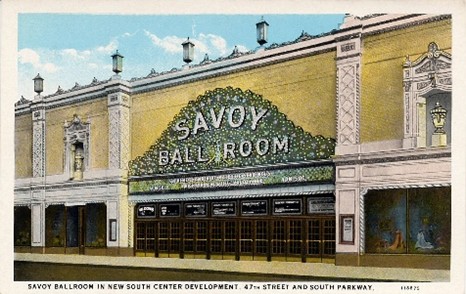
The Savoy Ballroom in Chicago was opened on Thanksgiving Eve, November 23, 1927, at 4733 South Parkway (now Martin Luther King Drive). At the time of its opening, the Savoy Ballroom was the largest dance hall on the south side of Chicago, surpassing the other large hall in that part of the city, Lincoln Gardens. The Savoy was heavily funded and its size was unprecedented on the South Side of Chicago with elaborate decor, a triple subfloor, and a checkroom that could accommodate 6,000 hats and coats. Originally featuring primarily jazz artists, including Louis Armstrong, Count Basie, Duke Ellington, Earl Hines, Stan Kenton, Dizzy Gillespie, Billie Holiday, Ella Fitzgerald, Gene Krupa, Woody Herman, the Savoy also hosted other activities, such as boxing, figure skating, and basketball exhibitions featuring the Savoy Big Five, who would later change their name to the Harlem Globetrotters.
From 1927 until 1940, there was continuous music supplied by two bands per night. When one band took a break, the other would go on. During these years, the Savoy was open seven days a week. Although most of the Savoy's patrons were black, growing numbers of white Chicagoans visited the Savoy. The Savoy closed in 1948 and was demolished in the early 1970s. The site is now home to the Harold Washington Cultural Center.
The Lincoln Gardens
Lincoln Gardens, also known during its history as Royal Gardens, Royal Gardens Café, the New Charleston Café and Café de Paris, was a night club and dance hall located at 459 E 31st St that played an instrumental role in the history of jazz and youth culture in the city of Chicago, during the first three decades of the 20th century. Opening sometime in the first few years of the 20th century, it was the largest dance hall on the south side of Chicago prior to the opening of the Savoy Ballroom in 1927. Originally a venue that employed only white musicians and catered to only white patrons, it was reinvented as a space for patrons and musicians of all races by African American entrepreneurs Virgil Williams and William Bottoms in 1918. This reinvented venue was at first the home of Bill Johnson and the Original Creole Band.
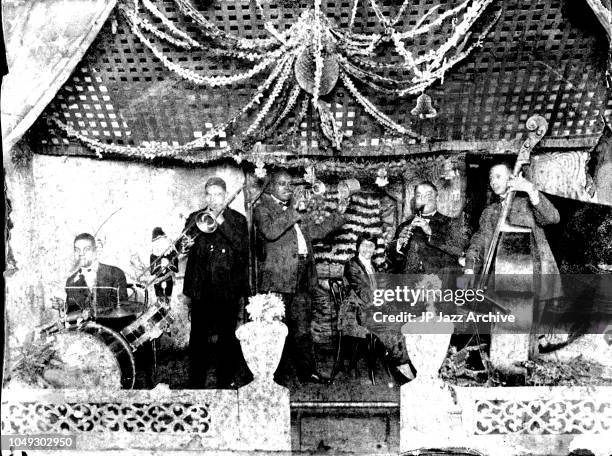
In 1921, the Royal Gardens Cafe was sold to Mrs. Florence Majors, and sometime between February and July 1921 its name was changed to Lincoln Gardens. Under her tenure King Oliver took over as the resident band leader at the hall from June 1922 until February 1924; leading King Oliver's Creole Jazz Band. After a fire significantly damaged the hall in late 1924, it was beautifully refurbished and reopened on October 28, 1925 as the New Charleston Café. The hall's name was later changed to the Café de Paris sometime before it closed in June 1927 when it was the target of a bombing suspected to be related to gang warfare. After this the venue remained closed.
The Palm Tavern – Where Elegance Met Community
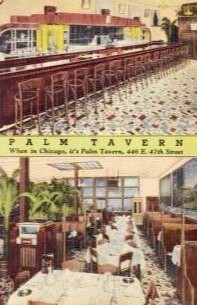
If you wanted something refined but rooted, you went to the Palm Tavern. Opened in 1933, it featured white-gloved waiters, fine food, and a stylish interior—but welcomed a mixed crowd and operated as both restaurant and nightclub. It was upscale—but still felt like home.
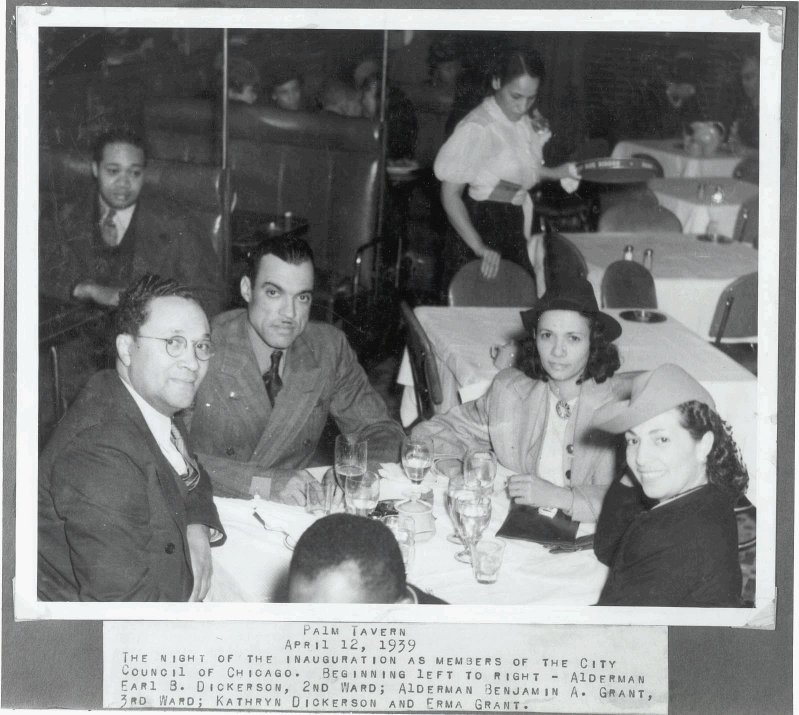
The Palm Tavern at 446 East 47th Street was a fancy, deco-style restaurant and nightclub that was opened in 1933 by James “Genial Jim” Knight, a onetime Pullman Porter who was running the local numbers racket. It soon became a popular local institution. The following year, Knight was elected “Mayor of Bronzeville” as part of a promotion that would honor a local community leader and sell copies of the Chicago Defender. Decked out with tropical murals, the Palm Tavern had white tablecloths and white-gloved waiters who served fine cuisine to hungry patrons in thick vinyl booths, notably without regard to skin color. It was among the first establishments in the Chicago to obtain a liquor license at the end of Prohibition and among the first to install tabletop juke boxes (known as “talkies”).
In 1956, Knight sold the Palm Tavern to his manicurist, a Mississippi native named Geraldine Oliver. “Mama Gerri” soon became a celebrity in her own right. Although she ditched the fine cuisine element of the business, she continued to serve her own brand of soul food, including red beans and rice that were craved by her favorite celebrity guests, like Dizzy Gillespie, Duke Ellington, Louis Armstrong, and Count Basie. Typically, her jazz legend clientele had just gotten off a tour bus, where they’d been forced to eat bag meals for weeks, having been denied entry to the finer local restaurants. Over the years, she ate meals, established friendships, and had herself photographed with such legends as Billie Holiday, James Brown, Lena Horne, Muddy Waters, Willie Dixon, Redd Foxx, and Quincy Jones.
In keeping with its community activism, the Palm Tavern became the focal point for the mayoral election of Harold Washington, who celebrated his historic 1983 primary victory. Although it continued as a jazz and blues venue, the neighborhood was obsolescing quickly, and business became increasingly difficult to maintain. Gerri ultimately lost her apartment (she says she was swindled out of it), and she was now sleeping on a mattress in the club’s kitchen.
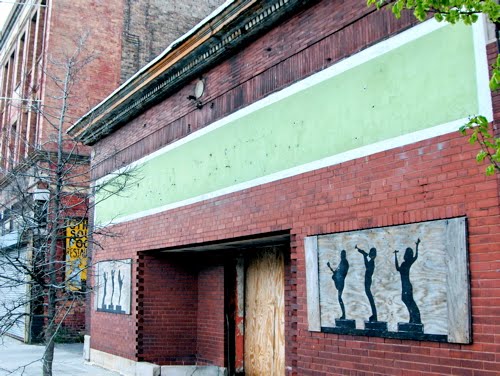
She continued to operate the Palm Tavern until July 3, 2001, when the city exercised its powers of eminent domain, evicted her, and closed the building out of concern that its by-now dilapidated character presented a danger to the community.
Club DeLisa
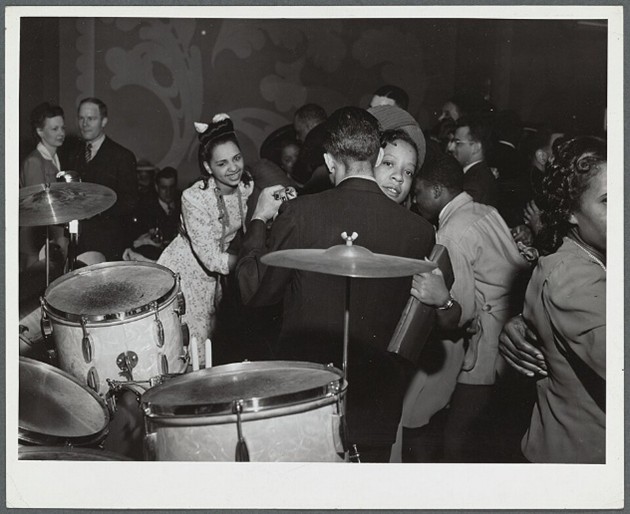
During the Chicago World’s Fair in 1933, the four white-American Italian DeLisa brothers opened Club DeLisa, it was an African American-themed nightclub and music venue. An article in the "Chicago Defender" in 1938 stated: “The DeLisa is truly a new haven for Lindy Hoppers, Jitterbug, and Floy-Floy addicts of the day.” Four shows were staged nightly and a Monday morning breakfast dance at 7 a.m. was popular with entertainers leaving other clubs.
Located further south from The Stroll at 5521 South State Street (State Street and Garfield Avenue, on the South Side), it was possibly the most prestigious venue in the city, together with the Regal Theater and the Rhumboogie Café in 20th century Chicago. The 1000-seat Club DeLisa played a key role in the city's association with jazz, blues, rhythm and blues, and soul music. The Club DeLisa’s original building burned down but was soon replaced with the New Club DeLisa. Nightly entertainment at the club was in a variety-show format.
The show featured singers, comedians, dancers, and the DeLisa chorines, accompanied by a house band that ranged in size from 7 to 12 pieces, depending on the club's revenues. Another less-announced source of revenue was gambling in the club's basement. During its heyday in the 1930s and 1940s, the club would remain open 24 hours a day, offering round-the-clock entertainment with musicians, dancers, and vaudeville acts.
Among the musicians and performers associated with the venue over the years was Red Saunders, whose band was in residence from 1937 until 1945 and returned in 1947. The band stayed until the club closed in 1958. Fletcher Henderson, Count Basie, Ethel Waters, Cab Calloway, Sun Ra Arkestra, Bessie Smith, Johnny Pate, Joe Williams, LaVaughn Robinson, George Kirby, Sonny Cohn, Earl Washington, Leon Washington, Albert Ammons LaVern Baker and Reverend Gatemouth Brown played there. The Club DeLisa closed its doors on February 16, 1958, after two of the DeLisa brothers died, but was re-opened as The Club in 1966.
The Smaller Clubs – Where the Real Stories Lived
And then there were the rooms that didn’t make headlines. The narrow lounges. The neighborhood taverns. The places where the lights were low, the drinks were strong, and the music sat right on your chest. These were the rooms where musicians experimented, locals gathered night after night and the culture stayed grounded. Sometimes, these were the most important rooms on the block, as they were the clubs that started it all.
The Forum
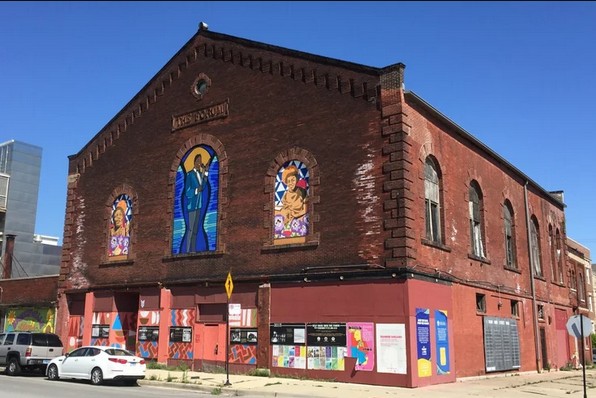
Built in 1897, The Forum, in its heyday hosted several musical legends including Nat ‘King’ Cole and Muddy Waters. It stood at the epicenter of what was called the Black Metropolis, serving as a cultural hub for music, culture, and local businesses. While it closed in the 1970s, nearly fifty years later in 2019, Urban Juncture received a grant from the African American Cultural Heritage Action Fund to restore The Forum as part of a broader initiative to build up Bronzeville.
The Pekin Theater
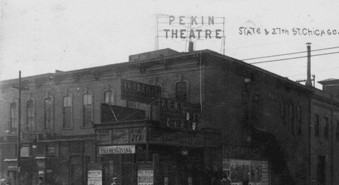
Originally built in 1892 as a beer garden at 2700 South State Street, it was converted in 1905 to the 900-seat Pekin Theater by Robert T. Motts, an African American street-hustler who allegedly financed the club with gambling earnings. It was the first theater in Chicago to feature black entertainment and admit interracial audiences, and the musical director was famed composer Joe Jordan. (Inspired by the club, Jordan penned “The Pekin Rag.”) The Pekin featured black vaudeville acts, minstrel shows, moving pictures, and high-brow plays and even served as a makeshift house of assembly for local African American politics. After Motts died, the new owners removed the theater seats and reopened the club as a dance hall in 1918, at which point it became known as the Pekin Inn. Some very risqué things happened here once the jazz began to play and the alcohol began to flow. Joe “King” Oliver occasionally gigged here between 1920 and 1921, when he departed Chicago for a two-year stint on the west coast. The Pekin’s success inspired other (typically white) businessmen to open competing theaters in the neighborhood, helping give birth to the area known as “The Stroll.”
Grand Theater
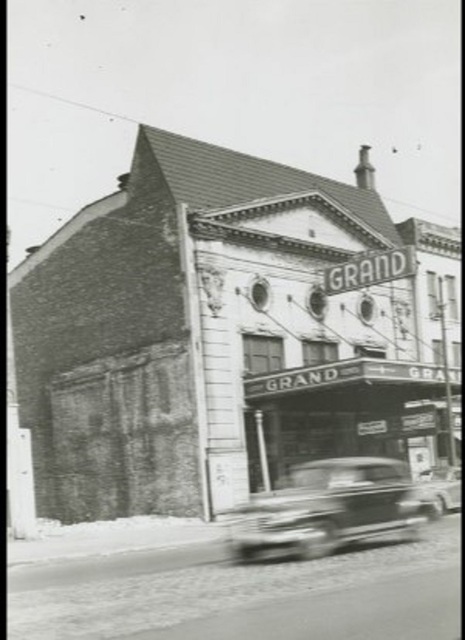
The Grand Theater was a popular jazz venue in the 1920s located at 3110 South State Street. Among the musicians who played here were Cab Calloway, Ma Rainey, Bessie Smith, Ethel Waters, and Edward “Kid” Ory. It opened around 1908 and closed around 1930.
Vendome Theater
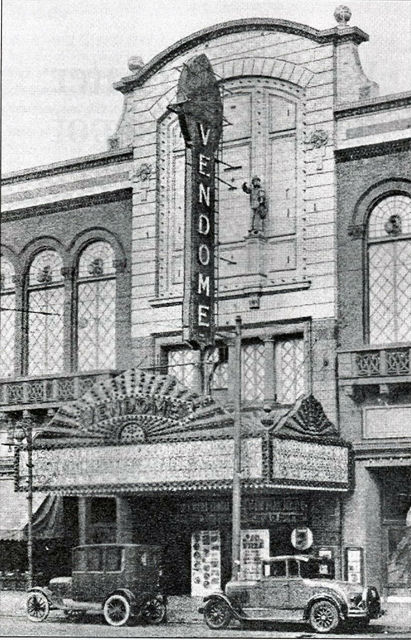
The 1,300-seat Vendome Theater opened in 1919 at 3143-49 South State Street to tremendous fanfare in the African American community. Built by O.C. Hammond at a cost of nearly a quarter-million dollars, the theater was luxuriously appointed with marble, gilded plaster, crystal chandeliers, and frescoes, not to mention an expensive and imposing pipe organ. It was a grandiose auditorium, and it catered to black audiences who were denied admission to other neighborhood venues. Leading Hollywood films, as well as “race” films, were shown here, and the theater featured an orchestra led by violinist Erskine Tate, whose band of musicians was amongst the finest in the country. Some came simply to hear the jazz, and the Vendome’s popularity surged when Louis Armstrong joined on cornet in December 1925. The theater’s popularity began to wane by the end of the 1920s, when Tate moved to the Metropolitan Theater and the Regal Theater began drawing away patrons. The building was demolished in 1949.
The Deluxe Café
A “black and tan” where interracial audiences were admitted, the Deluxe Café, at 3503 S State St in Bronzeville Chicago, was one of the more reputable purveyors of hot jazz in the second decade of the 20th century. The house band was Sugar Johnny’s Creole Orchestra, featuring Sidney Bechet and Freddie Keppard, both early jazz legends. In 1917, Li’l Hardin (who later married Louis Armstrong) joined the band as a pianist at the tender young age of 18. Sugar Johnny Smith was a “long, lanky dark man with deep little holes in his skinny face” and was a “gay, gutbucket cornet player from New Orleans” who was stricken with tuberculosis and died of pneumonia in 1918. The Deluxe Café had a billiard room, a bar, and, of course, a dance floor. Joe “King” Oliver played occasional gigs here with his Creole Jazz Band until 1919, when he was lured to the nearby Dreamland Café.
Plantation Café
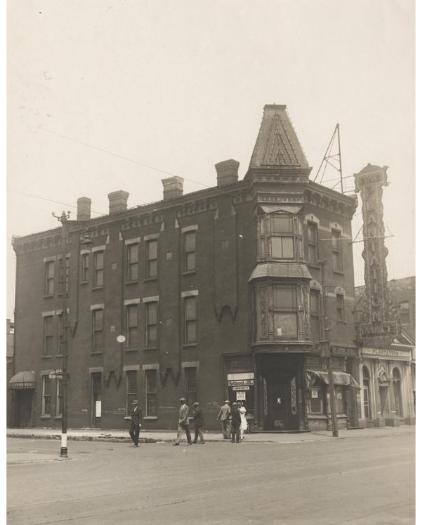
The Plantation Café was a “black and tan” jazz club (it catered to audiences of all races) and was nearly as prestigious as its kitty corner competitor, The Sunset Café. It opened in 1924, and King Oliver played here at 338 East 35th Street with his Dixie Syncopators from 1925 until 1927, when the club was destroyed by fire, reportedly after it was bombed. The Dixie Syncopators included such famed sidemen as Barney Bigard, Edward “Kid” Ory, and Paul Barbarin. Young white kids and out-of-town businessmen frequently caught King Oliver’s shows, where admission was fifty cents on weekdays and one dollar on weekends. The club was open practically all night. Before opening as The Plantation, this club was known as Al Tierney’s Auto Inn. Tierney closed the joint in 1923, and the following year he opened the Pershing Palace in the New Pershing Hotel at 61st and Cottage Grove Avenue.
The Apex
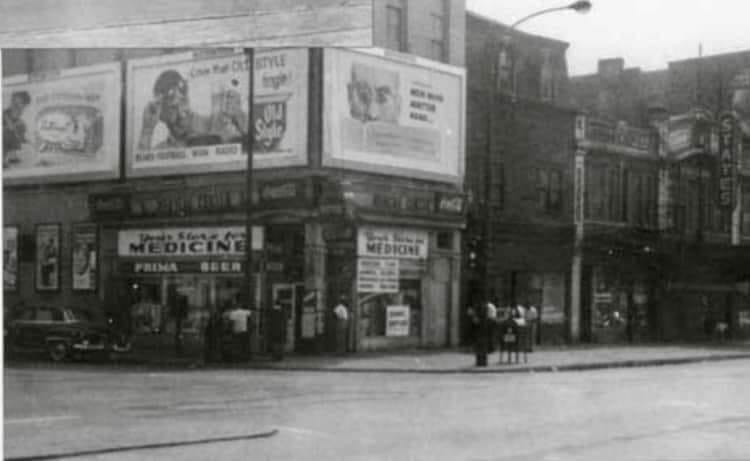
Formerly known as Club Alvadere and The Nest, the Apex Club at 330 East 35th street served fine food and outstanding jazz entertainment. Between 1926 and 1930, when Prohibition Era agents raided the club and shut it down, Jimmy Noone and his Orchestra (featuring Earl Hines) appeared here regularly. White guys who considered themselves jazz men flocked here to see Noone play, and it’s safe to say that one of those guys was local Chicagoan Benny Goodman. Previously, Jimmy Noone played in Doc Cooke’s Dreamland Orchestra in what is currently the West Loop neighborhood.
The Cozy Cabin Club
In the 1930s, this club at 3119 South Cottage Grove Avenue was known as "Chicago's Oddest Nightery." Mixed-race audiences came to see performances by black female impersonators. "When you have seen our floor show and `camped` in the Cozy Cabin Club, you have seen Chicago at its best," their ads read.
One Night, Many Worlds
That was The Stroll. You could begin your night in elegance, step into raw energy, pass through a packed dance hall, and end up somewhere small and unforgettable. All in one night. All on one street. The Stroll was built by Black Chicago. The music. The businesses. The fashion. The energy. But people came from everywhere to experience it.
White patrons crossed into Bronzeville to hear the music and feel the atmosphere they couldn’t find elsewhere. Meanwhile, Black performers who filled these rooms with life were still denied access to hotels, restaurants, and spaces outside this district. So even in the center of creativity, the contradiction remained.
Mob Protection, Racketeering and the Syndicate
During the 1920s and 1930s, the clubs, speakeasies, and businesses on "The Stroll were often bombed or firebombed by Chicago Outfit gangsters and racketeers. These attacks were primarily driven by the need to control the lucrative illegal gambling and bootlegging markets, as well as to extort protection money from black-and-tan club owners.
Perpetrators and Motives
- Mob Protection Racketeering: Syndicate hoodlums and gangsters used bombings and arson to intimidate owners into paying protection money or purchasing alcohol exclusively from mob-controlled suppliers.
- The "Gambling War" and Territory Control: The violence was part of a broader, long-term conflict to dominate vice operations, with white gang elements often targeting clubs that were lucrative but not yet fully under their influence.
- Prohibition Era Dynamics: While the Stroll thrived during Prohibition, it became a focal point of gang disputes over territory and bootlegging. If a club owner resisted the demands of outside gangs, their establishment was bombed.
- Closing of The Stroll: These attacks, combined with increased police pressure (after the 1923 crackdown by Mayor Dever), the 1929 market crash, and shifting nightlife towards 47th Street, contributed to the decline of The Stroll.
The perpetrators were rarely caught, as the bombings functioned as effective, deniable "governance" of the area by racketeers.
The Stroll was never just about where you went at night. It was about what was created there—on those blocks, in those rooms, through those sounds. It was about a community that built something powerful in the middle of limitation. A place where music wasn’t just played, it was shaped. Where style wasn’t borrowed, it was defined. Where business, culture, and creativity moved together in rhythm.
For a few blocks on the South Side, Black Chicago didn’t wait to be included. It led. Even as people came from across the city to experience it, The Stroll remained rooted in something deeper—a sense of ownership, pride, and possibility that extended far beyond those streets to the world.
Today, the buildings may have changed, and the lights may not shine the same way they once did, but the impact is still here because The Stroll didn’t disappear. It evolved. And while some were dancing in packed clubs and crowded streets, there was another side of Chicago nightlife unfolding at the very same time—one filled with elegance, intention, and tradition.
Ballrooms replaced dance floors. Orchestras played for formal introductions. Gowns, gloves, and tailored tuxedos set the tone.
Next week, we step into that world…
👉 Chicago After Dark, Part 3: The elegance, the gowns, and the social clubs that defined Black high society.
If you missed them here is the introduction and Part 1 of the Chicago After Dark Series.
Stay connected with news and updates!
Join our mailing list to receive the latest news and updates from our team.
Don't worry, your information will not be shared.
We hate SPAM. We will never sell your information, for any reason.
