
Chicago After Dark - Part 3: When Chicago Dressed Up
Apr 09, 2026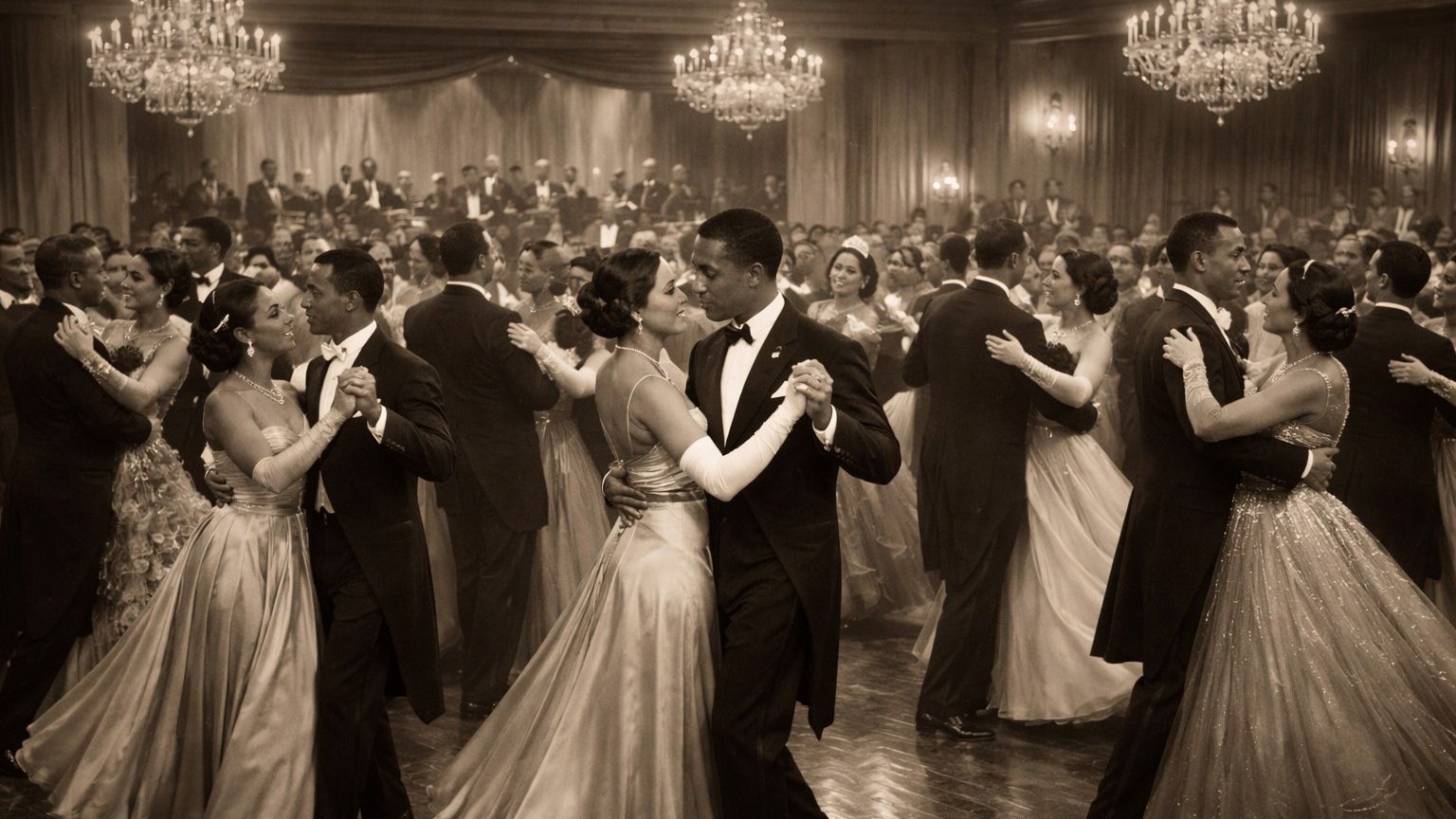
The Black Elite, Their Secret Clubs, and the Grandest Formals in the City
They swept into ballrooms in columns of satin and tuxedos, diamonds catching the chandelier light, white gloves reaching past the elbow, pearl studs gleaming on shirtfronts. The orchestra was already playing. The champagne was already poured. And nobody who was nobody was getting through that door.
While Part 2 of this series took you down The Stroll — that electric strip of jazz clubs, ballrooms, and nightlife venues that roared from 31st to 39th Street — this chapter steps into a different world that existed alongside it. Same era. Same South Side. But a different set of rooms. A different dress code. A different kind of evening entirely.
This is the story of Black Chicago's high society: a world of extraordinary sophistication that flourished from the Gilded Age all the way through the 1960s. A world of invitation-only galas, exclusive membership clubs, debutante cotillions, and formal balls so lavish they rivaled anything being thrown anywhere in this country. A world that existed not in spite of a hostile America — but defiantly, even gloriously, alongside it.
The Door That Was Always Closed — And the Room They Built Instead
To understand why Black Chicago's elite social clubs existed, you have to understand what they were responding to.
The white social clubs of Chicago — the Union League Club, the Chicago Club, the Cliff Dwellers — were completely closed to Black men and women, no matter how educated, how accomplished, or how distinguished. The city's most prestigious hotels might accept a reservation but deny a room. Department stores like Marshall Field's and Bonwit Teller's would sell a gown to a Black woman — but often would not allow her to try it on in the fitting room. Medical associations, bar associations, civic organizations — all either excluded Black members outright or made their membership so unwelcoming as to be functionally inaccessible.
So Black Chicago did what Black Chicago has always done. It built its own. And it built magnificently.
The exclusive clubs, the formal balls, the debutante cotillions — none of this was imitation. It was assertion. It was the community saying: we see ourselves. We honor ourselves. We invest in ourselves. The white gloves and the tailored tails and the chandelier light catching on diamond brooches were not borrowed from another culture. They were the deliberate expression of a community that had constructed its own world, its own institutions, its own places of grandeur — and intended to inhabit them with full dignity.
As Purdue University historian Anne Knupfer has noted, upper-class Black Chicagoans felt enormous pressure to distinguish themselves during the great waves of the Great Migration — not as rejection of their community, but as a response to a white society that lumped all Black people together regardless of achievement or standing. The clubs were a way of saying: not on our terms.
The Clubs: You Didn't Apply. You Were Chosen.
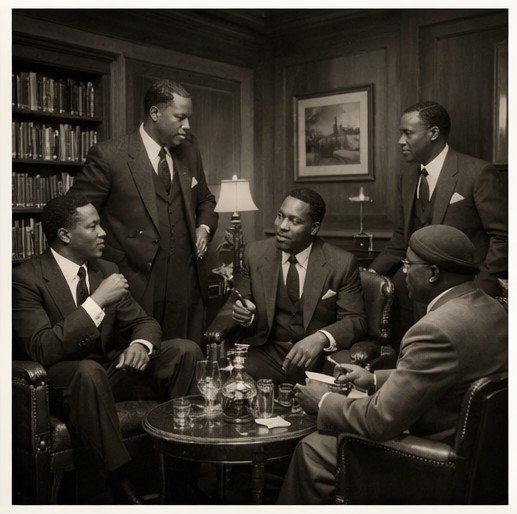
The backbone of Black Chicago's high society was its exclusive clubs — organizations that required not just a membership fee, but an impeccable reputation, the right connections, and often, a sponsor already inside. These were not open-enrollment organizations. Membership was offered. And if it wasn't offered, it wasn't yours.
Sigma Pi Phi — The Boulé — Chicago's Most Elite Fraternal Order
In 1904, six Black professionals in Philadelphia — four physicians, a dentist, and a pharmacist — founded Sigma Pi Phi Fraternity, which they called the Boulé, after the ancient Greek council of noblemen. Their intention was specific: to create a fellowship for Black men who had already achieved distinction — not a college fraternity, but a society for men who had already arrived.
Within three years, in 1907, the Beta Boulé — only the second chapter in the entire nation — was established right here in Chicago. That speaks to how important Chicago's Black professional class already was on the national stage. Membership required a college degree, demonstrated excellence in one's field, and the recommendation of archons already inside. Nationally, Boulé members have included W.E.B. Du Bois, Carter G. Woodson, Charles Drew, James Weldon Johnson, Martin Luther King Jr., and John H. Johnson. The Boulé's formal balls and annual Conclave celebrations were among the most anticipated events on Black Chicago's social calendar.
The Appomattox Club — Power, Politics, and Polish
Headquartered at 3632 Grand Boulevard — now Dr. Martin Luther King Jr. Drive — the Appomattox Club was named after the Virginia courthouse where the Civil War effectively ended. It was both a political and social powerhouse, the kind of place where powerful Black men gathered to talk policy, influence elections, and live well — a dinner here, a formal reception there, always conducted with the utmost decorum. Members moved easily between the world of politics and the world of polished social affairs.
The Original Forty Club — Founded on Promise, Sustained by Excellence
Founded in 1915, the Original Forty Club is one of the oldest social clubs for ambitious, civic-minded Black men in Chicago — and one of the least written about. At its founding, fewer than one Black male in twenty worked in a managerial, professional, or proprietary occupation in Chicago. The men who gathered to form the Original Forty — doctors, dentists, attorneys, educators — held the few prestigious positions available, and they knew it. They dressed like it. They carried themselves like it.
What set the club apart, beyond professional achievement, was its understanding of what membership meant. According to the club's own earliest yearbook, the majority of men were admitted 'not on their achievements but on their quality of promise' — and if a man came in unpolished, senior members made sure he would go out otherwise. Fathers brought in sons. Bosses brought in promising assistants. University of Chicago alumni brought in classmates. Real estate mogul Dempsey Travis was brought in by the late Earl Dickerson, then president of Supreme Life Insurance, who told him pointedly: 'You can't do the things you want to do unless you get a platform.' That kind of mentorship and collective uplift was the Original Forty at its best.
The club's roster across the decades reads like a catalog of Black Chicago's most consequential men: Bobby Rush, Emil Jones Jr., Cook County Board President John H. Stroger, Ebony magazine founder John H. Johnson, Chief Circuit Judge Timothy C. Evans, Chicago Defender publisher John H. Sengstacke, and former congressman William Dawson. Their annual dinner dances — held for decades at the Parkway Ballroom and the Vincennes Hotel — were covered in the society pages of the Chicago Defender and were considered among the most important social events of the season.
The Frogs Club — An Intimate Brotherhood
On a winter evening in 1922, thirteen bachelors gathered at the South Side home of Charles Young at 4523 S. St. Lawrence Avenue and founded the Frogs Club — named after the ancient Greek playwright Aristophanes and defined from the beginning by intimate exclusivity: thirteen charter members, capped by bylaws at a maximum of fifty members ever. The original Frogs were all bachelors, and the club's earliest social life revolved around parties, dances, and gatherings that were the talk of Black Chicago. When a founder married, the club presented him with a beautiful silver water pitcher engraved with his wedding year — a tradition that became part of the club's legend. The Frogs remain active today as one of Chicago's oldest Black social organizations.
The Chicago Assembly — Black Tie on December 26th
Chartered on May 4, 1932, the Chicago Assembly positioned itself from the beginning as a home for prominent men 'from all walks of life' who shared a commitment to sophisticated social events. The club's premier event — a Holiday Ball held every year on December 26th — became a fixture of Black Chicago's formal social calendar. The dress code was uncompromising: black tuxedos, white tuxedo shirts, black bow ties, no exceptions. For decades, the Holiday Ball was one of the evenings that Chicago's Black elite dressed for weeks in advance.
The Royal Coterie of Snakes, the Druids, and Others
The fabric of Black Chicago's social world was woven with dozens of clubs whose names rarely made it into the history books, but whose presence was felt on every social register worth reading. The Royal Coterie of Snakes. The Druids Club. The Chicago Connection. The Knights of the Roundtable. The Father’s Club. The Saints. Together with the Frogs, the Original Forty, and the Chicago Assembly, these organizations — along with their sister clubs for women — formed an interlocking social architecture that structured the formal life of the South Side's professional class for generations.
The Fraternal Orders — Built Because the Door Was Slammed
Alongside the exclusive social clubs, Black Chicago's elite belonged to a powerful network of fraternal orders — each one born directly out of white exclusion, and each one a declaration that Black men and women would build what white America refused to provide.
The Prince Hall Masons trace their origins to 1787, when Prince Hall established the first African American Masonic lodge in Boston after mainstream Masons refused Black membership. Their annual balls were black-tie affairs with the full grandeur of formal dress and orchestra music. The Colored Knights of Pythias — inspired by the ancient story of Damon and Pythias — had 250,000 Black members nationally by the early twentieth century. Their chivalric theme lent particular pageantry to their social events: knights and their ladies, formally presented, formally dressed.
The Improved Benevolent and Protective Order of Elks of the World was born in 1897 when two determined Black men in Cincinnati were refused Elks membership and founded their own order. It grew to 500,000 members in 1,500 lodges worldwide. Their colors of royal purple and white, their jeweled regalia, and the spectacular formal attire of their women's auxiliary made Elks balls among the most visually stunning events of the season.
Every one of these orders had been born out of necessity — a response to a slammed door — and every one of them had built magnificently in response.
The Women Who Set the Standard
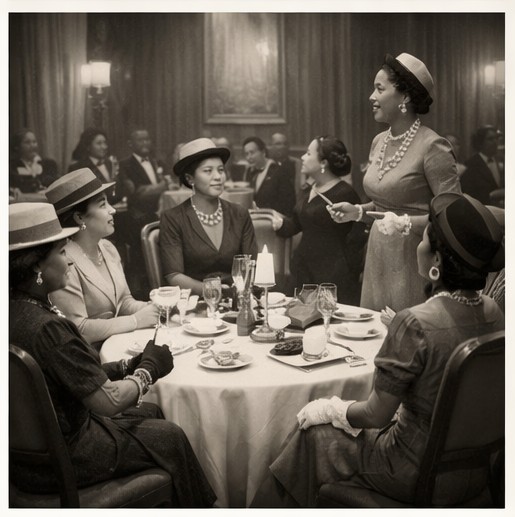
No story of Black Chicago's high society is complete without the women who defined it, organized it, and in many ways drove it. The formality of the ballroom, the elegance of the cotillion, the precision of the social calendar — these were largely the work of Black women who understood that how a community presented itself was a statement about what it believed itself to be worth.
The Links, Incorporated
Founded in 1946, The Links, Incorporated spread rapidly to chapters across the country, including Chicago. An invitation-only organization for women of achievement, The Links hosted some of the most magnificent social events in Black society: debutante cotillions, formal balls, fashion show luncheons, and charity galas. Their events were productions — requiring formal gowns, elbow-length gloves, and preparation that began weeks in advance. Over the decades, the organization's roster has included Betty Shabazz, Marian Wright Edelman, and Kamala Harris.
Jack and Jill of America
In 1938, twenty upper-middle-class Black mothers in Philadelphia founded Jack and Jill of America to give their children what white society refused to provide: social networks, cultural opportunities, and community with peers of shared standing. By the 1940s and 1950s it was considered, as the Chicago Tribune would later note, a prestigious club for those considered almost literally the cream of Black society. Jack and Jill functions, dances, and holiday parties were fixtures on the social calendar of Black Chicago's elite families — and the young people who grew up together in Jack and Jill, more than a little by design, often married each other.
The Women's Club Movement
Between 1890 and 1920, more than 160 African American women's clubs formed in Chicago — a number that reflected the organizational genius of Black women on the South Side. These clubs held bid whist tournaments, masquerades, balls, and high teas alongside their serious civic work. Fannie Barrier Williams — educator, activist, and a woman who enforced social standards simply by her presence — and Ida B. Wells-Barnett, who moved through Chicago's social world with the same fierce intelligence she brought to her anti-lynching crusade, were among the era's defining figures. These women understood that getting dressed up wasn't vanity. It was a declaration.
Months of Preparation: The Art of Getting Ready
Receiving an invitation to one of the season's major formals was not a casual event. It was the beginning of a process — one that could stretch across months — of preparation, planning, and deliberate elegance.
The Gown
For women of Black Chicago's high society, the gown was the centerpiece of everything. Floor-length formal gowns in satin, silk, chiffon, and taffeta — in rich jewel tones or classic black and white — were chosen with extraordinary care. Some women went to Marshall Field's on State Street or to Bonwit Teller's, both of which catered to upscale clientele. The experience, however, was often not equal to the money being spent. Black women shopping in these establishments in the 1930s, '40s, and '50s frequently encountered a particular indignity: they could browse, they could select, but they often could not use the dressing rooms. A salesperson might bring items to a private area, or a woman might be asked to hold a gown against herself rather than try it on. The message was unmistakable — and so was the response. Many of the South Side's most elegant women simply chose differently.
They went instead to their seamstress. Black women dressmakers on the South Side were among the most skilled and most sought-after craftspeople in the community. A formal gown made by a skilled seamstress was fitted precisely to the woman wearing it — no approximations, no compromise. She could choose her own fabric, her own silhouette, her own details. The result was often more beautiful, more individual, and more personal than anything available off a rack or even a department store floor. And it was made by someone who treated her like the client she was.
Once the gown was chosen or made, the accessories followed: real jewelry whenever possible — diamond earrings, pearl necklaces, a brooch that had perhaps belonged to a mother or grandmother. Hair was set and coiffed, sometimes over multiple appointments. Long white kid leather gloves — elbow length, immaculate — were not optional; they were the signature of the era, the detail that completed the look and signaled that a woman understood exactly what kind of evening she was dressed for.
The Men
The men of Black Chicago's high society matched the occasion with equal precision. White tie and tails for the grandest affairs — the full formal regalia of the era, as rigorous as anything worn in any ballroom in the city. Black tuxedos with crisp white dress shirts for the somewhat less formal evenings, secured by pearl buttons or jeweled shirt studs. Cufflinks in gold or silver, sometimes set with stones. Pocket squares folded just so. Patent leather shoes that caught the light from across the room.
Many men had their formal wear custom tailored — measured and fitted by South Side tailors who understood that the cut of a jacket was a matter of serious attention. The fraternal orders added their own spectacular dimension: Masonic aprons, Pythian regalia, jeweled collars and medallions that layered ceremony and color onto evenings when the orders were celebrating their own history and legacy.
The Rooms Where It All Happened
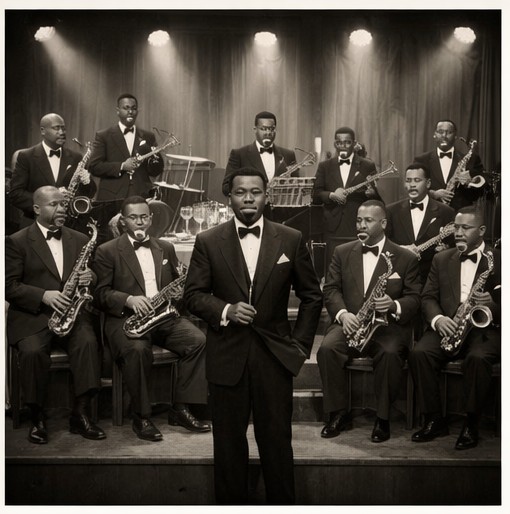
We described The Stroll's great venues in detail in Part 2 of this series — the Savoy Ballroom with its half-acre of sprung hardwood and its double bandstand that kept music playing until dawn; the Regal Theater with its velvet seats and its chandelier-lit grandeur; the Grand Terrace Cafe where jazz legends made their names. Many of these same venues hosted the formal balls and galas of Black Chicago's social organizations. But for the high society events, there were two rooms that stood apart.
The Parkway Ballroom — Built by Black Chicago, for Black Chicago
If the Savoy was the people's ballroom, the Parkway Ballroom was the elite's ballroom — the room where the guest book read like a Who's Who of Black America. Count Basie. Duke Ellington. Joe Louis. Paul Robeson. Ella Fitzgerald. Mavis Staples celebrated her first wedding reception here in 1964. Dr. Martin Luther King Jr. and Langston Hughes both attended banquets within its walls.
The Parkway opened in 1940 at 4455 South Park Way (now Martin Luther King, Jr Drive), built on the second floor of the Chicago Metropolitan Mutual Assurance Company. Entrepreneur Robert A. Cole's intention was specific: to give Black Chicago a first-class ballroom that was Black-owned and Black-operated, because the other options in the area were either in disrepair or controlled by white proprietors. Designed in dignified Art Moderne style, the Parkway occupied the entire second floor with high ceilings that made it feel both intimate for a dinner and expansive for a dance. The Original Forty Club held their annual dinner dances here for years. The Links. The Boulé. Every major social organization on the South Side. The building still stands at 4455 South King Drive and was revived in 2002 as an event space — one of the few physical links to Bronzeville's grand era of formal social life.
Forum Hall — The Oldest Floor in the City
Before the Savoy. Before the Parkway. Before the Jazz Age had even arrived, there was Forum Hall — built in 1897 at 318-328 East 43rd Street in the heart of what would become Bronzeville. Its second floor contained what is likely the oldest surviving hardwood ballroom dance floor in Chicago. Nat King Cole played here before he was famous. Muddy Waters performed here. Fraternal organizations used Forum Hall as their headquarters. Sorority balls and civil rights strategy sessions took place in the same rooms where orchestras later played. Named to the National Register of Historic Places in 2019, Forum Hall is being slowly restored by Urban Juncture as part of the Build Bronzeville initiative.
An Evening You Would Never Forget
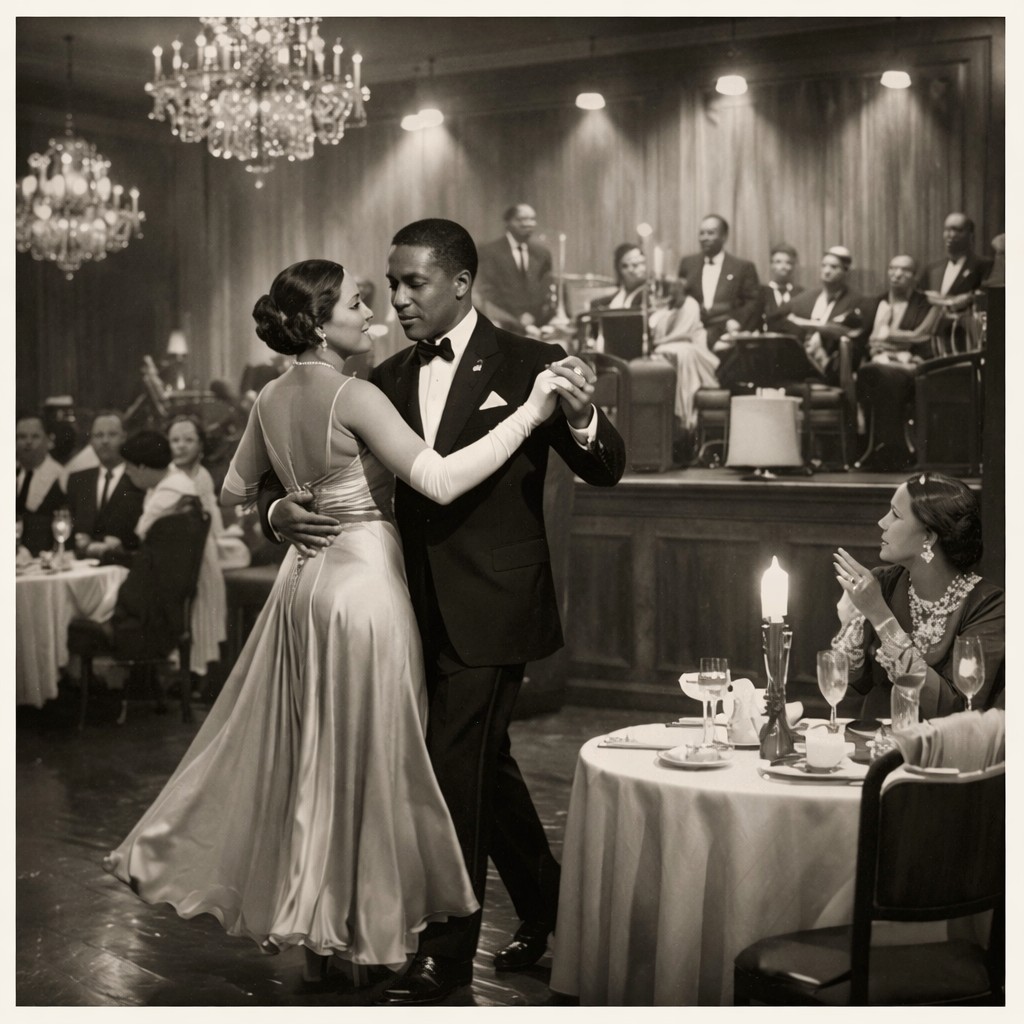
The invitation arrived by mail — a heavy envelope, cream-colored or white, with formal engraving. Your name, in careful calligraphy. An invitation to the annual ball of the Boulé, or the Frogs, or the Links Cotillion, or the Chicago Assembly's Holiday Ball. If you received one, you knew what it meant. If you didn't, you knew that too.
There was no 'plus one' unless the invitation said so. There was a dress code, and it was enforced. Women who arrived underdressed were remembered. Men who failed to appear in formal attire did not appear at all.
The venue was always somewhere grand. The committee had chosen flowers, arranged the seating, engaged a live orchestra or big band. The tables were set with fine linens, crystal, and China — not as background detail, but as deliberate statements about what the evening was and who it was for. There was a receiving line, where the hosts greeted each guest individually — a small ceremony that acknowledged everyone's arrival as a social event in itself.
The music began with formal dinner, then opened into dancing: waltzes, fox trots, the social dances of the era. By the 1920s and 1930s, the influence of jazz — Duke Ellington, Cab Calloway, the great bands that came through Chicago — could be felt even in the most formal rooms. On some evenings at the Savoy, the double bandstand meant the music never stopped at all; when one orchestra rested, the other stepped up, and the dancing continued until the early morning hours.
The Debutante Cotillion — Coming Out into Society
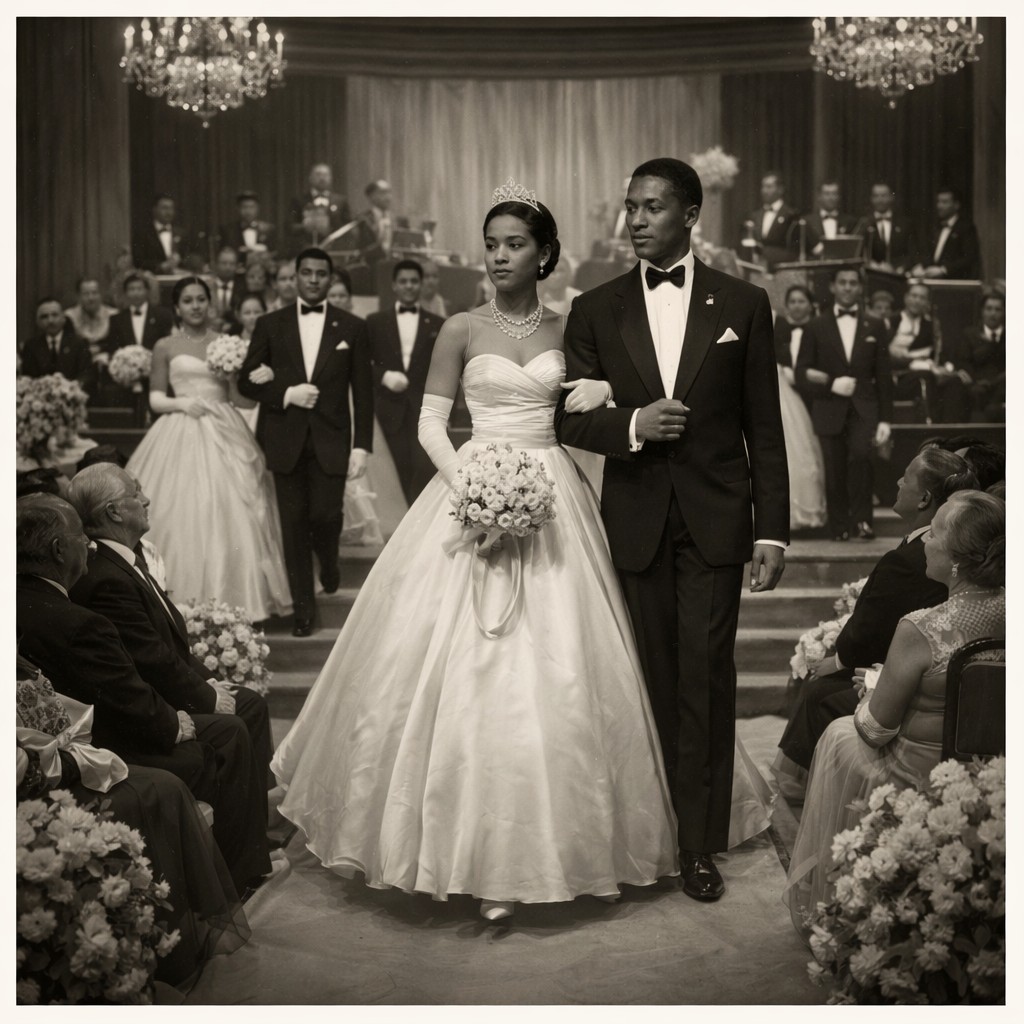
Among the most anticipated formal events on the Black Chicago social calendar was the debutante cotillion — the formal presentation of young women of good family into society. Sponsored by organizations like The Links, Jack and Jill, and various women's clubs, the cotillion was a formal ball at which young women — usually between sixteen and twenty-one — were presented in full formal gown, long white gloves, and often a tiara or floral headpiece. Their escorts — young men of equal social standing — were in white tie and tails.
The presentation was choreographed: the debutantes entered one by one or in pairs, were announced by name, curtsied to the room, and were formally escorted to their seats. Then the dancing began. A young woman's debut was a major social milestone — not just for her but for her entire family. A public declaration of standing, aspiration, and belonging. It was the community formally welcoming its next generation.
When the Era Changed — and What Remained
By the mid-1960s, the formal ball era that had defined Black Chicago's social life for decades began to shift. The Civil Rights Movement was transforming the country. Integration — hard-won and long-overdue — opened doors that had always been slammed. Black professionals could now join organizations, stay in hotels, eat in restaurants, and socialize in venues that had previously been entirely off-limits. The rigid social architecture of the pre-integration era began to feel, to some, like a relic of a world built under compulsion.
As Theresa Fambro Hooks, longtime columnist for the Chicago Defender, observed: 'There's not the same sense of society now. When you broke down barriers and started having more interface between the races, things changed drastically. After integration, you were considered bourgeois if you were talking about society. They put it down and never picked it back up.' The Defender's own society pages — which had once covered the Original Forty's dinner dances as major news — gradually scaled back. The community's attention turned outward, toward the battles still being fought. The season of the formal ball quietly came to a close.
But it did not disappear entirely. The organizations that had made those evenings possible — the Boulé, the Frogs Club, the Chicago Assembly, the Original Forty, the Links, Jack and Jill, the Prince Hall Masons, the Elks — did not dissolve when the ballrooms went quiet. They adapted. They continued their work of mentorship, civic engagement, scholarship, and community leadership. The Chicago Assembly still holds its Holiday Ball on December 26th. The Links still sponsor debutante cotillions. The Frogs Club, now more than a century old, still meets and still caps its membership at fifty. The Original Forty still gathers, still debates, still mentors, still writes checks for South Side youth scholarships.
The rooms were real. The gowns were real. The orchestras were real. The white gloves and the tuxedos and the chandelier light catching on diamond brooches — all of it was real, in a city that sometimes pretended it wasn't. Black Chicago knew better. And the organizations built in that era are still, today, making sure it isn't forgotten.
The Next Time You Dress Up
The next time you put on your finest for a formal evening — and feel that particular electricity of it — take a moment to think of the men and women who did the same a hundred years ago on the South Side of this city. Who fastened their pearl buttons and smoothed their white gloves and walked into rooms where the orchestra was already playing. Not because the world had given them permission to belong there. But because they had built the room themselves.
If you missed them, here are the Introduction, Part 1: When Jazz Ruled the Night, and Part 2: The Stroll — The Street That Built the Sound.
Stay connected with news and updates!
Join our mailing list to receive the latest news and updates from our team.
Don't worry, your information will not be shared.
We hate SPAM. We will never sell your information, for any reason.
