
Chicago After Dark, Part 4: From Supper Clubs to Show Lounges — When the Stage Took Over
Apr 15, 2026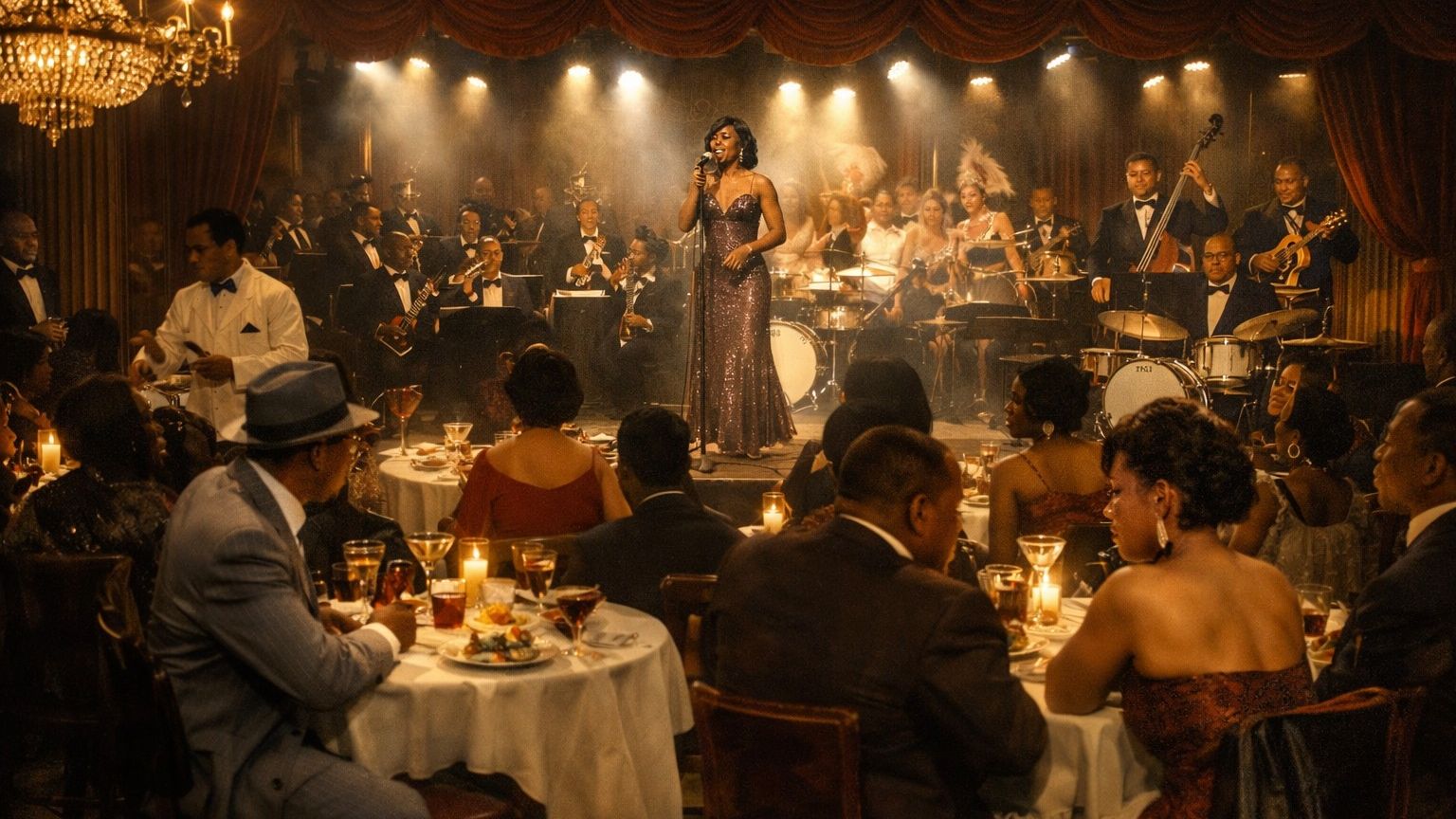
The Tables Were Set, the Band Was Already Playing, and Nobody Was Going Home Before 2 a.m.
The war was over. The soldiers came home. And on Chicago's South Side, something was shifting in the dark.
The great ballrooms and formal galas of Black Chicago's elite social world — the white gloves, the chandelier light, the orchestras playing waltzes at the Parkway — were still there, still magnificent, still absolutely in their own lane. But alongside them, a different kind of nightlife was finding its form. Less formal. No less sharp. And far louder.
This was the age of the supper club and the show lounge. You didn't come here to be seen attending something. You came here to eat a real meal, order another round, and be pulled into an evening that took you somewhere — by a singer who could stop your heart, a comedian who'd make you spit your drink, a dancer who made the stage look like it was barely enough room for what she had to say. The dress code was still real. The standards were still high. But the tie wasn't white, and nobody was curtsying. The stage had taken over. And South Side Chicago — already the capital of Black American nightlife — became the room where the next generation of American entertainment found its legs.
The Street That Ran All Night
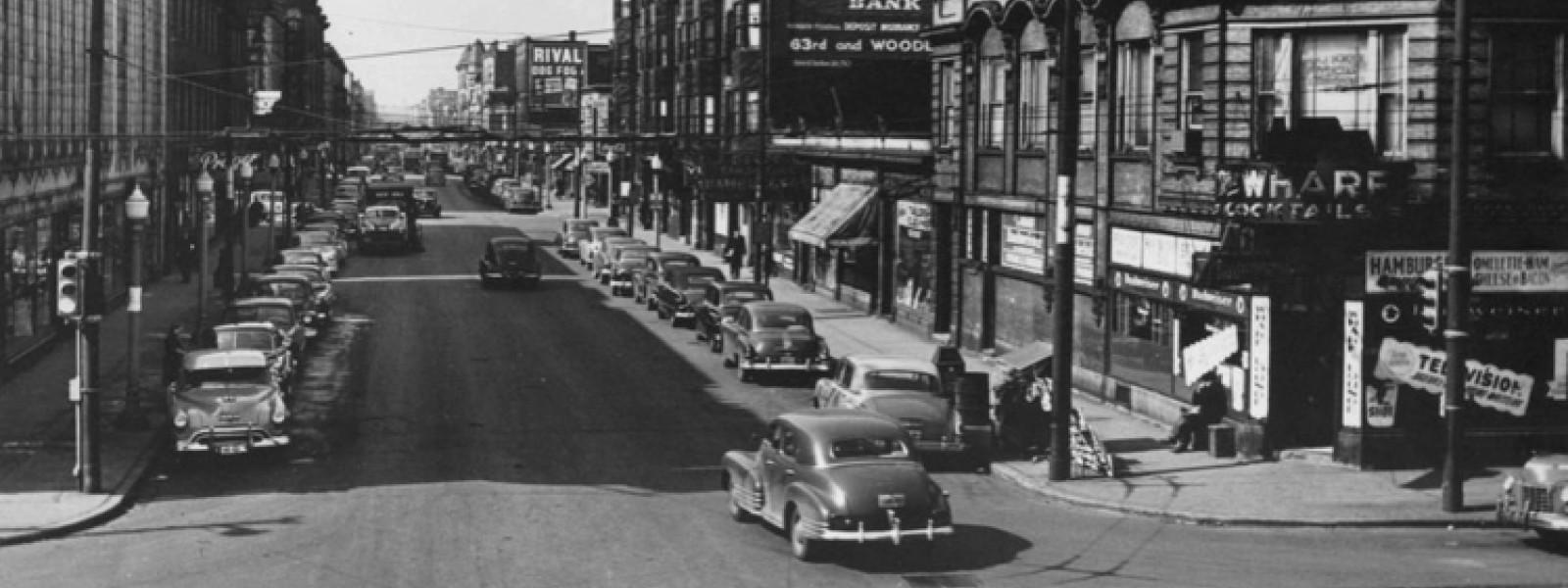
In the 1930s and 1940s, Garfield Boulevard had sidewalk traffic at all hours, as many of the lounges, clubs, and restaurants stayed open until just before daybreak. On hot summer nights, the grassy median of Garfield Boulevard was covered with blankets where people escaping crowded apartments slept. That detail says everything. This was not a neighborhood that went to sleep. This was a neighborhood that breathed nightlife the way other parts of the city breathed factory smoke.
A lifelong South Side resident remembers a time when "we couldn't go west of Wentworth, east of Cottage Grove, or south of 63rd Street." A history of racial violence and institutionalized discrimination meant that most white neighborhoods were considered off-limits to Black Chicagoans. But it is not the limitations of this segregated environment that linger in memory. The Black Belt was like "a city unto itself where you could get anything that you needed. We rarely, if ever, had to go downtown."
That is the context you have to hold onto. When you understand what was outside those invisible borders — the hostility, the humiliation, the violence that waited in neighborhoods that simply did not want you — you understand what was built inside. These supper clubs and show lounges weren't second-best replacements for somewhere else. They were the real thing. They were the destination. And on any given Friday night, they were exactly where you wanted to be.
Club DeLisa: Open for Business, All Night Long
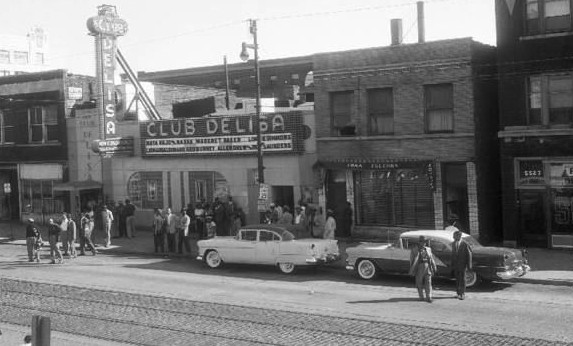
Located at 5521 South State Street, the 1,000-seat Club DeLisa played a key role in the city's association with jazz, blues, rhythm and blues, and soul music. It was possibly the most prestigious venue in the city, together with the Regal Theater and the Rhumboogie Café.
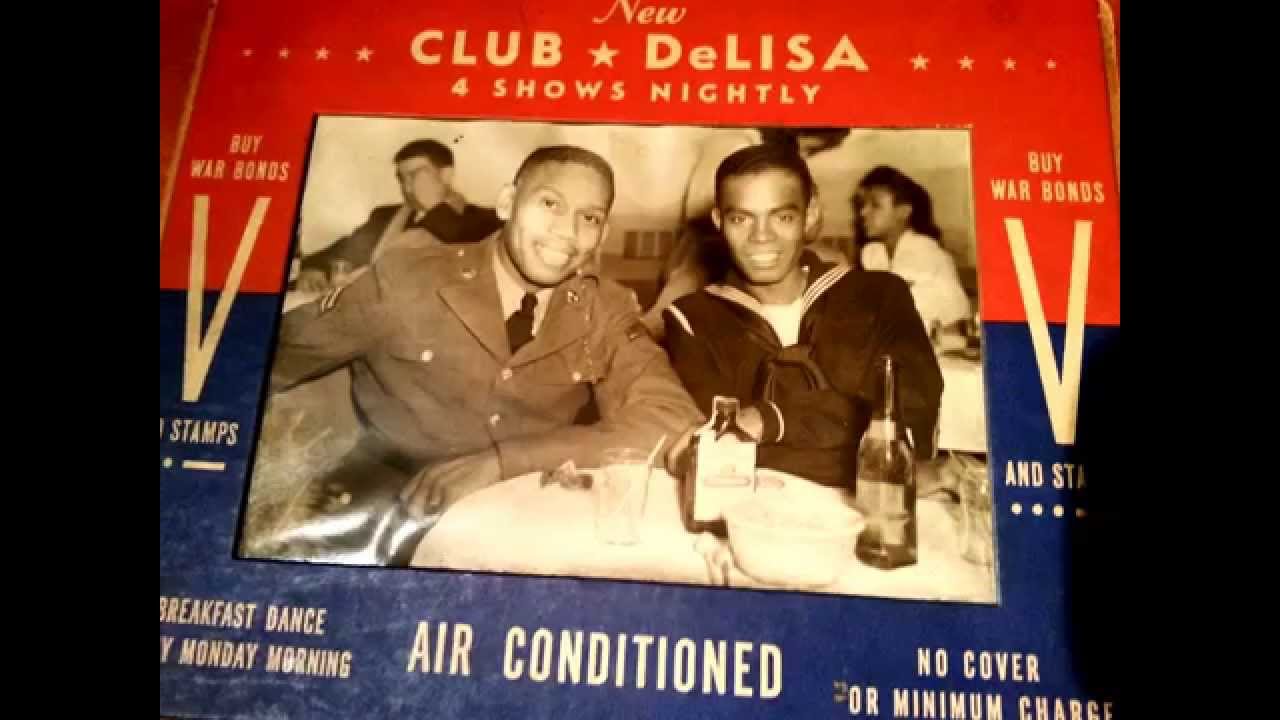
The Club DeLisa was owned by the four DeLisa brothers — Louis, John, Jimmy and Mike. It opened in 1934 following the repeal of Prohibition. In 1941, the original building burned down but was soon replaced with the New Club DeLisa, which was a larger space. Nightly revue-style entertainment at the club was presented in a variety show format. The show featured singers, comedians, dancers, and the DeLisa chorines, accompanied by a house band that ranged in size from 7 to 12 pieces. During its glory years, the DeLisa did something almost no other club in the country did: the club would remain open 24 hours a day, offering round-the-clock entertainment with musicians, dancers and vaudeville acts.
Twenty-four hours. Let that land for a moment. There was no last call at the DeLisa. There was no closing time. The music simply continued — the next set picking up where the last one left off, the dancers cycling back through, the house band finding another gear at three in the morning when the room, somehow, was still full.
The Club DeLisa was known for having no cover charge and featuring singers, dancers, chorus girls, comedians, vaudeville acts, and even acrobats alongside a house band led by the famous drummer Red Saunders. Red Saunders. That name deserves a full stop. Red Saunders and his band were the house band for Club DeLisa for more than 21 years — a tenure so long and so defining that his name and the DeLisa's became nearly synonymous. He was there at the beginning. He was there at the end. And for two decades in between, every singer who stepped up to that microphone on South State Street stepped up into the sound Red Saunders had built around them.
The performers who came through were staggering in their range. Singers LaVern Baker and Joe Williams were featured there early in their careers. Count Basie. Fletcher Henderson. Big Joe Turner. The DeLisa was known as a "Black and Tan" — it catered to Black clientele first, but white audiences crossed the color line to be there too, because what was happening inside those walls wasn't available anywhere else in the city. Together with the Regal Theater and the Rhumboogie Café, the DeLisa played a key role in the city's association with jazz, blues, rhythm and blues and soul music. It closed in February 1958.
The Rhumboogie: Joe Louis Owns the Room
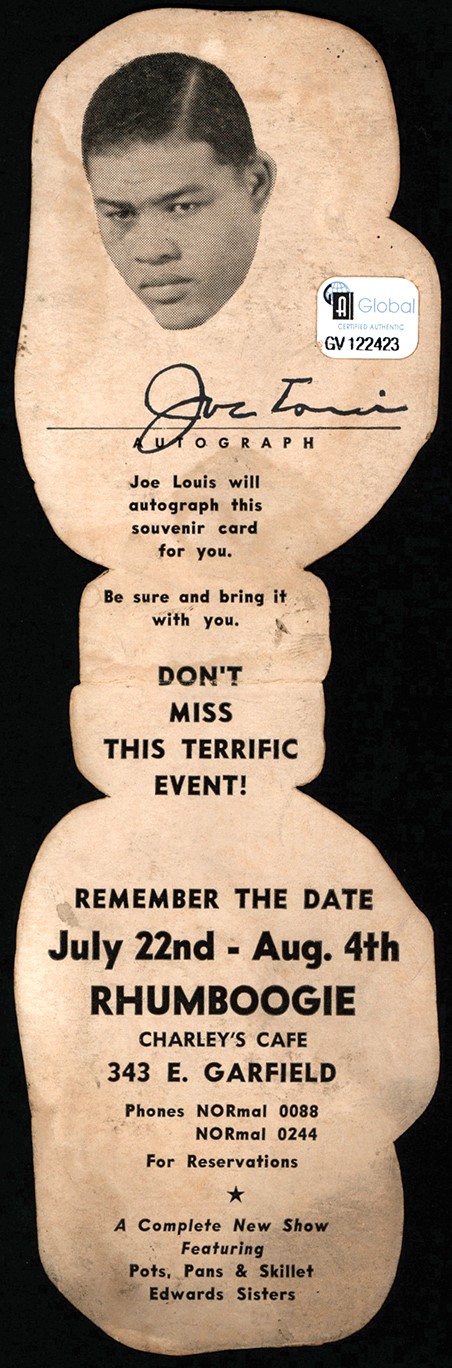
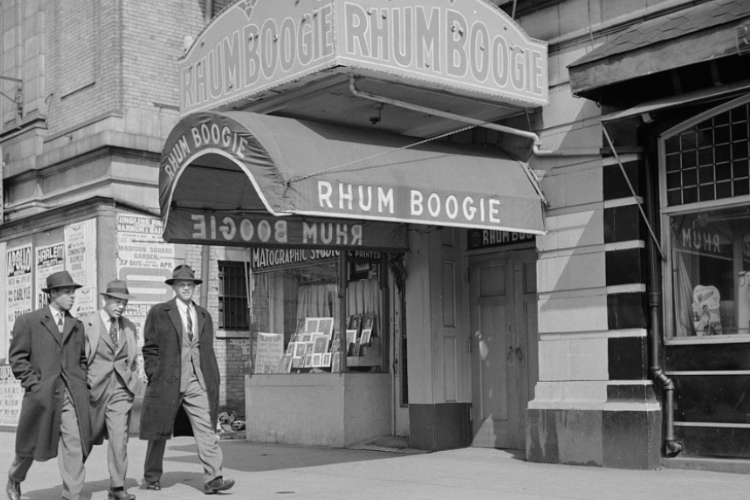
A ten-minute walk east along Garfield Boulevard from the DeLisa — past smaller cocktail lounges and the rumble of the elevated train overhead — brought you to the address at 343 East 55th Street. It had been a club for years under different names, but in April 1942, it reopened as the Rhumboogie Café. And when it did, it arrived.
The Rhumboogie was owned by Charlie Glenn and boxing champion Joe Louis. Joe Louis. The heavyweight champion of the world. The Brown Bomber who had knocked out Max Schmeling in the first round in 1938 while a nation listened on the radio and Black America wept with pride. His name attached to a South Side supper club was not merely a business arrangement — it was a declaration. If Joe Louis was behind this room, this room was serious.
By 1942, you could find Joe Louis cracking jokes and leading the show when he was in town. His fame helped attract many of the top musicians of the day.
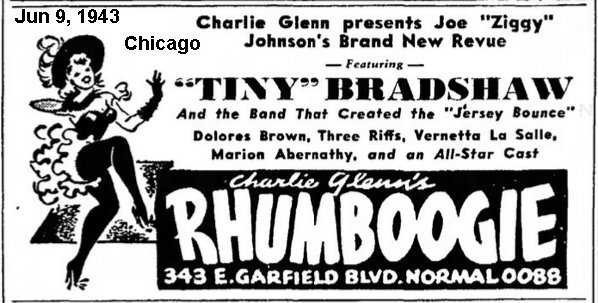
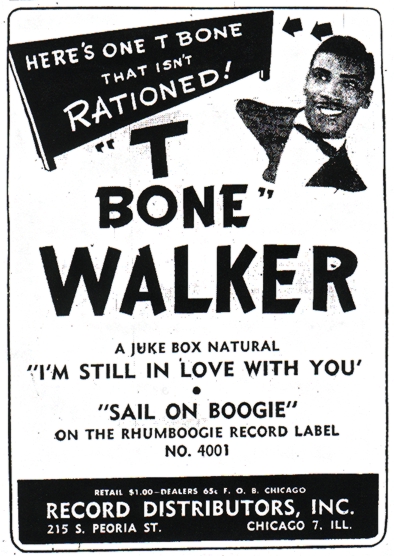
The opening night's performance was the first of Tiny Bradshaw and His Orchestra's eight-week residency. Then came T-Bone Walker — the electric guitar pioneer who spent a nine-month run at the Rhumboogie that became legendary. The club launched its own record label in October 1944, coinciding with T-Bone Walker's third stint at the venue. A South Side supper club was running its own record label. That is how seriously the people in these rooms took the music.
And a young singer named Dinah Washington — then still cutting her teeth in the city's clubs, not yet the Queen she would become — sang at the Rhumboogie at twenty-two, one of the stops on her rise in the national R&B scene.
The club closed as the result of a fire on December 31, 1945. Reopening in June 1946, it never fully regained its original form, and closed for good in May 1947. Five years. The Rhumboogie had just five years at full power. But those five years — with Joe Louis at the door, T-Bone Walker on the stage, and the South Side in full postwar stride — were enough to make it permanent in the story.
Joe's Deluxe: The Room That Made Room for Everyone
Not every show lounge on the South Side drew from the same playbook. In fact, some of the most memorable and packed rooms in Bronzeville were built around something the larger clubs rarely centered: the art of transformation.
Joe Hughes quit his job as a fur salesman and, after witnessing the popularity of Chicago's Drag Balls, invested in a new venue at 5524 South State Street with the idea of staging a review of female impersonators. "Joe's Deluxe" opened its doors in 1938. What Hughes built was unlike anything else on the strip. Joe's Deluxe became the home of the female impersonator revue — an elaborate, fully produced show featuring performers who packed the house night after night with audiences that crossed every conceivable social boundary.
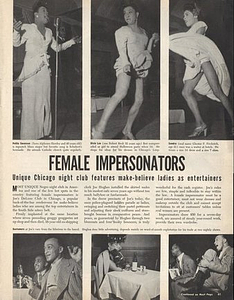
Joe's Deluxe quickly became Bronzeville's most popular club of its kind in the late 1940s. Famous female impersonators in the circuit performed in this establishment. Valda Gray, the 1930s pioneer of drag shows on the South Side, served as producer of the popular review of four impersonation shows — all introduced by comedian Calla Donia — that were presented per night.
This was not a fringe venue. This was not a hidden room. Heterosexuals attended the female impersonators' performances en masse — South Side families, working people, middle-class couples, all of them filling seats to watch performers who were, by any measure, extraordinary artists. As a proof of Hughes' respectability, Ebony Magazine noted that he was friends with Eddie 'Rochester' Anderson and Joe Louis, along with other celebrities.
Joe's Deluxe is part of this story because it tells you something true and important about the South Side entertainment world that the rest of America was not ready to hear: that Black Chicago's nightlife had always been more expansive, more inclusive, and more complex than any one version of the story allows. The show lounge world held multitudes. Joe Hughes understood his audience and built for all of them — and they came.
The Regal Theater: Where the South Side Sat in Velvet
You could walk the whole circuit — DeLisa to Rhumboogie along Garfield, Joe's Deluxe on State Street, the Roberts Show Club down on King Drive — and still not have told the full story without stopping at 47th Street. Because at 47th and South Parkway stood the Regal Theater, and it was the crown of it all.
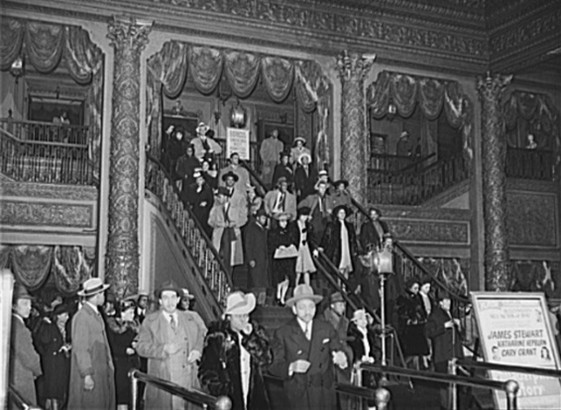
Built at 47th and South Park Boulevard — now Martin Luther King Drive — the Regal opened in the heart of the Black community. Although it was often compared to New York's Apollo Theater in Harlem, the Regal actually opened six years earlier than the Apollo and had double the seating capacity. Its beautiful interior was described by the Chicago Defender as "an Oriental garden on a moonlight night."
Its architecture was the talk of the town. Its Spanish Baroque-revival facade and interior was based on the Moorish designs of North Africa and Spain. The auditorium ceiling was designed to affect the underside of an Arabian tent. The sky and distant castles were painted into the interior facade. The theater's featured act was typically a 22-piece jazz band, the "Regalettes" chorus line, and a Barton House organist.
Now picture yourself walking through those doors on a Friday evening. You weren't just going to a show. You were entering a palace — one built in your neighborhood, staffed by your neighbors, showing the faces of people who looked like you, under a painted sky that felt like the whole world had been opened up for your pleasure.
Nat King Cole, Cab Calloway, Louis Armstrong, Ella Fitzgerald, Sarah Vaughan, Lena Horne, Dinah Washington, Ethel Waters, Miles Davis, Sammy Davis Jr., Moms Mabley, Lionel Hampton, Dizzy Gillespie, and Duke Ellington performed frequently at the theater from the 1920s through the 1940s. Later, the Regal welcomed the entire Motown universe — the Temptations, the Supremes, the Four Tops, Marvin Gaye, Stevie Wonder. In 1962, twelve-year-old Stevie Wonder recorded his famous live version of "Fingertips" at a Motortown Revue at the Regal. In 1964, during a performance at the theater, Aretha Franklin was crowned "the Queen of Soul."
Nat King Cole got his professional start at the Regal Theater. Chicagoans first met Sam Cooke and Al Green at the Regal. Richard Pryor. Dick Gregory. Moms Mabley. Redd Foxx. The Regal held them all. It was where careers were launched, where reputations were confirmed, where a performer who could win over a South Side Regal audience knew they could win over any audience anywhere.
Considered the apex of the entertainment world in Chicago, the Regal rendered a tremendous boost to the city's Black culture and Black economy. So important was the Regal Theater to the Grand Boulevard community that when the Chicago Land Clearance Commission razed it in 1973, many businesses in the surrounding area went into decline.
They tore it down. The community protested, and they tore it down anyway. Some things you don't forgive, and some losses you don't explain — you simply name them.
The Pershing Hotel and Budland: Where 63rd Street Made History
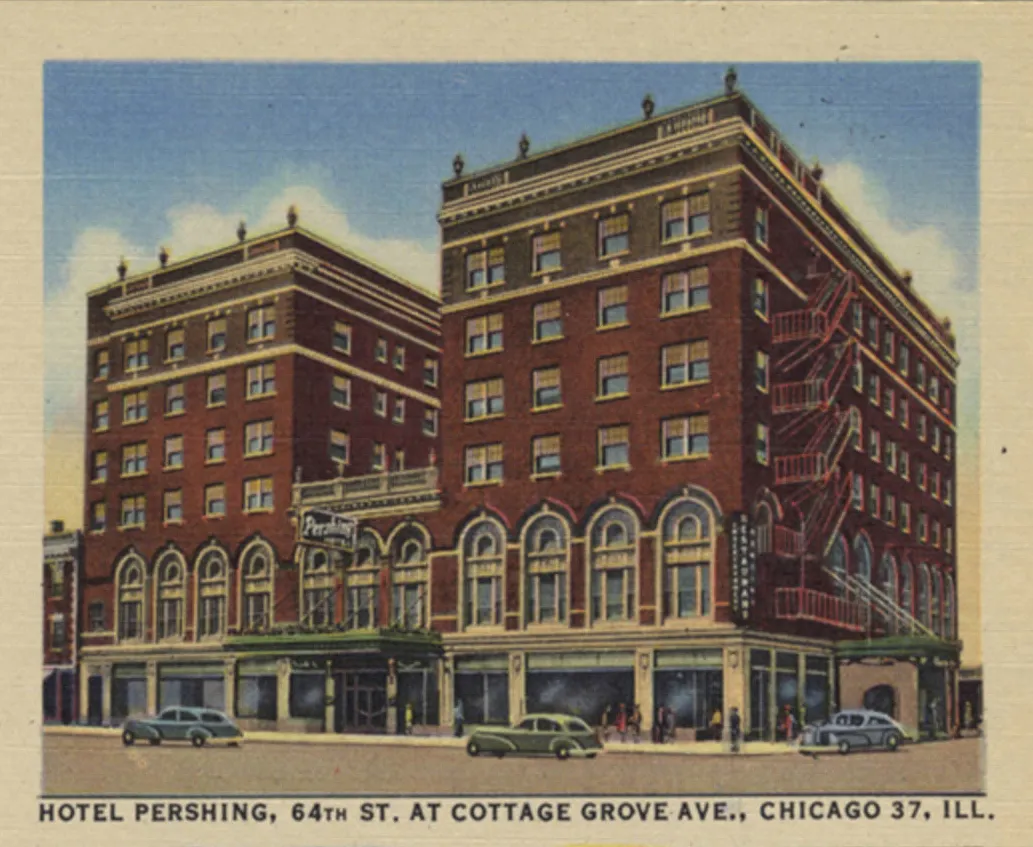
If Garfield Boulevard was the heartbeat of the South Side show lounge world in the 1940s, by the 1950s the action had begun to pulse further south — down to 63rd Street, where a new constellation of clubs was forming around the Pershing Hotel at 64th and Cottage Grove.
As Chicago's Black Belt expanded in the 1940s, white residents moved out of this pocket of Woodlawn, and the hotels and ballrooms began their second lives as hubs of the South Side's African American jazz and social scene. The Pershing Hotel became Black-owned in 1943, and would go on to host countless artists, including Earl Hines, Ahmad Jamal, and Charlie Parker, in its ballroom through the 1950s and 1960s.
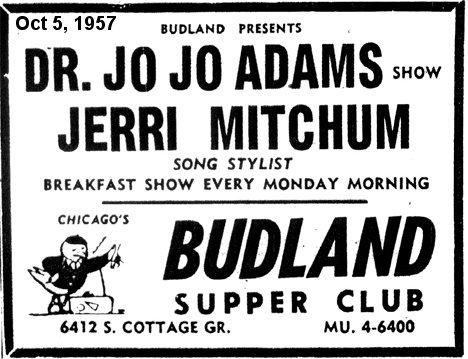
Located in the basement of the Pershing Hotel at 6400 South Cottage Grove, Budland was one of the most popular nightclubs in the city for 15 to 20 years. It started out as a premier jazz club in one of the most fertile jazz districts in the city and featured such legends as Charlie Parker, Miles Davis, Lester Young, Dizzy Gillespie, Billie Holiday, Dinah Washington, and Sun Ra in the mid-1950s. By the late 1950s it began drawing doo-wop crowds. By the early 1960s it was soul and R&B all the way. Budland reportedly featured the "baddest" dancers in town during its soul years. It was generally accepted that you dared not enter Budland unless you could flaunt serious dance moves.
That last detail deserves to be savored. A club with an unspoken but fully enforced standard: if you come here, you better be able to move. The South Side had opinions about dancing, and the dance floor at Budland was where those opinions were expressed.
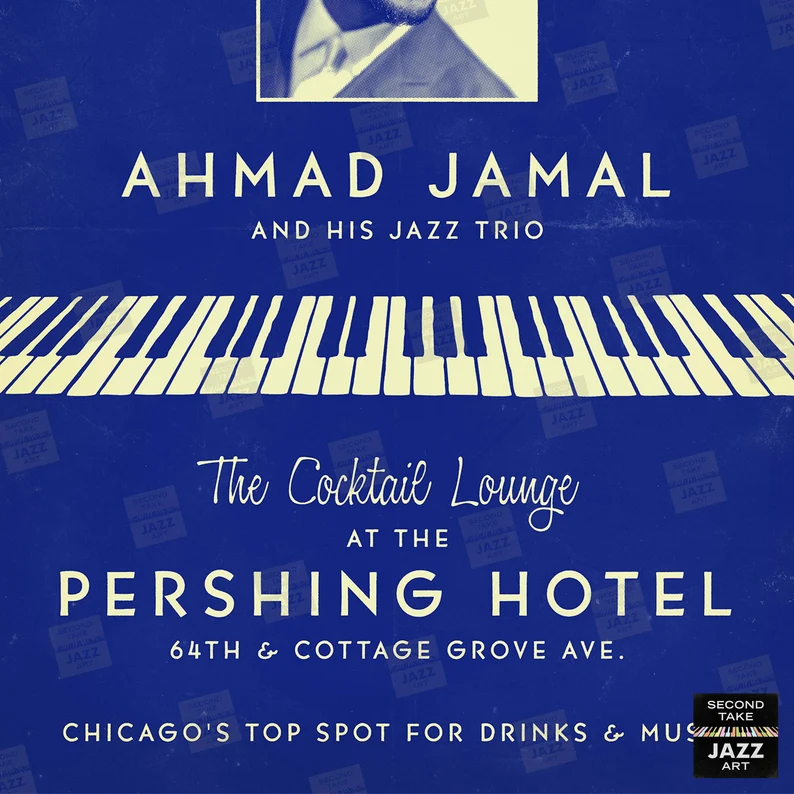
But the Pershing Hotel's deepest mark on music history was made upstairs, in the lounge — and it was made by a piano player named Ahmad Jamal. The trio worked as the "House Trio" at Chicago's Pershing Hotel, with bassist Israel Crosby and drummer Vernel Fournier. They released the live album, Live at the Pershing: But Not For Me, which stayed on the ten best-selling charts for 108 weeks.
At The Pershing: But Not For Me was much more than a record: it was a phenomenon. Its fame and popularity spread like wildfire. It topped America's jazz charts for months. "That album sold over one million copies and is still selling," Jamal later recalled, the note of disbelief still audible in his voice decades later. Jamal's trio, especially through its influence on Miles Davis, would come to be recognized as a seminal force in the history of jazz. Miles Davis told his own musicians to study Jamal. To listen to how he used space — what he chose not to play — as much as what he did play.
One million copies. Sold off the back of a live recording made in a hotel lounge on the South Side of Chicago. That is what the Pershing Hotel sent out into the world.
Dinah Washington: The South Side's Own Queen
Before we go further, we have to stop and sit with Dinah Washington. Because no account of Chicago's supper club era is complete — not even close — without the woman who was born Ruth Lee Jones in Tuscaloosa, Alabama, moved to the South Side as a child, won an amateur contest at the Regal Theater at fifteen, and went on to become one of the most consequential voices in American music.
She performed and recorded in a wide variety of styles including blues, R&B, and traditional pop music, and gave herself the title of "Queen of the Blues." She was also known as "Queen of the Jukeboxes."
She started in the church — playing piano and directing her choir at St. Luke's Baptist Church, studying under the great gospel singer Sallie Martin. Then she moved to the clubs. In 1943, she performed at Chicago nightclubs including the Rhumboogie Club. She also joined the house band at the Garrick, a more prestigious downtown lounge, where she also worked as a washroom attendant. A washroom attendant during the day. A performer at night. The South Side knew what it had in her before the rest of the world figured it out.
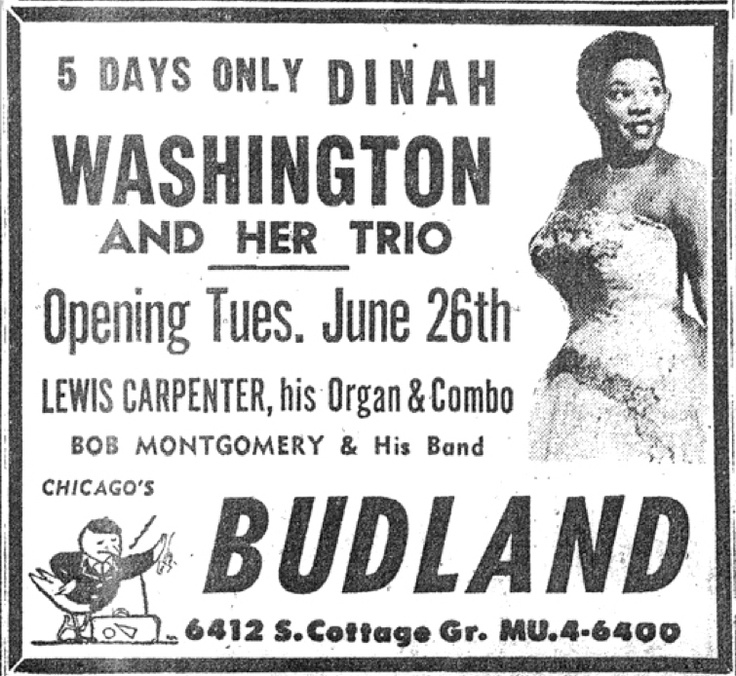
Lionel Hampton figured it out first. He heard her, hired her, and took her on the road. From 1943 to 1946 she sang with his orchestra. Then she went solo, signed with Mercury Records, and over the next decade and a half, she recorded forty-five songs that charted on the Billboard R&B and Pop charts. Her flexibility as a vocalist meant she was equally at home in front of lush orchestras as she was doing gigs in intimate, smoky jazz clubs.
When Dinah Washington walked into a supper club — and she walked into the DeLisa, the Roberts Show Club, rooms all over the South Side — she brought something that no room was big enough to fully contain. She was funny. She was fierce. Legend has it that she was as fierce and assertive in her own life as she was in the studio. Her goddaughter Patti Austin recalled, "She might have thrown instruments at musicians, but she could easily shower them with presents." She wouldn't put up with mistakes, expecting the same high standard from them as she had for herself.
She died in December 1963 at thirty-nine years old, gone too soon. The city she grew up in — the clubs that formed her, the South Side audiences that claimed her as their own — named a park after her. She earned it.
Herman Roberts: The Man Who Put It All Together
If Dinah Washington was the soul of the South Side's show lounge era, Herman Roberts was its architect. Not an architect who played or sang or danced. An architect who looked at a neighborhood, understood exactly what it needed, and built it.
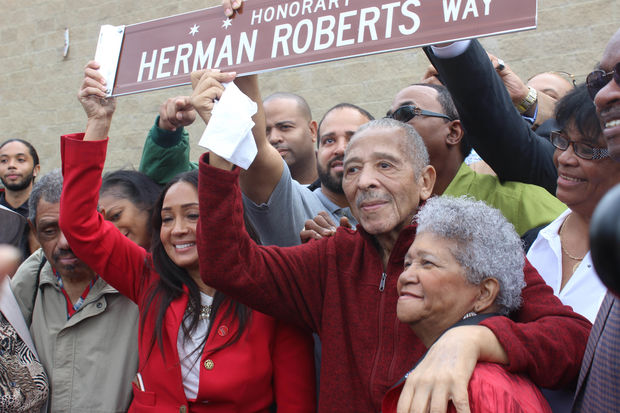
Herman was born with a passion for change and a desire to succeed by turning his dreams into realities. Born in Beggs, Oklahoma in 1924, he moved with his family to Chicago when he was 12 years of age. When most boys in the 1930s were playing or involved in after school activities, Herman was hanging out at a South Side cab garage. He worked for dimes wiping down cabs. By fifteen he was driving one. By 1944, at twenty years old, he owned Roberts Cab Company with a fleet of more than fifty cars criss-crossing the South Side — at a time when white-owned cab companies routinely refused to pick up Black passengers.
In 1952 he opened his first nightclub, the Lucky Spot, at 605 East 71st Street. Two years later, he converted a garage that had once held his cab fleet into something different. Something grander. The Roberts Show Club — at 6622 South Parkway, now Dr. Martin Luther King Jr. Drive — opened its doors and changed the definition of what a South Side entertainment venue could be.
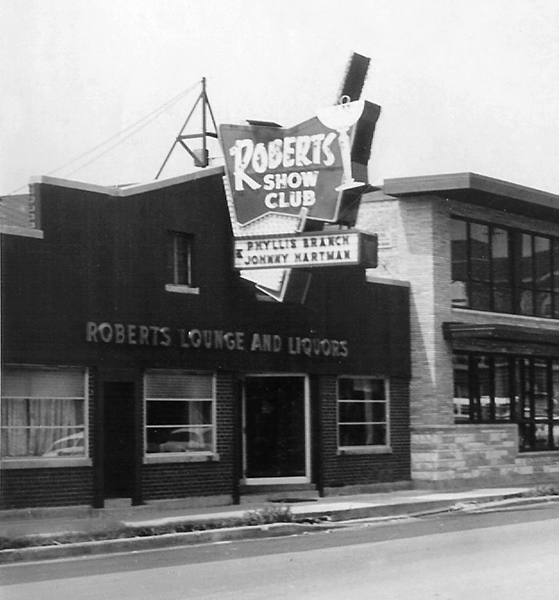
During its heyday, Roberts Show Lounge was the social place to be, and he was the South Side Chicago nightlife operator to know. It presented different Black music cultures from jazz, swing, and ballads to pulse-pounding R&B.
The names who played the Roberts Show Club read like a roll call of American music history: Sammy Davis Jr., Count Basie, Nat King Cole, Dinah Washington, Redd Foxx, Della Reese, Dick Gregory, Billy Eckstine, Smokey Robinson, Ramsey Lewis, Sarah Vaughan, Jackie Wilson, Sam Cooke, Lionel Hampton. On any given weekend, the Roberts Show Club stage held someone whose name you recognized from a record on your shelf.
Herman Roberts knew how to sequence a show. He understood what an audience needed and when they needed it. He once said: "He could put Sam Cooke to shame! Don't bring Jackie Wilson on first and then bring out Sam Cooke behind him! It ain't gonna work!" That was the showman's mind at work — knowing not just who you were booking, but in what order, and why.
Segregation did not exist at Roberts Show Club. This was the place to be and be seen, the most talked-about Black-owned and operated club in the country. Businessmen and athletes were regulars — Joe Louis, Muhammad Ali. Civil rights leaders. Future President Jimmy Carter made sure he came to Roberts while in Chicago. Local politicians like Representative William Dawson, Congressman Ralph Metcalfe, and a young attorney who would later become the first Black Mayor of Chicago, Harold Washington, all patronized Roberts Show Club. Even Mayor Richard J. Daley was a frequent guest.
That last sentence deserves to breathe. The mayor of Chicago — at a time when city hall and the Black South Side were in constant political tension — was a regular at Herman Roberts' club. That is how good the room was. That is the reach Herman Roberts had built, from a ten-cent car wash to the most talked-about club in the country.
Unlike downtown entertainment venues where Black audiences were not welcomed, Roberts welcomed everyone and opened his doors to whites as well. It was not uncommon to see white celebrities at the Roberts Show Club — Playboy publisher Hugh Hefner, Chicago Sun-Times columnist Irv Kupcinet, singer Tony Bennett.
But Roberts understood something practical and painful about the world his performers were living in. Because of segregation, the Black entertainers had nowhere to stay when in town. So Roberts did what he always did — he built the solution himself. Knowing that Black entertainers and customers weren't welcome at most downtown hotels, Roberts in 1960 built the first Roberts Motel across the street from the Roberts Show Club. The performers who sang on his stage could sleep across the street in dignity, without being turned away at a downtown hotel door.
He eventually built six South Side motels. His pride and joy — the sixth motel, with its winding staircase, chandelier that fell from nearly the roof, terrazzo floors, and a 500-seat ballroom — became known simply as the 500 Room, one of the most beautiful social spaces on the South Side.
The Roberts Show Club closed in 1961. Herman Roberts lived to ninety-seven, long enough to see a stretch of King Drive officially named Herman Roberts Way. He died in Las Vegas in early 2021, still recognized by transplanted Chicagoans wherever he went. He never learned to sing or dance or tell a joke. He just built the room where it all happened — and kept it running, with pride, for everyone who walked through the door.
The Comedians: They Were Ready for Prime Time Long Before Prime Time Was Ready for Them
The singers got the marquees. The comedians got the room warmed up. And on the South Side's show lounge circuit, warming up the room meant doing something genuinely dangerous — making a segregated America laugh about itself, with a mostly Black audience that understood every single reference and needed no translation.
Real Black folk humor survived and thrived in Black nightclubs and theaters such as the Apollo in Harlem and the Regal in Chicago in the 1930s, 1940s, and 1950s. In these settings, known as the "Chitterlin' Circuit," comedians including Moms Mabley, Redd Foxx, and Slappy White performed without restrictions.
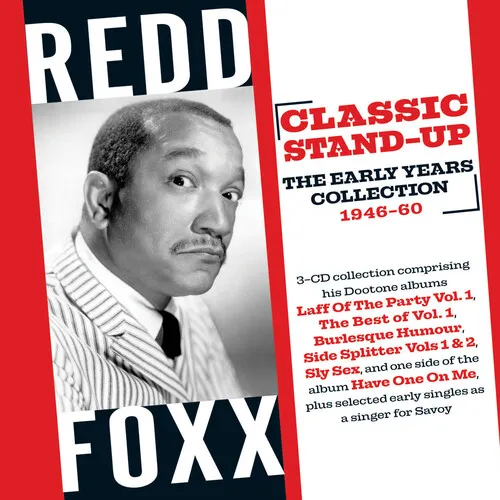
Redd Foxx — born John Elroy Sanford, whose red hair earned him the nickname "Chicago Red" — was a Chitlin' Circuit veteran who honed a style of comedy that was raw, fearless, and absolutely not appropriate for white television. For years, his party albums were not available in white record stores. That didn't stop him from building one of the most devoted followings on the circuit. South Side audiences knew him. The Roberts Show Club knew him. He was a regular, and a great one. The television show and the mainstream fame came later. What came first was the South Side.
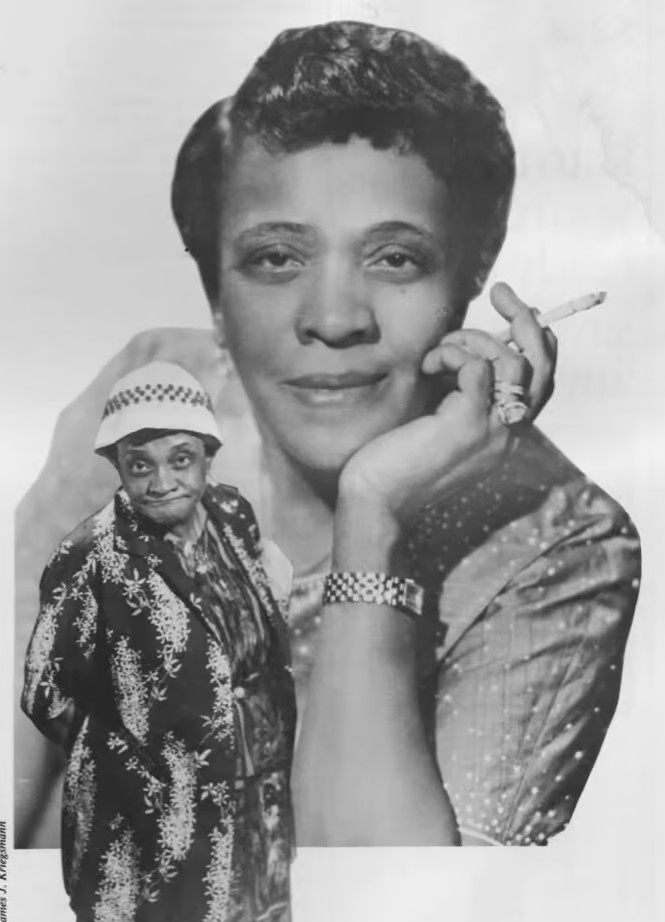
Moms Mabley — Jackie "Moms" Mabley — was a generation older and had been working the circuit since the 1920s, always in character as a wisecracking old woman who had seen everything and feared nothing. She talked about sex, about race, about men and their shortcomings, with an old lady's license to say whatever she wanted and the room's full permission to howl. She was a veteran of the Chitlin' Circuit. It was really important when someone like her broke through to the mainstream because she had been honing her craft for decades — out in the shadows of white America.
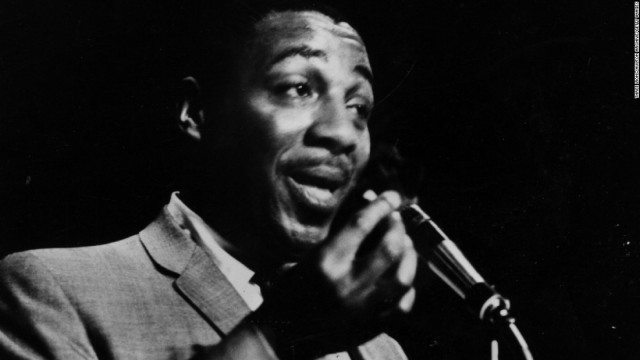
And then there was Dick Gregory — who found his voice and his footing on the South Side. In 1959, Gregory landed a job as master of ceremonies at the Roberts Show Club. He was working the postal service during the day and doing comedy at night, and it was at the Roberts Show Club that Hugh Hefner saw him perform. After Hefner saw Dick Gregory perform there, he hired him to perform at his Playboy Clubs. That connection changed Gregory's life — and eventually changed American comedy. The South Side incubated that. The Roberts Show Club was the proving ground.
The Audience: Well-Dressed, Well-Fed, and Fully Present
Here is something that tends to get lost when we talk about the entertainers: the people in the seats were also part of the performance.
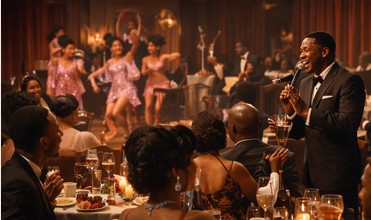
The supper club and show lounge audience was not a concert crowd. You didn't stand and hold a lighter over your head. You sat at a table. You had a tablecloth. You had food — real food, not bar snacks. You had a drink in front of you and likely another on the way. And you were dressed. Maybe not white tie and tails — that was the ballroom world, the formal club world of Part 3. But sharp. A man in a good suit, tie knotted just right, cufflinks on. A woman in a dress she'd chosen carefully, hair done, earrings that caught the stage light. You came presenting yourself, because the people around you were presenting themselves, and that was part of the agreement.
The South Side audiences at these clubs were sophisticated listeners. They knew the music. They had the records at home. They had seen these performers before, or had friends who had, and the word-of-mouth between South Side households about who was performing and when was its own entire communications network. Roberts is credited with giving thousands of jobs to Black Chicagoans who had few employment and economic opportunities in a city that grew increasingly segregated over the years. The people working these clubs — the waitstaff, the bartenders, the coat check attendants, the musicians in the house band — were the same community as the people sitting at the tables. Everyone was invested in how the evening went.
And the evenings went late. Very late. The DeLisa was open until dawn. The Roberts Show Club ran deep into the night. You didn't check your watch at a show lounge. You checked it when you finally stepped back outside and the sky was a different color than when you went in.
When the Era Shifted
"It was a great thing, but it hurt my business." That was Herman Roberts, talking about the Civil Rights Act of 1963 and the Voting Rights Act of 1965 — legislation that was long overdue, hard-won, and morally unambiguous. He did not hesitate saying it was the right thing. And he also didn't hesitate acknowledging what it cost him personally. Hotels and other white business establishments could no longer refuse the Black dollar. Black entertainers who were performing in Chicago now had a choice of where to stay — Roberts Motel or the Hyatt, Palmer House or other downtown hotels.
The Roberts Show Club closed in 1961. The Rhumboogie had been gone since 1947. The Club DeLisa closed in 1958. In the 1960s and 1970s, the South Side's tradition of music and nightlife continued as newer clubs opened in formerly all-white neighborhoods that became majority-Black to the south, east, and west of the original Black Belt. The scene didn't die. It migrated and evolved. But the concentrated, electric, self-contained world of Garfield Boulevard — where you could walk ten minutes from the DeLisa to the Rhumboogie and pass smaller clubs with their own live bands the whole way — that particular world was not rebuilt. Some worlds only get built once.
Walking down the relatively empty sidewalks of Garfield Boulevard today, it is difficult to imagine the 24-hour bustle that could be found there decades ago. The buildings that once housed the Rhumboogie Club and the Club DeLisa have all been torn down, replaced by lots that sit empty.
But those lots were once rooms. And those rooms were once full. Full of the music of Red Saunders' band swinging into a third set at 4 a.m. Full of Dinah Washington standing at a microphone demanding perfection from herself and everyone around her. Full of Redd Foxx making a roomful of well-dressed people laugh until they couldn't breathe. Full of Ahmad Jamal at the Pershing, playing "Poinciana" so quietly and so perfectly that a room of South Siders went still. Full of Herman Roberts moving through his club in his finest suit, making sure everything was right, making sure his guests had what they came for.
The stage took over the South Side — and for about three extraordinary decades, what happened on those stages shaped American music, American comedy, and American culture in ways that the rest of the country is still catching up to.
You can read the full Chicago After Dark series from the beginning: Introduction | Part 1: When Jazz Ruled the Night | Part 2: The Stroll — The Street That Built the Sound | Part 3: When Chicago Dressed Up
Stay connected with news and updates!
Join our mailing list to receive the latest news and updates from our team.
Don't worry, your information will not be shared.
We hate SPAM. We will never sell your information, for any reason.
