
The Two Black Blues Men Behind the Name "Pink Floyd"
Apr 30, 2026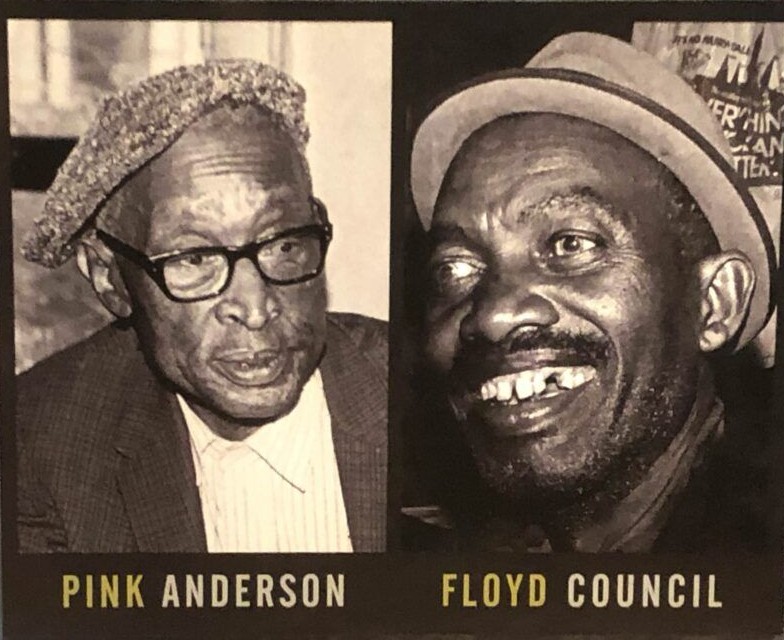
One of the most famous band names in rock history belongs to a group of white musicians from London. But the name Pink Floyd? That came from two Black men from the American South who spent their lives playing the blues — and never got a dime, a credit, or so much as a thank-you note for it.
Here's the story.
First, the Band That Didn't Know What to Call Itself
In the early 1960s, a group of young musicians in London were still trying to figure out who they were. They cycled through names the way most bands do at that stage — trying on identities and discarding them. They called themselves Sigma 6 for a while. Then The Meggadeaths. Then The Screaming Abdabs. Then The Abdabs. Then simply Leonard's Lodgers, after the address where some of them lived. By the mid-1960s, they had landed on The Tea Set — a name that was perfectly British and perfectly forgettable.
The core lineup at this point included Syd Barrett, Nick Mason, Roger Waters, and Richard Wright — the group that would eventually become one of the most celebrated rock bands of the 20th century, known for albums like The Dark Side of the Moon, Wish You Were Here, and The Wall.
But they weren't any of that yet. They were just The Tea Set, playing gigs around London's underground music scene, building an audience one show at a time.
Then came the night that changed everything — and it happened in the most ordinary, accidental way possible.
The Night the Name Was Born
It was late 1965. The Tea Set showed up to a gig and discovered that another band — also called The Tea Set — was already on the bill. Two bands with the same name on the same night. Something had to give.
Syd Barrett, the band's creative force and frontman, had to come up with something on the spot. He reached into his memory, pulling from something he'd been carrying around for a while: a record he owned, an album by the legendary Piedmont blues guitarist Blind Boy Fuller. On the sleeve of that record, in the liner notes written by blues historian Paul Oliver, were two names among a list of musicians who had worked the Carolinas and Georgia: "Pink Anderson or Floyd Council — these were a few amongst the many blues singers that were to be heard in the rolling hills of the Piedmont, or meandering with the streams through the wooded valleys."
Barrett took the first name of one and the first name of the other. Pink. Floyd. That night, The Tea Set became The Pink Floyd Sound. It was soon shortened to Pink Floyd, and the name stuck for the next fifty years.
Pinkney "Pink" Anderson (1900–1974)
The Medicine Show Man from South Carolina
Pinkney "Pink" Anderson was born February 12, 1900, in Laurens, South Carolina, and raised in nearby Greenville and Spartanburg. He came of age in the era of the traveling medicine show — a very American institution where a huckster would roll into town with a wagon full of bottled tonics and miraculous cures, and hire musicians, comedians, and dancers to draw a crowd while he sold his remedies to whoever would buy them.
Anderson joined Dr. William R. Kerr of the Indian Remedy Company in 1914 to entertain the crowds while Kerr tried to sell a concoction purported to have medicinal qualities. He was employed not only as a musician and singer but as a dancer and comedian. Pink Anderson was fourteen years old. He would spend much of the next several decades doing exactly this — traveling the back roads of the South with medicine shows and on his own, playing blues, folk, ragtime, and old ballads for anyone who would listen.
His style was rooted in what music historians call the Piedmont blues — the sound that grew out of the rolling hills and mill towns of the Southeast, characterized by a finger-picking guitar technique that was more melodic and rhythmically intricate than the rawer Delta blues developing further west. Anderson was a storyteller as much as a musician, and his repertoire ranged widely. He wasn't just a blues man — he was a complete entertainer in the old tradition, the kind who could hold a crowd in a tent or on a street corner or in a small club with nothing but a guitar and a voice full of life.
In the 1950s, Anderson toured with Leo "Chief Thundercloud" Kahdot of the Potawatomi tribal nation and his medicine show, often with the harmonica player Arthur "Peg Leg Sam" Jackson. Anderson was recorded by the folklorist Paul Clayton at the Virginia State Fair in May 1950. By the early 1960s, he was recording albums and performing at live venues, finally getting some of his music documented for posterity.
He reduced his activities in the late 1960s after a stroke. A final tour took place in the early 1970s with the aid of Roy Book Binder, one of his students, taking him to Boston and New York City.
Pink Anderson died on October 12, 1974, in Spartanburg, South Carolina — the city where he had spent most of his life. He was 74 years old. His name had been attached to one of the biggest rock bands in the world for nearly a decade by then. There is no record that he ever knew.
Floyd Council (1911–1976)
The Man Who Became a Footnote
Of the two men whose names Syd Barrett joined together that night in 1965, Floyd Council's story is the one that stays with you longest — and not for reasons that feel good.
Floyd Council was born September 2, 1911, in Chapel Hill, North Carolina. He began his musical career on the streets of Chapel Hill in the 1920s, performing with two brothers, Leo and Thomas Strowd, as the Chapel Hillbillies. He was a teenager, playing for tips on street corners and at parties, learning his craft in the open air the way most blues musicians of his generation did.
He later played his fine Piedmont-style fingerpicking guitar on the streets of nearby Durham, where he met and befriended Fulton Allen — better known to history as Blind Boy Fuller, perhaps the central figure of the Piedmont blues. That friendship would define Floyd Council's brief recording career.
In 1937, Council joined Fuller on three recording trips to New York, at the invitation of a talent scout for the American Record Corporation. Between the three sessions he recorded twenty-seven tracks, including eight of his own. That's all we'll ever hear of him. His entire career as a recording artist spanned eleven months. Then the sessions stopped, the world moved on, and Floyd Council disappeared from the official story of American music.
He kept playing locally through the 1940s and 1950s — at country clubs, Elks lodges, local dances, on the radio. He also drove long-haul trucks to make ends meet. By the early 1960s, an unspecified illness had begun to slow him down. Then, in the late 1960s, a stroke partially paralyzed his throat muscles and slowed his motor skills, though it did not significantly damage his cognitive abilities. He remained, by all accounts, sharp in mind — a man who knew what he had been, what he had done, and what the world had done with it.
By the early 1970s, historians and blues researchers had begun to track him down. What they found was devastating. He was living by himself in a somewhat rough home, still not fully recovered from the stroke. A historian who visited around the same time said that Council was very ill and living in extremely poor conditions — in such bad shape that it wasn't possible to discuss his playing days. Unable to work, he moved in with his daughter.
In 1973, his son James, twenty-four years old, was murdered in Greensboro — shot in the chest. Floyd Council lived three more years after that.
Floyd Council's heart gave out on May 9, 1976. He was sixty-four years old. He was buried at White Oak AME Zion Cemetery in Sanford, North Carolina — broke, a widower, without a marker on his grave. The grass grew long over the spot. Trees came up. The church that stood nearby was eventually torn down. For decades, the grave of the man whose name is carried by one of the most successful rock bands in history was simply lost.
It wasn't until 2014 — nearly forty years after his death — that the Killer Blues Headstone Project placed a marker on Floyd Council's grave. He finally had a stone with his name on it.
By then, Pink Floyd had sold more than 250 million records worldwide.
What It All Means
Pink Anderson and Floyd Council never met each other, as far as anyone knows. They worked in the same musical tradition — the Piedmont blues of the Southeast — and they both crossed paths with Blind Boy Fuller, which is how their names ended up in the same liner notes, which is how a young Syd Barrett happened to see them side by side on an album sleeve on a particular afternoon in 1965.
Neither man ever saw a dollar from the band that carries their names. Neither was asked for permission. Neither was ever publicly acknowledged by the band during their lifetimes. Their names were taken the way so much has been taken from Black artists throughout American music history — not with malice, perhaps, but without thought, without credit, and without consequence for the people who did the taking.
What they left behind is real, though. Pink Anderson left a body of work that documents a way of making music that was already disappearing in his own lifetime — the traveling folk singer, the medicine show entertainer, the Piedmont storyteller. Floyd Council left twenty-seven recordings made over eleven months in 1937, songs with titles like "Poor and Ain't Got a Dime" and "I'm Grievin' and I'm Worryin'" — music that tells you everything you need to know about the life behind it.
And now you know their names — not because of the band that borrowed them, but because of what those men actually did.
Stay connected with news and updates!
Join our mailing list to receive the latest news and updates from our team.
Don't worry, your information will not be shared.
We hate SPAM. We will never sell your information, for any reason.
