
When Diplomacy Is Replaced by Force (Iran Approach - Obama vs Trump)
Mar 25, 2026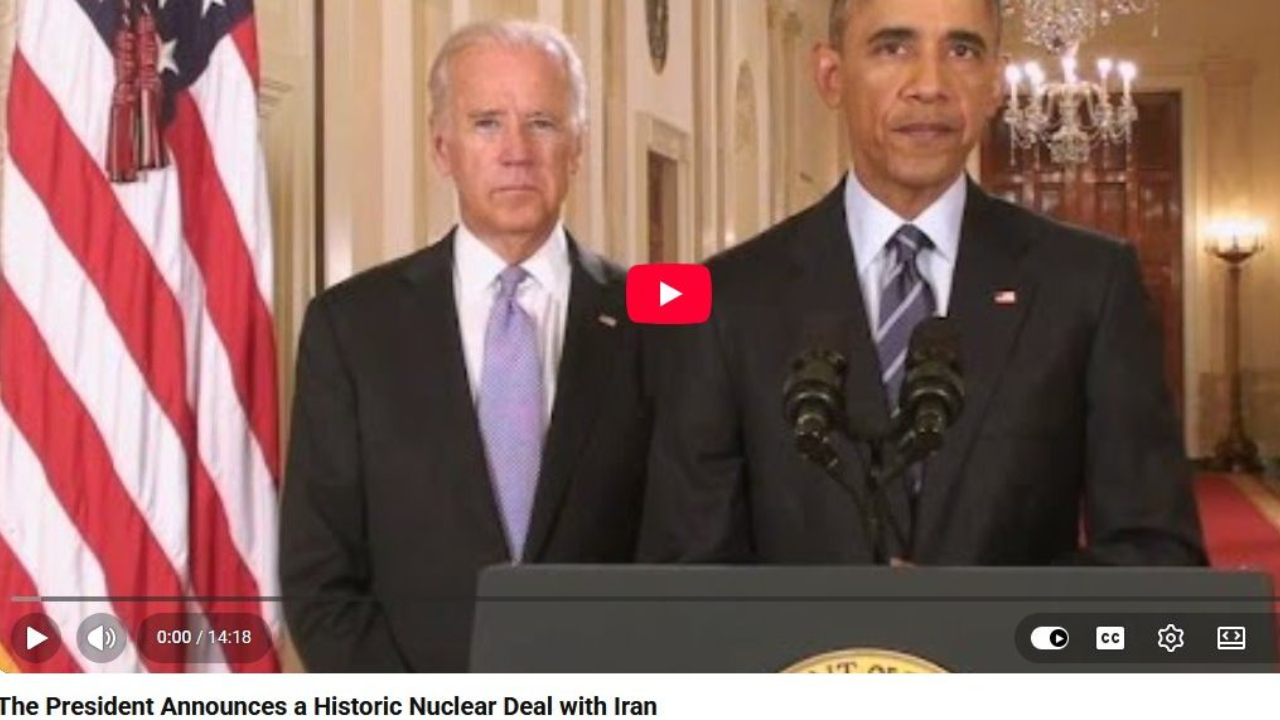
Click to hear President Barack Obama introduce the Joint Comprehensive Plan of Action treaty with Iran.
We are once again watching the United States engage in what can only be described as a war of choice.
President Trump has framed this moment as necessary—arguing that military action is required to stop Iran from developing a nuclear weapon. That explanation may sound familiar, but it leaves out a critical piece of recent history.
Just over a decade ago, the United States and its allies had already addressed this exact concern—through diplomacy.
What Was Already Accomplished
After five years of detailed negotiations, the Obama Administration, alongside global partners, reached an agreement with Iran known as the Joint Comprehensive Plan of Action (JCPOA).
Signed on July 14, 2015, the agreement:
- Placed strict limits on Iran’s nuclear program where approximately 97% of Iran's enriched uranium stockpile was converted to non-enriched forms or diluted.
- Required ongoing monitoring and verification by international inspectors
- Included participation from the U.S., U.K., France, Russia, China, and Germany
- Took effect on January 16, 2016
In exchange, Iran received relief from economic sanctions.
The goal was simple: reduce the risk of nuclear escalation through accountability and cooperation, not conflict.
What Changed
The JCPOA was not without critics. Among them was Donald Trump, who made it clear that he intended to withdraw from the agreement if elected. In May 2018, that’s exactly what happened. The United States exited the treaty, removing the very framework that had placed limits and oversight on Iran’s nuclear activity. Without those constraints, Iran resumed uranium enrichment—bringing us closer to the situation we face today.
A Familiar Cycle
Now, years later, we find ourselves in a troubling position. Military action is being used in an attempt to achieve what diplomacy had already accomplished.
Let’s be clear about what that means.
We are attempting to force, through bombs and escalation, the same outcome that was previously reached through negotiation and cooperation.
That approach raises a serious question:
If diplomacy worked once, why abandon it—only to return through conflict?
What Could Have Been
It’s worth considering where we might be today had the agreement remained in place. Continued diplomatic engagement could have:
- Strengthened relationships with allies
- Maintained oversight of Iran’s nuclear program
- Opened pathways for cooperation in energy and economic development
- Improved conditions for the Iranian people over time
Diplomacy is not fast. It is not always easy. But it creates space for long-term solutions. War does not.
The Cost of Force
The idea of “bombing a country into submission” may sound decisive, but history tells a different story.
Escalation often leads to:
- greater instability
- unintended consequences
- prolonged conflict
There is a reason previous administrations—across political lines—resisted direct military confrontation with Iran. Not because the challenges weren’t real, but because the risks were greater.
Separating Fact from Narrative
Recent public statements about the JCPOA have also come under scrutiny. According to reporting by NPR, claims made about the agreement in a recent Oval Office press conference were found to be inaccurate after fact-checking.
Bronzecomm Takeaway
This moment isn’t just about Iran. It’s about how decisions are made—and the long-term impact those decisions have on people, both here and abroad. We’ve seen this path before. The question now is whether we are willing to learn from it because the choice between diplomacy and war isn’t just political. It’s human.
Stay connected with news and updates!
Join our mailing list to receive the latest news and updates from our team.
Don't worry, your information will not be shared.
We hate SPAM. We will never sell your information, for any reason.
