What Happens When a Hero's Name Gets Erased?
Aug 27, 2026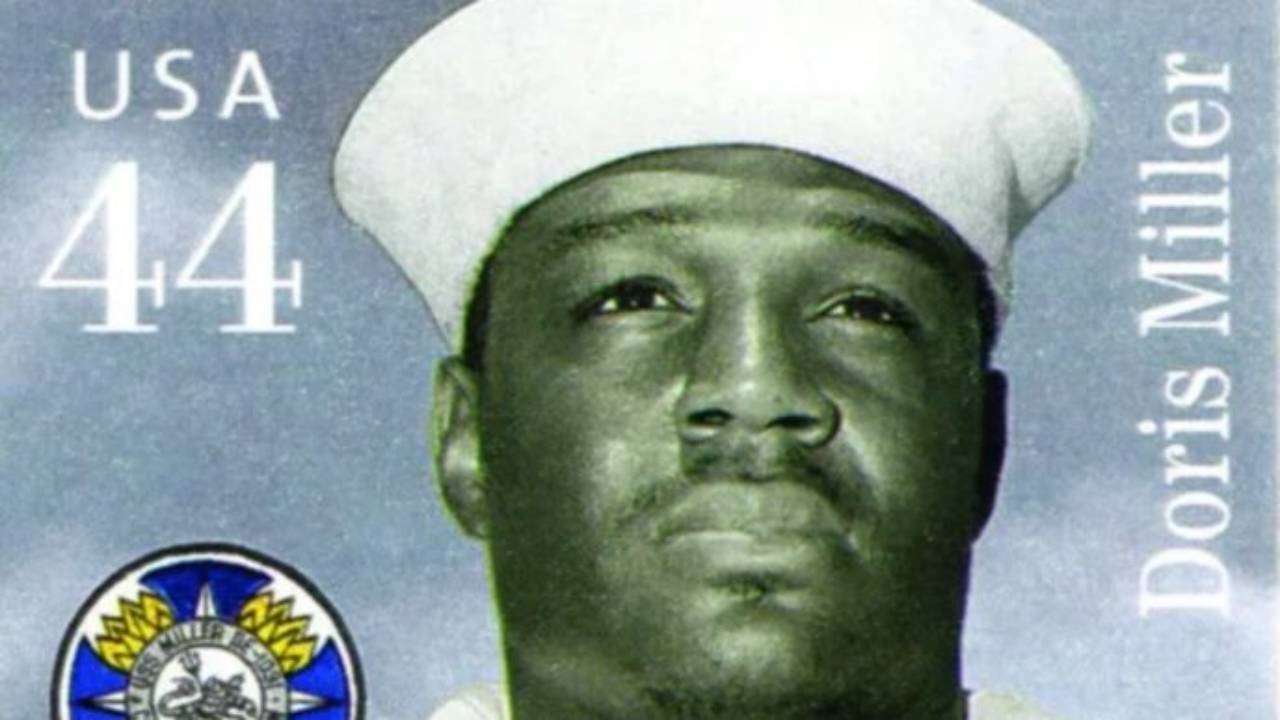
There was supposed to be a United States aircraft carrier called the USS Doris Miller — the first carrier in Navy history named for an enlisted sailor, and the first ever named for a Black American. Now, according to multiple news reports, Defense Secretary Pete Hegseth and President Trump are considering stripping Miller's name off that ship and replacing it with Trump's own.
Before we talk about what that means, we need to talk about who Doris Miller actually was — because his story is bigger than one ship, and it deserves to be told in full.
A Navy That Wouldn't Let Him Fight
When Doris Miller enlisted in September 1939, the United States Navy was segregated by policy. Black men could join, but they were barred from combat roles entirely. The only jobs open to them were mess attendant, cook, or steward — serving meals, shining officers' shoes, swabbing decks, doing laundry. It didn't matter how strong, how sharp, or how capable a Black sailor was. The Navy had already decided, before he ever set foot on a ship, what he was allowed to become.
Miller was 6'3" and 200 pounds, a former high school fullback and the ship's boxing champion. He was built for far more than kitchen duty. But in the Navy of 1939, that didn't matter. He was trained as a Mess Attendant, Third Class, and that was the ceiling.
A Waco Son, A Sharecropper's Grandson
Doris "Dorie" Miller was born October 12, 1919, in Waco, Texas, to Henrietta and Conery Miller. His people were sharecroppers, and his grandparents had been enslaved. He grew up working his father's farm and played fullback for Moore High School.
He joined the Navy in September 1939, right before his 20th birthday, the way a lot of young men did back then — to see something of the world beyond Waco, and to send money home to his family. He couldn't have known the Navy would hand him a mop instead of a rifle. He went anyway.
December 7, 1941
Miller was serving aboard the battleship USS West Virginia, moored at Pearl Harbor, on the morning the Japanese attacked. He'd already been up since 6 a.m. collecting laundry when the general alarm sounded.
As the ship took torpedo hits and began to list, Miller didn't hide and he didn't freeze. He ran toward the danger. He helped carry wounded sailors through smoke and wreckage to safety, then made his way to the bridge to help move his mortally wounded captain, Mervyn Bennion.
Then Miller did something no one had trained him to do and nothing in his job description asked of him: he took hold of an unattended .50-caliber anti-aircraft machine gun and started firing on the Japanese planes overhead. He had never operated the weapon in his life. "It wasn't hard," he said later. "I just pulled the trigger and she worked fine." He kept firing until he ran out of ammunition and was ordered to abandon ship.
Navy records officially credited him with shooting down one enemy aircraft; Miller and other eyewitnesses on deck that day said it was closer to four to six.
Recognized, Then Erased, Then Recognized Again
In the Navy's first accounts of the heroism at Pearl Harbor, Miller's name didn't appear at all. He was referred to only as the "unknown negro mess attendant." It took public pressure, including from the NAACP, before the Navy finally attached his name to his own actions.
On May 27, 1942, Admiral Chester Nimitz personally awarded Miller the Navy Cross, the Navy's second-highest honor for combat valor, making him the first African American ever to receive it. Many of the sailors and officers who knew what he'd done believed he deserved the Medal of Honor instead. Decades of advocates, including former Congresswoman Eddie Bernice Johnson of Texas, have spent years pushing for that upgrade. It still hasn't happened.
The Navy did put Miller to work in a different way after Pearl Harbor — as the face of a recruitment campaign encouraging Black Americans to enlist, touring the country as a spokesman for the war effort. Then he went back to sea.
He Never Came Home
In June 1943, Miller was promoted to Cook, Third Class — still capped by the same rules that kept Black sailors out of combat ratings, even after he'd proven himself under fire. Later that year he was serving aboard the escort carrier USS Liscome Bay when a Japanese torpedo struck it during the Battle of Makin. The ship sank in a matter of minutes. Of the crew aboard, 646 sailors died, including Doris Miller. He was 24 years old.
Why They Named a Ship After Him
In January 2020, the Navy announced that its newest Gerald R. Ford-class aircraft carrier, CVN-81, would be named the USS Doris Miller — the first time in Navy history an aircraft carrier would honor an enlisted sailor instead of a president or an admiral, and the first time one would honor an African American.
Then-Navy Secretary Thomas Modly said the idea came from a group of retired Black admirals, and that he believed one of the Navy's most powerful warships should carry the name of a sailor like Miller "to bring greater attention to what makes our Navy so unique — and great." The point, he said, was that ship names raise up "the heroism, patriotism and sacrifices of all American sailors — not merely their commanders."
For a man who was told by his own country's Navy that the only thing he was fit to do was cook and clean, and who then picked up a gun he'd never been trained on to defend his shipmates anyway, that ship carried real weight. It said: we see you, fully, not just as labor.
Where Things Stand Now
According to reporting from CNN, NBC News, ABC News and other outlets in August 2026, Navy leadership has been discussing renaming CVN-81 for President Trump instead. Sources told CNN that Navy officials have largely stopped referring to the ship internally as the USS Doris Miller, using only its hull number. No final decision has been formally announced, and the ship isn't expected to be delivered until 2034.
As part of the same discussions, officials have reportedly recommended Miller for the Medal of Honor — the recognition advocates have sought for over 80 years. That would still require approval from Congress and the president.
This wouldn't be the first Navy renaming under Secretary Hegseth. In 2025, he ordered the USNS Harvey Milk, named for the Navy veteran and gay rights activist, renamed for World War II Medal of Honor recipient Oscar V. Peterson. Hegseth has said ship names should reflect "the Commander-in-Chief's priorities, our nation's history, and the warrior ethos," and that vessels shouldn't be named for civil rights figures without a direct military connection — though it's worth noting Miller's connection to the military is not in question. He didn't just serve. He picked up a weapon he'd never touched before and used it to save his shipmates' lives.
Doris Miller's family has spoken out against the proposed change. Whatever the Navy ultimately decides, his story doesn't depend on a ship's name to be true. A sharecropper's grandson from Waco, told by his country he could only cook and clean, ran toward the fire anyway. That happened. No renaming can undo it.
Stay connected with news and updates!
Join our mailing list to receive the latest news and updates from our team.
Don't worry, your information will not be shared.
We hate SPAM. We will never sell your information, for any reason.
