
Two Pizzas, One City: Deep Dish vs. Tavern Style
Oct 07, 2026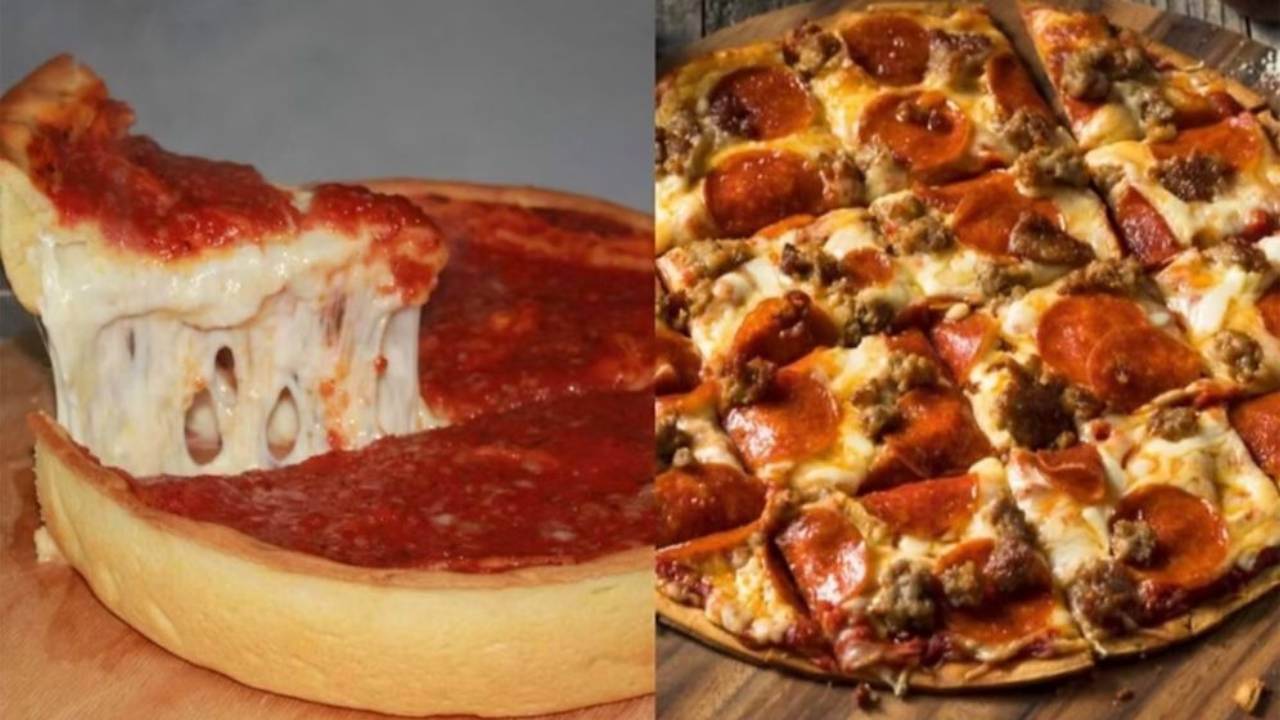
Here's a secret Chicagoans have been keeping from tourists for decades. The pizza on every visitor's checklist is not the pizza most locals order on a Friday night.
Deep dish is the one with the fame. Tavern style, the thin, crackly, square-cut pie, is the one with the loyalty. Both were born in Chicago within a few years of each other, both have a messy origin story, and both have fans who will defend them with a level of intensity usually reserved for the Cubs and the Sox. Let's take them one at a time.
Deep Dish: The Famous One
The official story starts in 1943 at the corner of Ohio and Wabash on the Near North Side. Ike Sewell, a former University of Texas football player, and his friend Ric Riccardo opened a restaurant. Sewell reportedly wanted to serve Mexican food, but Riccardo pushed for Italian, and the pizzeria that became Pizzeria Uno was born. They didn't make a thin, foldable pie. They built something tall, buttery, and loaded with cheese, with the sauce on top and a bake time of close to an hour. It was less a slice and more a sit-down meal that needed a knife and fork.
It worked. Uno's was popular enough that Sewell opened a second spot, Pizzeria Due, a block away in 1955.
So Who Actually Invented It?
Ask five Chicago pizza historians and you'll get a few different answers. Uno's has long credited Sewell. But Sewell was a businessman, not a cook, and that's where the arguments start.
- Rudy Malnati Sr. A 1956 Chicago Daily News article credited him with creating the original recipe. His sons later opened Lou Malnati's in 1971 and Pizano's in 1991, both deep dish institutions.
- Ric Riccardo. Cultural historian Tim Samuelson makes the case that Riccardo, who also ran a well-known Rush Street bar, was the real creative force, and that Sewell's contribution was keeping the business alive.
- Alice Mae Redmond. This is the name that deserves far more attention than it gets.
The Cook Who Changed the Crust
Alice Mae Redmond was a Black cook from Mississippi who came to Chicago during the Great Migration and worked the kitchens at Uno and Due in the 1940s and 50s. According to pizza historian Peter Regas, who spoke with her daughter, Redmond found the dough wasn't stretching well, so she reworked it using ideas from her family's Southern biscuit recipe, adding oil and a few other ingredients. That shift pushed deep dish toward the flaky, almost pastry-like crust people recognize today.
She didn't stay at Uno's. When two cab drivers, Fred Bartoli and Sam Levine, opened Gino's East in 1966, Redmond went with them and spent 29 years there developing the recipe, retiring in 1989. A year later, she helped a young restaurateur named Michael Coli open Old World Pizza in Elmwood Park, teaching him how to make deep dish. His family's suburban spot still serves it today, as an homage to her.
Where the credit lands depends on who you ask. Regas's research suggests Riccardo created the original pie and Redmond made it what it became. Whatever the exact split, her fingerprints are all over the version Chicago eats now.
Tavern Style: The One Locals Actually Order
If deep dish was built to be a meal, tavern style was built to be a snack. After World War II, Chicago taverns started serving a thin, cracker-crisp pizza cut into small squares. It was cheap to make, easy to hold with a beer in the other hand, and salty enough to keep customers ordering drinks. Many bars handed out free squares on napkins. The idea, as Chicago food writer Steve Dolinsky has put it, was a snack for the guys stopping in after work who still needed to save room for dinner at home.
That's where the name "party cut" comes from, and why the square cut isn't a gimmick. It was practical.
Who Was First?
Like deep dish, tavern style has no clean origin point.
- Granato's Pizzeria Napolitana was selling thinner pizzas in the 1930s, but a contemporary description compared its crust to an English muffin, which sounds a lot softer than the crackery tavern style we know today.
- Vito & Nick's on the South Side is often credited as the first true tavern-style pizza, which journalist Monica Eng traced to around 1946. The family behind it had been running taverns since the 1920s.
- Home Run Inn has a competing claim. The South Side tavern opened in 1923 and, according to the family, started handing out free square-cut pizza in the early 1940s before selling it in 1947. The name comes from a baseball that crashed through the front window. In 2024, a national food holiday group named it the official founder of National Tavern-Style Pizza Day, though that recognition is a celebration, not a ruling on who baked first.
The honest answer is that tavern pizza probably emerged from several South Side kitchens around the same time, which fits how most Chicago food works.
Italian Fiesta and the South Side Tradition
This is where tavern style becomes a neighborhood story. Italian Fiesta Pizzeria, a family-owned South Side spot that dates back to the late 1940s, is one of the places that kept the style alive for generations. It was started by Phillip DeCarlo, who set out to make homemade food from family recipes. Locations in South Shore and Auburn Gresham, along with suburban shops, serve the same thin crust, square cut pie, and the restaurant says it has been a favorite of the Obama family.
It's the kind of place that doesn't show up on tourist lists but shows up in every South Side family's memory. The crust is thin and crisp, the toppings are generous, and the squares are meant to be passed around the table.
Side by Side
- Crust: Deep dish is thick, buttery, and pastry-like. Tavern is thin and crisp enough to snap.
- Build: Deep dish layers cheese on the bottom with sauce on top. Tavern follows a more traditional order with toppings under the cheese.
- Cut: Deep dish gets sliced into wedges. Tavern comes in squares.
- Bake time: Deep dish takes close to an hour. Tavern is done in a fraction of that.
- Purpose: Deep dish is a meal. Tavern started as a bar snack.
- Topping of choice: Chicago thin crust leans on sausage more than pepperoni.
The Fan Bases
Deep dish has the tourists and the brand names. Uno's, Gino's East, Giordano’s, Lou Malnati's, and Pequod's each have devoted followers who will tell you theirs is the real thing, and fans of Gino's like to point out that customers are encouraged to write on the walls.
Tavern style has the locals. PBS's Chicago Stories series describes it as the favorite pie among Chicagoans, even while deep dish draws the visitors. If you grew up here, there's a good chance your family has a go-to spot and a strong opinion about it, and you probably ordered it by the square-cut pie, not the slice.
A Few Little-Known Facts
- Pizza has been in Chicago longer than either style. Records suggest it was being served in the city by at least 1909, decades before Uno's opened.
- Deep dish was a wartime invention. Uno's opened in 1943, in the middle of World War II, as the country was dealing with rationing and a restaurant needed to offer something filling.
- Home Run Inn helped pioneer frozen pizza. In the late 1960s, a customer from Wisconsin asked for partially baked pies to take home, and the idea of a frozen Chicago pizza took off from there.
- Stuffed pizza is a separate animal. It looks similar to deep dish at first glance, but it uses a second layer of crust under the sauce and has its own history and fan base. It's a story for another post.
- The family trees are tangled. Many of the city's best known pizza names, from Lou Malnati's to Gino's East to Old World Pizza, trace back to cooks who learned their craft at Uno and Due.
One City, Two Answers
You can argue about which pizza is better, but you can't really argue about which one tells you more about Chicago. Deep dish is the show-off, the sit-down meal and the tourist photo. Tavern style is the neighborhood regular, the bar snack that grew into a tradition. Both started with someone who needed to feed a crowd, and both got shaped by people whose names took a while to make it into the story.
Next time someone asks where to get real Chicago pizza, the right answer is another question. Do you want the famous one, or the one we actually eat?
Stay connected with news and updates!
Join our mailing list to receive the latest news and updates from our team.
Don't worry, your information will not be shared.
We hate SPAM. We will never sell your information, for any reason.
