
They Paid to Hear His Genius. They Never Paid Him.
Oct 22, 2026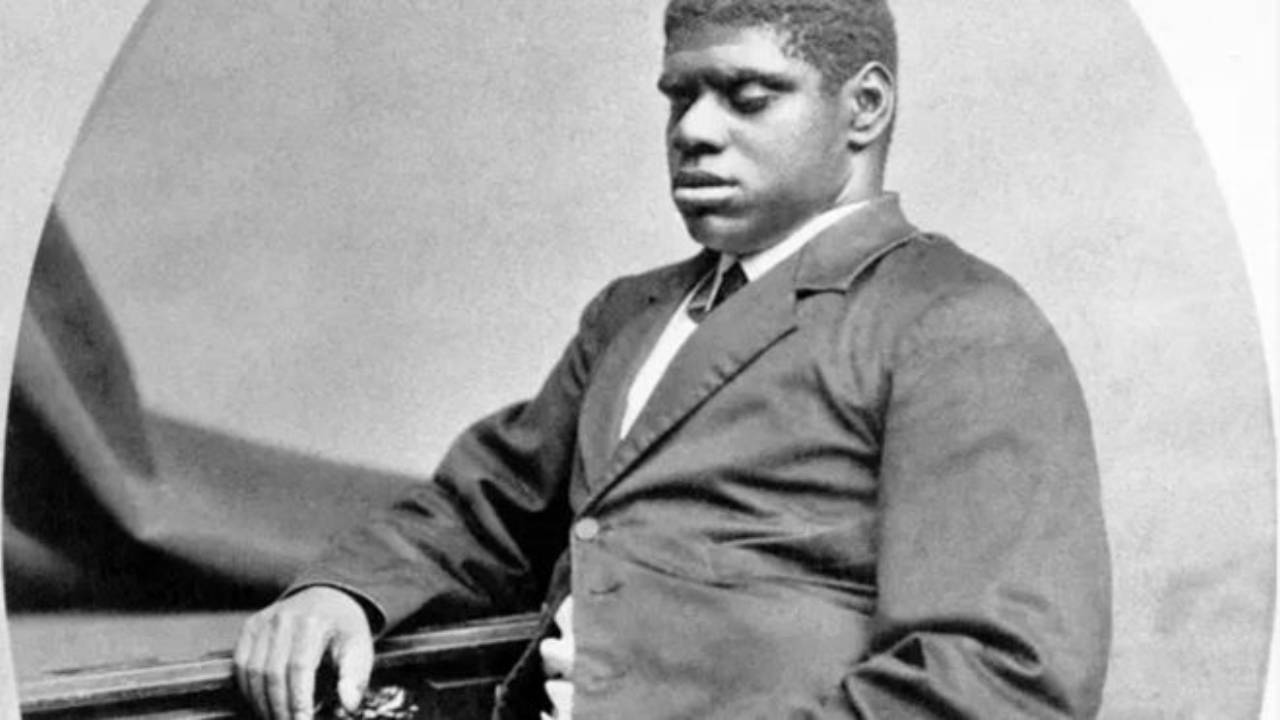
What do you call a man who sold out concert halls on two continents, played for a sitting president, and still wasn’t allowed to decide where he slept?
You call him Thomas Wiggins. Most of us were never taught his name.
He was born blind. He was born into slavery. And before he was old enough to read a word, he could sit down at a piano and play back almost anything he heard. For more than fifty years, other people made a fortune from that gift. This is his story.
Born Into It, 1849
Thomas Greene Wiggins was born on May 25, 1849, near Columbus, Georgia, to Charity Greene and Domingo “Mingo” Wiggins. Both of his parents were enslaved. By most accounts, the family was owned by Wiley Jones. Tom was blind from birth, and in the cold math of slavery, that made him a problem. A child who couldn’t see couldn’t be put to work in the fields.
In 1850, when Tom was still a baby, he was sold along with his parents and two of his brothers to General James Neil Bethune, a Columbus lawyer and newspaper editor. That sale changed the course of his life. It also set the terms of everything that came after: the Bethunes would own, manage, and profit from Tom for the rest of their lives.
The Boy Who Listened
Because Tom couldn’t do the work expected of enslaved children, he was left to wander the Bethune property. Charity brought him along to the big house when she worked. Accounts say she didn’t believe her son could learn much of anything. She was wrong about that, and so was almost everyone else.
Tom was fascinated by sound. He imitated birds, farm animals, the rain, the wind, anything that made a noise. Then he found the piano. The Bethune daughters played in the parlor, and the story goes that Tom, around age four, was drawn to the instrument and began picking out the tunes he’d overheard. Not just the notes. The whole piece.
The Bethunes noticed, and they did what slaveholders did when they noticed something valuable. They saw an opportunity.
A Child on the Road
Accounts differ on exactly when Tom first performed in public, but he was a small child. By the late 1850s, General Bethune had hired him out to a promoter named Perry Oliver, who booked shows across the South and sold Tom as a “Plantation Negro Boy,” a musical wonder of the age. Bethune reportedly collected $15,000 on a three-year deal. Tom saw none of it.
He was soon performing four shows a day. In 1860, at around eleven years old, he played at the White House for President James Buchanan.
Here’s the part that gets left out of the feel-good versions: the advertising claimed Tom was completely untaught, a pure natural wonder. That wasn’t true. He studied with trained musicians, including a professor of music who traveled with him. The “untaught savage genius” story sold tickets. The truth, that a gifted child was being trained to perform for profit, sold fewer.
What He Could Actually Do
Set the exploitation aside for a moment and look at the talent, because it was real. Tom could hear a long, complicated piece once and play it back note for note. By his teens he was performing Bach, Beethoven, Chopin, Liszt, and Thalberg. Promoters bragged that he knew thousands of pieces. Audiences watched him play one song with his right hand and another with his left while singing a third. Critics who came to doubt left convinced.
He also composed. His best-known work, “The Battle of Manassas,” was an imitation of a Civil War battle in sound, full of cannon fire, marching, and chaos, and it became his signature. He wrote pieces that mimicked rainstorms and running water, and many of his compositions were written down by a music teacher, Professor Joseph Poznanski, who worked with him.
In 1866, at sixteen, Tom toured Europe. Respected musicians of the day, including Ignaz Moscheles and Charles Hallé, praised his playing, and those endorsements helped build his international reputation. He kept performing across the United States and Canada for decades, earning an estimated $50,000 a year at his peak. Over his lifetime, the Bethune family fortune from his work was estimated at $750,000. Of course, Tom received none of it.
Free on Paper
The Civil War ended slavery. It didn’t end Tom’s captivity.
As the Confederacy was collapsing, General Bethune saw what was coming. He persuaded Mingo and Charity to sign an indenture agreement, a five-year contract handing him legal guardianship of Tom and a cut of his earnings in return for a small yearly payment. Tom’s parents had been enslaved their whole lives. Charity could not read or write. Historians describe the deal as exactly what it was: a way to keep the money flowing after the law said it shouldn’t.
When that contract expired around 1870, Bethune reportedly went to court to have Tom declared legally insane so the guardianship could continue. In 1875, management of Tom passed to Bethune’s son John, who toured with him and lived well on his earnings. Because of all this, Tom was often called “the last slave.”
A Mother’s Fight
Charity never stopped trying to get her son back.
After John Bethune died in a railway accident in 1884, the fight over Tom turned ugly. John’s estranged wife, Eliza, sued General Bethune for custody and brought Tom’s elderly mother in as a party to the case. In 1887, a federal court ordered Bethune to surrender Tom at Arlington, Virginia, into the hands of Charity and Eliza.
It looked like a victory. It wasn’t. Eliza had her own motives, and she moved to control Tom’s rights and income herself. Charity was pressured to sign those rights over, and she did not win control of her son or his earnings. Accounts differ on how long she stayed with him in New York, but she returned to Georgia and spent her later years far from the son she fought for.
The Final Years
Eliza, who later became Eliza Bethune Lerche, kept Tom on stage, now billing him under his father’s surname, Wiggins, and as the last slave freed by order of a court. He performed in concert halls and vaudeville houses until around 1904, 1905 at the latest. Then he was pulled from public life and lived in seclusion in Eliza’s home in Hoboken, New Jersey, a house bought with the money his talent had earned.
Thomas Wiggins died in June 1908, after a stroke, at about 59 years old. His headstone in Brooklyn bears his name: Thomas Greene Wiggins.
What Do We Do With His Story?
First, you’ll see modern writers describe Tom as autistic. Maybe. But nobody can diagnose a man who died in 1908, and the labels attached to him in his own time, like “idiot savant,” were used to market him and to justify controlling him.
Second, his music didn’t disappear. In 1999, pianist John Davis released the first commercial recording of Tom’s compositions. Writers and theater companies have kept telling his story, including Deirdre O’Connell’s book The Ballad of Blind Tom and the play Hush: Composing Blind Tom Wiggins.
Third, and this is the one that matters: Tom’s story is not an inspirational tale about overcoming. It’s a record of how talent in a Black body was turned into other people’s wealth, and how the law was bent to keep it that way, even after slavery was supposedly over. We still see versions of that today in who gets paid, who owns the work, and who gets to speak for the artist.
Stay connected with news and updates!
Join our mailing list to receive the latest news and updates from our team.
Don't worry, your information will not be shared.
We hate SPAM. We will never sell your information, for any reason.
