
The Man: William L. Dawson and the Architecture of Black Political Power in Chicago
May 21, 2026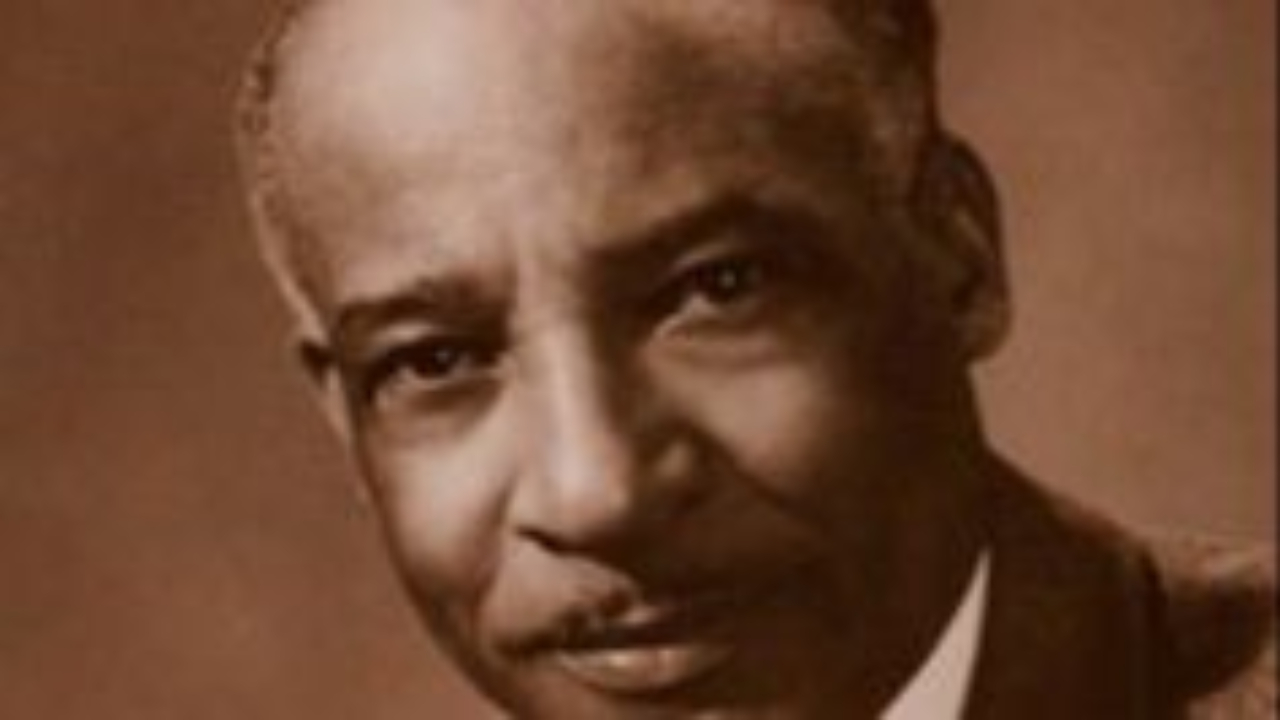
What does it mean to build power in a city that was never designed to share it?
Before Harold Washington, before Jesse Jackson's presidential campaigns, before the phrase "Black political power" became a rallying cry that anyone would print on a flyer — there was William Levi Dawson. He did not seek the spotlight. He did not give speeches meant for the history books. He worked the rooms that didn't make the news, and he built something that had never existed in Chicago before: a sustained, organized, disciplined Black political machine — one that delivered votes, extracted patronage, and sent a man from the South Side of Chicago to the halls of Congress for twenty-seven consecutive years.
His story does not fit neatly into a single verdict. It is not a simple triumph, and it is not a simple betrayal. It is something harder to hold — the story of a man shaped by the Jim Crow South who became one of the most powerful Black politicians of the twentieth century, and who used that power in ways his community still debates today.
Born in Albany, Georgia: The Education of a Survivor
William Levi Dawson was born on April 26, 1886, in Albany, Georgia — deep in the heart of a South where Black life was governed by terror, by law, and by the daily calculus of what was survivable. He grew up attending segregated public schools, graduated from Albany Normal School in 1905, and went on to earn his degree magna cum laude from Fisk University in Nashville, Tennessee, one of the nation's premier historically Black colleges.
Those who want to understand Dawson have to understand where he came from. A Black man born in Georgia in 1886 did not come into the world with the luxury of idealism as his first tool. He came into the world learning how systems worked, who held the keys, and which doors a man like him could get through — and which ones he'd have to build himself.
After Fisk, Dawson migrated to Chicago, joining the Great Migration that was already reshaping the city's South Side. He enrolled at Northwestern University School of Law, and when the United States entered World War I in 1917, he joined the U.S. Army, commissioned as a second lieutenant with the 365th Infantry and serving in France. He returned from that war having watched his country ask Black men to die for freedoms they were denied at home — and that experience never left him.
He came back to Chicago, passed the Illinois bar in 1919, and began practicing law. Politics was the next step. For a man of his ambitions, in a city like Chicago, it was always going to be.
The Republican Years: Learning the Machine
Dawson's first political home was the Republican Party — the party of Lincoln, the party most Black Americans had claimed since Emancipation. He wasn't unusual in that. What made him unusual was how quickly he understood the machinery of Chicago ward politics and how seriously he took the work of organizing.
He became state central committeeman for the First Congressional District from 1930 to 1932, aligned closely during that period with Congressman Oscar DePriest — the first Black congressman from the North. In 1933, Dawson won election as alderman for Chicago's Second Ward, and for six years he held that seat as a Republican. He was learning the city from the inside. He was watching how power moved.
In 1938, he made his move. He challenged his mentor DePriest in the Republican primary for the congressional seat — and won the primary. But he lost the general election to the Democratic incumbent Arthur W. Mitchell, and in doing so, burned his bridges with Republican Party leadership. He ran for his aldermanic seat as an Independent and lost that too.
For most men, that would have been the end. For Dawson, it was a recalibration.
The Turn: Joining the Democratic Machine
Chicago in the 1930s was changing. The New Deal had reshaped Black political loyalties across the country. President Roosevelt's Depression-era programs meant real, tangible things to families who had been locked out of private-sector opportunity. Black voters were moving to the Democratic Party in numbers that could not be ignored — and Dawson moved with them.
In 1939, Democratic Mayor Edward J. Kelly installed Dawson as the Democratic committeeman of the Second Ward. It was a foothold, and Dawson used it like a man who had been waiting for exactly this moment. He organized. He registered voters. He built precinct operations that were disciplined, loyal, and effective. He understood something essential about Chicago politics: the machine ran on votes, and votes were leverage, and leverage was the only currency that mattered.
Within three years, with the full backing of the Democratic machine behind him, Dawson won the Democratic nomination for Illinois's First Congressional District — defeating Chicago alderman Earl Dickerson in the primary — and went on to beat his longtime rival, Republican William E. King, in the general election with 53 percent of the vote.
On January 3, 1943, William L. Dawson was sworn in as a United States congressman. He would hold that seat until the day he died.
The Machine He Built
What Dawson constructed over the following decade was something historians have described as Chicago's first major Black political machine — a disciplined network of ward organizations, precinct captains, and political relationships that operated within the larger Cook County Democratic Organization while also functioning as its own Black-centered submachine.
At his peak, Dawson controlled the committeeman positions in as many as five South Side wards. He delivered votes — reliable, massive, organized votes — to Democratic candidates at the local, state, and national levels. In return, he demanded patronage: jobs in municipal departments, federal agencies, and public works projects. Those jobs were not trivial. For families systematically excluded from private-sector employment, a city job was a ladder into the middle class. A paycheck with benefits. Stability that the market would not provide.
His constituents called him "The Man." The name meant exactly what it sounds like. In a city where who you knew determined what you could access, Dawson was the person you needed to know.
He mentored rising Black politicians — including Archibald Carey Jr. — helping them win elections and secure federal appointments. He returned to his district regularly, maintained a presence in his ward office, and was known for being accessible to the people he represented.
The Firsts That Belong to History
Whatever else is said about William Dawson, certain facts are simply facts.
In 1949, the Democratic Caucus named him chair of the House Committee on Expenditures in the Executive Departments — later renamed the Committee on Government Operations. He became the first African American to chair a standing committee in the United States Congress. That chairmanship gave him the authority to conduct oversight of federal agency spending, to hold investigations, to audit federal appropriations. He held that post for most of the years between 1949 and 1970, becoming the Black member with the longest tenure as chair of a committee in congressional history.
He was also the first Black congressman to speak in the state of Mississippi since Reconstruction ended in 1877, when he addressed the Regional Council of Negro Leadership's first annual conference in Mound Bayou in 1952.
He was a vocal opponent of the poll tax — the mechanism used across the South to strip Black voters of their franchise by making voting a financial burden the poor could not afford.
His most significant legislative accomplishment came when he helped defeat the Winstead Amendment. After President Harry Truman desegregated the armed forces in 1948, Representative William Winstead of Mississippi proposed an amendment that would have allowed military personnel to choose whether they served in integrated units — effectively carving an opt-out from desegregation for white soldiers who didn't want it. Dawson helped kill it. Integration of the armed forces held.
In the 1960 presidential campaign, the vote Dawson organized in Illinois's First Congressional District was credited with helping carry the state of Illinois for John F. Kennedy — a margin that proved decisive in the Electoral College. Kennedy, in gratitude, offered Dawson the position of Postmaster General. Had Dawson accepted, he would have become the first Black cabinet officer in American history. He turned it down. He believed he could do more for his constituents from his seat in Congress than from a cabinet position.
The Criticisms That Also Belong to History
None of that erases the harder parts of the record.
Dawson became deeply aligned with Mayor Richard J. Daley after 1955. Daley's machine was built on segregation — not the loud, legal Jim Crow of the South, but the quieter, bureaucratic segregation of the North: public housing stacked high on the South Side to concentrate Black residents, school boundaries drawn to maintain separation, urban renewal that displaced Black communities without replacing what it took. Dawson's political operation existed within that machine and, in many cases, helped sustain it.
His opposition to residential integration was explicit. Spreading Black voters across more wards would have diluted his power — the power he'd spent decades building. So he opposed it.
In the early 1950s, he had been active in civil rights work, sponsoring voter registration drives and advocating for his community's interests in Congress. But as the civil rights movement intensified in the 1960s and turned its attention to the North, Dawson pulled back. He gave no support to Martin Luther King Jr.'s efforts to confront Chicago's segregation. He opposed the Powell Amendment, which would have banned federal funding for segregated schools, predicting — perhaps correctly, politically — that it would cost votes for school construction funding. The NAACP condemned what they described as his silence, compromise, and meaningless moderation.
He was quoted as having said, "I am a politician first, and a Negro second." That line has followed him ever since — used by critics as a verdict, used by defenders as context.
The Harder Question
The hardest question about William Dawson is not whether he made compromises. He did. The question is what the alternatives looked like, and what those alternatives would have cost.
He operated in a system designed to exclude him. He decided the best way to serve his community was to get inside that system, master its rules, and extract from it what he could. Jobs. Access. Congressional power. A committee chairmanship that let him hold the federal government accountable — at least in theory.
Scholars like Christopher Manning, in his political biography of Dawson, have argued that he should be understood not as a simple opportunist but as a shrewd and progressive politician who struggled to adapt when the civil rights movement demanded a different kind of leadership than the one he had built his career on. The movement of the 1950s and early 1960s was not what he had been trained for. He was trained for the machine. And by the time the streets demanded something the machine couldn't deliver, he was already too embedded in the machinery to change.
What he built — the patronage, the ward organization, the voting bloc — was real. The jobs were real. The access was real. And the ceiling he accepted — the one that kept Black Chicago concentrated and politically corralled on the South Side while he accumulated personal power — was also real.
The End of an Era
William Levi Dawson died in office on November 9, 1970, at the age of 84, from pneumonia in the city he had served and shaped for nearly four decades. He was succeeded by Ralph Metcalfe, who would later break with the Daley machine and become a sharp critic of police brutality — a turn that might have told Dawson something about what was coming.
The city Dawson left behind was not the city he had arrived in. He had been part of building Black electoral power in Chicago at a time when that power was not given, it was fought for and organized. He had sent Black patronage workers into city hall, Black voters to the polls in numbers that decided presidential elections, and himself to a congressional committee chair that no Black American had ever held before.
He had also helped hold in place a city that kept Black Chicagoans trapped in specific neighborhoods, specific schools, specific horizons — and the debate over what that cost, and who bore the price, has never fully ended.
His portrait — the first portrait of a Black member of Congress ever commissioned — hangs today in the collection of the U.S. House of Representatives. He is shown standing near a curtain, hand resting on a chair, looking like a man who preferred not to be photographed, which, by all accounts, he did.
William L. Dawson was a member of Alpha Phi Alpha Fraternity. He is buried in Chicago. A post office building in Chicago bears his name.
Sources: BlackPast.org | U.S. House of Representatives History, Art & Archives | WTTW Chicago — DuSable to Obama | African American Registry | KOLUMN Magazine | Avoice Digital Library, Congressional Black Caucus Foundation
Stay connected with news and updates!
Join our mailing list to receive the latest news and updates from our team.
Don't worry, your information will not be shared.
We hate SPAM. We will never sell your information, for any reason.
