The Heights - Home to Civic Institutions and Historic Architecture
Jan 14, 2026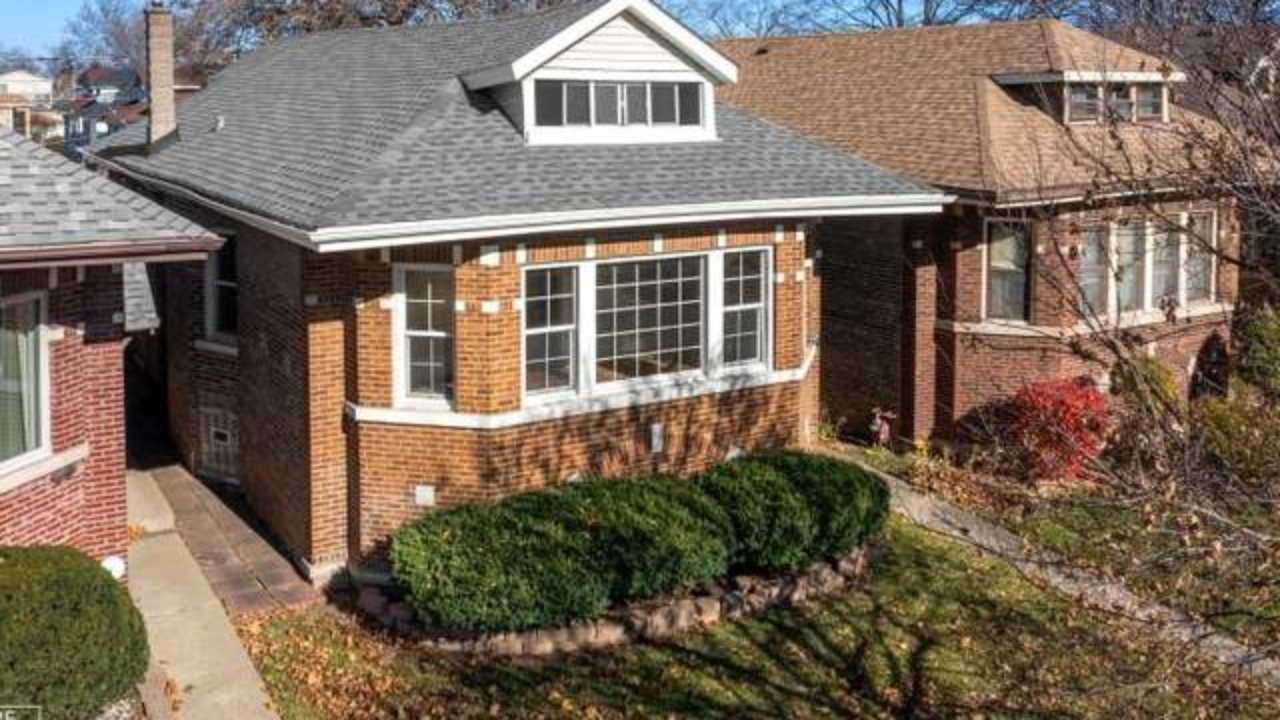
Washington Heights is a historic neighborhood on Chicago’s South Side, bounded by 95th Street to the north, 107th Street to the south, Halsted Street to the west, and State Street to the east. Developed primarily as a commuter-oriented residential area, Washington Heights has long been shaped by rail access, modest single-family housing, and community institutions that served a growing middle-class population in the early 20th century.
Trivia Question:
Which major Chicago Public Library branch located in Washington Heights was the first library in the city named after an African American?
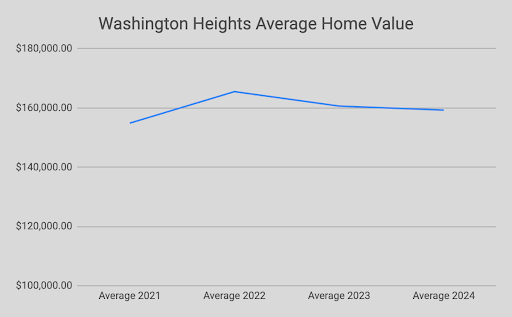
Washington Heights by the Numbers
Early Landscape and Settlement
Before urban development, the land that became Washington Heights consisted largely of prairie and farmland. Like much of the South Side, it was used for agriculture throughout the mid-19th century, with scattered homesteads and limited permanent settlement. The area’s flat terrain and proximity to emerging rail corridors made it suitable for later residential subdivision.
European settlement increased in the late 19th century as Chicago expanded southward. Early residents were largely working- and middle-class white families, many of them immigrants or children of immigrants employed in trades, rail-related work, or small businesses elsewhere in the city.
From the 1830s to the 1860s, the area was populated mostly by farmers. After the 1860s, railroads dominated the economy of the region, beginning in 1864–1865 when railroad workers temporarily settled in the area.
Rail Access and Early Development
The development of Washington Heights was closely tied to the expansion of rail infrastructure. The presence of the Illinois Central Railroad to the east and other nearby rail lines made the area attractive to residents seeking affordable housing within commuting distance of downtown Chicago.
Residential subdivision accelerated in the early 20th century, with developers marketing Washington Heights as a quiet alternative to denser neighborhoods closer to the city center. Housing construction focused on single-family homes and two-flats, reflecting the area’s middle-class aspirations and commuter orientation.
Annexation and Community Formation
Washington Heights was annexed by the City of Chicago in 1915, later than some nearby neighborhoods. Annexation brought city services, including water, sanitation, and public schools, which supported further residential growth.
Despite annexation, the neighborhood retained a suburban character, with relatively wide streets, detached homes, and limited industrial development. Commercial activity remained concentrated along major corridors such as Halsted Street and 95th Street, while interior blocks stayed largely residential.
Institutions and Historic Landmarks
One of Washington Heights’ most significant landmarks is the Carter G. Woodson Regional Library, located at 9525 South Halsted Street. Opened in 1975, it was the first Chicago Public Library branch named after an African American, honoring historian and scholar Carter G. Woodson, often referred to as the “Father of Black History.”
The library serves as both a regional research center and a neighborhood anchor, housing extensive collections related to African American history and culture. Its presence reflects Washington Heights’ role as an educational and civic hub on the South Side.
Churches and public schools have also played a central role in neighborhood life, providing stability and community infrastructure through decades of change.
Demographic Transition
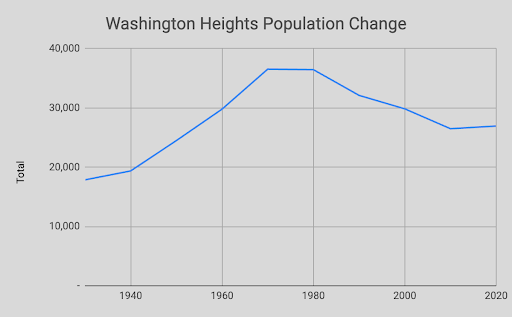
During the first half of the 20th century, Washington Heights was predominantly white. Beginning in the 1950s and 1960s, the neighborhood experienced demographic change as Black families moved southward, part of broader patterns tied to housing access, segregation, and economic opportunity.
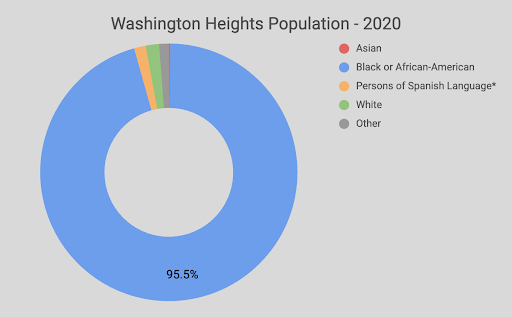
By the late 20th century, Washington Heights had become a predominantly Black neighborhood, with a strong base of long-term residents and homeowners. Compared to some nearby areas, the transition occurred relatively steadily, allowing many institutions to remain intact.
Housing and the Built Environment
Washington Heights is characterized by modest single-family homes, bungalows, and two-flats, many built between the 1910s and 1940s. The housing stock reflects the neighborhood’s origins as a middle-income residential area rather than a site of large-scale speculative development.
Tree-lined streets and consistent lot sizes give the neighborhood a uniform appearance. While some housing has aged, the overall residential fabric remains largely intact.
Economic Life and Commercial Corridors
Commercial activity in Washington Heights has traditionally been limited and locally oriented. Halsted Street and 95th Street serve as the primary commercial corridors, with small businesses, service providers, and neighborhood retail.
The neighborhood has not experienced large-scale commercial redevelopment, and many residents continue to travel outside the area for employment and shopping. This dynamic reinforces Washington Heights’ identity as primarily residential.
Transportation and Connectivity
Transportation access remains a defining feature. The neighborhood is served by nearby Metra Electric and CTA Red Line stations just beyond its boundaries, as well as multiple bus routes along Halsted, 95th, and 103rd streets. These connections continue to support commuter patterns established more than a century ago.
Washington Heights Today
Today, Washington Heights remains a stable residential neighborhood facing familiar urban challenges, including aging infrastructure, housing maintenance, and uneven investment. At the same time, long-standing institutions like the Carter G. Woodson Regional Library and active community organizations continue to anchor the area.
The neighborhood’s history as a rail-oriented residential community remains visible in its layout, housing stock, and daily rhythms.
Trivia Answer
The Carter G. Woodson Regional Library in Washington Heights was the first Chicago Public Library branch named after an African American.
Stay connected with news and updates!
Join our mailing list to receive the latest news and updates from our team.
Don't worry, your information will not be shared.
We hate SPAM. We will never sell your information, for any reason.
