
The East India Company: From Trade to Empire and Donald Trump
Jan 14, 2026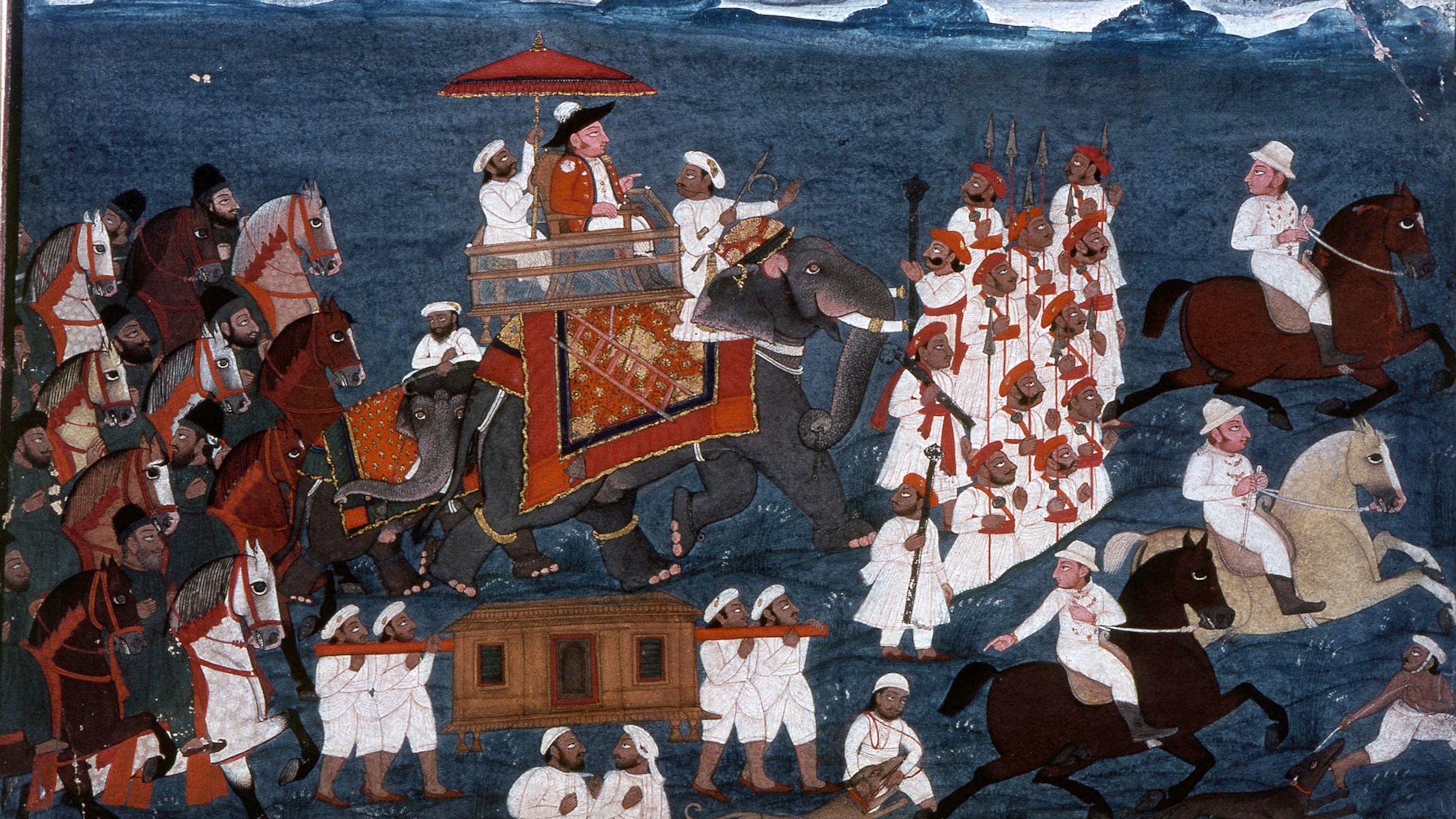
President Trump’s rhetoric about taking control of countries in the Western Hemisphere—such as Venezuela, Cuba, Colombia, and Mexico—calls to mind the Monroe Doctrine, which he himself referenced during a recent press conference. But his attention does not stop close to home. His remarks about distant, resource-rich regions like Nigeria and Greenland echo something much older and far more consequential: the era when powerful nations justified expansion and control in the name of economic and strategic interest.
That pattern is not new. Centuries ago, Britain used similar logic when it created the East India Company—a private corporation backed by state power—to access, control, and profit from the resources of Asia and India. What began as trade quickly evolved into domination, exploitation, and empire.
Before drawing direct comparisons to today, it’s important to understand how the East India Company came to be, how it operated, and the lasting damage it left behind. That history offers critical context for evaluating modern ambitions to control resources beyond one’s borders—and the risks of repeating a path the world has already paid dearly to survive.
The East India Company: From Trade to Empire
The East India Company (EIC) was founded in 1600 by a group of London merchants who received a royal charter from Queen Elizabeth I. Its original purpose was to break into the highly profitable spice trade with the East Indies — trade routes long dominated by Portuguese and Spanish merchants.
Thanks to its royal charter, the Company was granted exclusive monopoly rights over England’s trade with the East Indies, meaning no other English traders could compete in that lucrative market. Over time, the Company shifted its focus from spices to textiles and other commodities in India and Southeast Asia.
This combination of government backing, trade monopoly, and private investment — along with limited liability for its investors — made the EIC one of the first and most powerful joint-stock corporations in history.
How It Grew Into a Political and Military Power
What began as a trading enterprise soon became much more. In the 18th century, the EIC took advantage of the declining Mughal Empire in India and internal conflicts among regional rulers. It built fortified trading posts, raised its own private army, and eventually began governing vast areas of the Indian subcontinent — not just trading there.
Some historians describe the Company as a “state within a state” because it exercised functions normally reserved for governments, including tax collection, diplomacy, and warfare.
This rapid expansion was aided by battles like the Battle of Plassey in 1757, where Company forces defeated a regional Indian ruler and began asserting real political control. From there, it ruled large populations, shaped economic life, and extracted resources.
Impact on India and Other Regions
The Company’s control had long-lasting and often devastating effects:
-
Economic Exploitation: Local industries were disrupted. For example, traditional Indian textile production suffered as British-produced cloth flooded the market.
-
Resource extraction: Wealth flowed back to Britain through exports of cotton, tea, spices, and opium — and later from other trade goods.
-
Political Control: The Company dethroned local rulers, collected taxes, and governed large populations, effectively creating an imperial system before Britain formally became the colonial power.
-
Military dominance: The Company had its own army, larger than Britain’s in some eras, and fought numerous wars — including campaigns in India and China — to secure and expand its interests.
Overall, the EIC’s rule set the stage for the later British Raj, the direct governance of India by the British Crown.
How and Why the East India Company Ended
The Company’s power lasted for nearly three centuries, but it began to unravel in the mid-19th century:
-
After the Indian Rebellion of 1857, it became clear that private corporate rule over millions of people was unstable and unjust.
-
In response, the British Government took direct control of India’s governance in 1858.
-
The Company continued to exist in a reduced role for a short time, but was formally dissolved in 1874.
With the Crown taking over, India entered an era known as the British Raj — becoming the centerpiece of the British Empire until independence in 1947.
East India Company and European Imperialism
The Company exemplified European colonial practices in Asia: commerce backed by military power. It turned trade monopolies into territorial control, extractive wealth transfer, and administrative authority over local societies.
Other European powers — including the Dutch, Portuguese, and French — also established East India Companies that pursued similar goals. Over time, these corporate ventures often became tools of state imperialism, extending influence through force and governance rather than simple trade.
Comparison to Trump’s Rhetoric on Resources
Recent statements from U.S. President Donald Trump about Venezuela and other countries’ natural resources evoke a modern form of resource-related interventionism:
-
Trump has tied U.S. actions in Venezuela to control over Venezuelan oil, arguing that U.S. oil companies will take over infrastructure and profit from production.
-
He and his administration have also suggested long-term oversight of Venezuelan oil and even broader strategic interests in resources globally.
-
Critics frame this approach as “resource imperialism,” drawing parallels to historical practices of powerful nations asserting control over others’ resource wealth.
The comparison hinges on who controls resources and how that control is justified. The East India Company gained authority to manage trade and extract wealth under the auspices of state backing — mixing corporate goals and national interests. Today’s interventions are justified by a mix of political, economic, and security arguments, but the effect of powerful entities gaining influence over another country’s resources draws a historical echo.
Both scenarios raise questions about sovereignty, economic benefit, and the legacy of powerful actors shaping the fate of less powerful regions.
History shows us that power without restraint rarely ends well. Britain’s dominance through the East India Company was justified in its time as trade, progress, and national interest, but it ultimately led to exploitation, suffering, and long-term instability that still shapes entire regions today. The lesson is not that nations should avoid influence altogether, but that how power is used matters.
Being more powerful than other countries does not grant moral authority to take, control, or dictate their futures. When resource control becomes the driving force, human cost is always treated as collateral damage. We should be wary of rhetoric that echoes old imperial logic—because the path from “strategic interest” to exploitation is shorter than history would like us to believe.
If we truly believe we have learned from the past, then our actions must reflect restraint, respect for sovereignty, and an understanding that dominance is not destiny. The question before us is not whether we can impose our will, but whether we are wise enough not to repeat the same destructive mistakes—simply under a different flag.
Stay connected with news and updates!
Join our mailing list to receive the latest news and updates from our team.
Don't worry, your information will not be shared.
We hate SPAM. We will never sell your information, for any reason.
