
Sylvia Robinson: The Mother of Hip Hop They Never Gave Her Flowers
Jun 11, 2026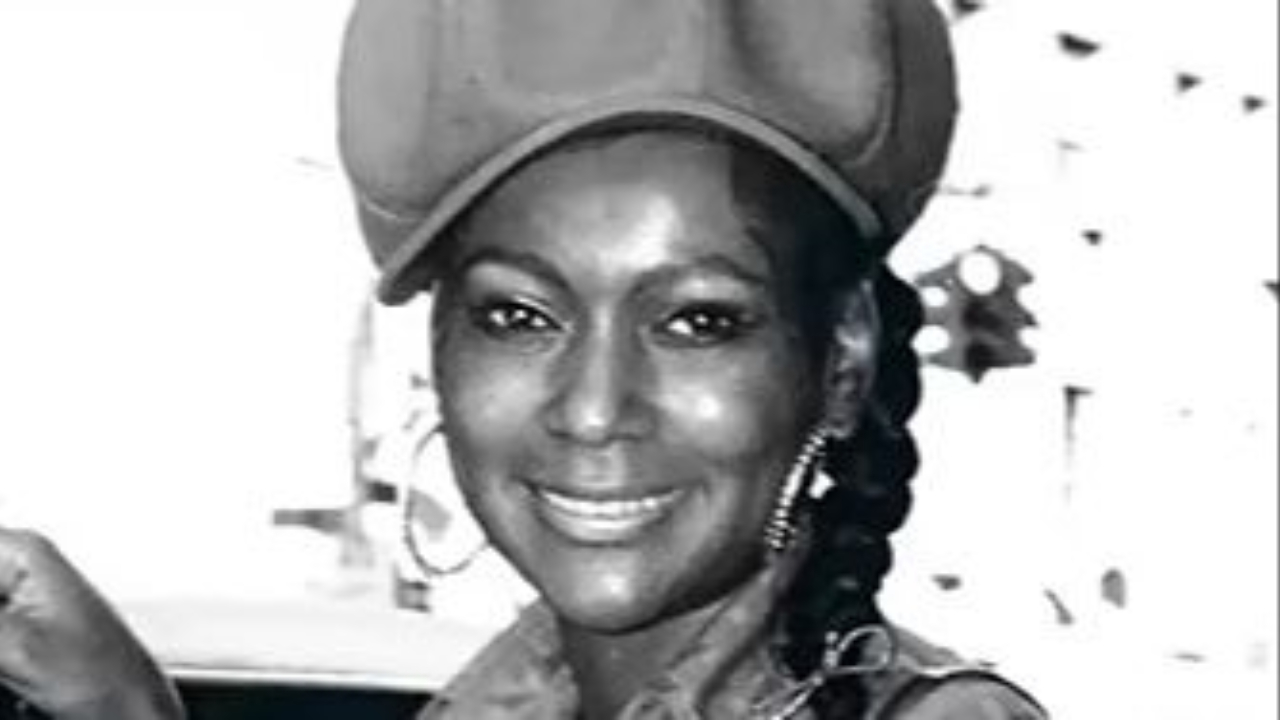
She Built the Foundation. The Industry Got the Credit.
Before there was Def Jam. Before there was Bad Boy. Before there was Roc-A-Fella. Before any of the empires that turned hip hop into a billion-dollar industry, there was a woman from Harlem who saw what nobody else could see — and then built it with her own hands.
Her name was Sylvia Robinson. And if you don't know it, that's exactly the problem this blog is here to fix.
Hip hop belongs to the culture. But the woman who first put it on wax, first gave it a record label, and first pushed it to the world? She spent decades operating in the shadows of a story she wrote. That ends today.
Little Sylvia: A Harlem Girl Born for Music
Sylvia Vanderpool was born in Harlem, New York in 1935, growing up surrounded by jazz, R&B, and gospel — the holy trinity of Black American sound. Music wasn't just in her environment; it was in her bones. By the age of 14, she was already singing blues and performing publicly. By 16, she had signed with Savoy Records.
In the mid-1950s, she teamed up with guitarist Mickey Baker to form the duo Mickey & Sylvia. In 1956, they released "Love Is Strange" — a slinky, playful duet that climbed to the top of the R&B charts and cracked the Billboard Top 20. Three decades later, a new generation would fall in love with that song all over again when it appeared in the cult classic film Dirty Dancing and later in Martin Scorsese's Casino. "Love Is Strange" wasn't just a hit. It was a timeless record.
But here's what most people don't know: behind the scenes, Sylvia was already producing. In 1960, she produced the song "You Talk Too Much" for New Orleans vocalist Joe Jones — and received no credit for it. A woman doing the work, a man getting the name. It was a pattern that would follow her for decades.
"Pillow Talk": A Woman Who Claimed Her Space
In 1959, Sylvia married fellow musician Joe Robinson and the couple eventually settled in Englewood, New Jersey, where they built a life and a business together. In 1967, they co-founded All Platinum Records, a label that would score major hits including "Love on a Two-Way Street" by The Moments — a song co-written by Sylvia herself. (Fun fact: Alicia Keys would later sample that exact groove for "Empire State of Mind.")
But it was 1973 that proved Sylvia Robinson was in a category all her own.
She wrote a song called "Pillow Talk" — a sensuous, moaning, proto-disco soul record that she originally offered to Al Green. He turned it down flat. Said it was too sexually provocative, too outside his religious convictions. So, Sylvia did what any self-respecting artist would do: she recorded it herself.
"Pillow Talk" shot to number one on the R&B charts and number three on the Billboard Hot 100. It earned Sylvia a Gold Record from the RIAA and a Grammy nomination in 1974. It was one of the first songs where a Black woman sang with unapologetic sexual confidence — predating Donna Summer's iconic "Love to Love You Baby" by two full years. Some AM radio stations were so scandalized they edited the song before airing it. Which, of course, only proved how powerful it was. She was a woman ahead of her time — in a music industry that consistently made women prove themselves twice over just to be seen half as much.
The Night That Changed Everything
By the late 1970s, All Platinum Records had fallen into financial trouble. Joe Robinson's business dealings had caught up with the label, and bankruptcy was on the horizon. It would have been enough to make most people walk away.
In 1979, she went to a party. And at that party, she heard something she had never heard before — a young man named Lovebug Starski rapping over the break of Chic's smash hit "Good Times." The crowd was alive. The energy in the room was electric. And something inside Sylvia went still.
"A spirit said to me, 'Put a concept like that on a record and it will be the biggest thing you ever had,'" she recalled years later. She trusted that voice.
With her husband Joe, Sylvia founded Sugar Hill Records — named for the culturally rich Sugar Hill neighborhood. She assembled three young men she believed in: Michael "Wonder Mike" Wright, Henry "Big Bank Hank" Jackson, and Guy "Master Gee" O'Brien. She christened them the Sugarhill Gang. Then she got her house band to recreate the groove from "Good Times" and had the group rap over the top of it.
The result was "Rapper's Delight."
You know the opening: I said a hip hop / the hippie the hippie / to the hip hip hop, and you don't stop...
Released in 1979, "Rapper's Delight" became the first commercially successful rap record in history. It sold over 14 million copies worldwide. It introduced hip hop to mainstream radio. It introduced hip hop to the world. And it was Sylvia Robinson who made it happen — who assembled the group, who supervised the production, who had the vision when everyone around her was still asking, "But can you even put rapping on a record?"
Sugar Hill Records: Building the Architecture of Hip Hop
What Sylvia built with Sugar Hill Records was the first architecture of hip hop as an industry. And she didn't rest on "Rapper's Delight."
In 1981, she produced one of the most important records in the genre's history: "The Adventures of Grandmaster Flash on the Wheels of Steel" — a record that put the DJ front and center, validating scratching and turntablism as legitimate musicianship. That record helped set the template for what golden age hip hop would become.
Grandmaster Flash and the Furious Five weren't sold on it. Melle Mel, the group's lead voice, thought a dark, seven-minute social commentary would destroy their party reputation. Sylvia Robinson had already spent decades being second-guessed by men. She knew what she had. She took the record to Disco Fever — a Bronx nightclub known as a proving ground for new music — and watched the crowd react in stunned silence, then erupt.
"The Message" was released in 1982. Rolling Stone would later name it the greatest hip hop song of all time. Its unflinching portrait of inner-city Black life — "Don't push me 'cause I'm close to the edge" — proved that hip hop could carry the full weight of a community's truth.
Under her leadership, Sugar Hill Records accumulated 26 Gold Records before it closed in 1986. The label she built became the foundation on which every independent hip hop label that came after — Def Jam, Death Row, Bad Boy, Top Dawg — was constructed.
As Billboard magazine wrote: "Her business opened the doors for all the independents that followed, from Def Jam to Top Dawg, and her music pioneered distinct concepts that set the template for hip hop's entire creative arc. From party rocking, to the DJ as a musician, to social consciousness, Sugar Hill made everything possible for today's hip-hop stars."
The Credit She Never Got — And the Reasons Why
Sylvia Robinson did not receive the recognition she earned while she was alive. Not from the industry. Not from mainstream music history. Not in the way that a man doing the same work would have.
Part of that was the era. Part of it was gender. Part of it was the mythology that hip hop built around itself — stories centered on the block, the cipher, the DJ booth, spaces that were coded as male even when women were the architects operating behind and above them.
There were also controversies. Chic's Nile Rodgers and Bernard Edwards were never properly compensated or credited for the "Good Times" bassline that underpinned "Rapper's Delight," sparking early and ongoing debates about sampling and royalties that the industry is still navigating today. Sugar Hill's business practices were scrutinized, and some artists later disputed their contracts. History with Sylvia Robinson is complicated — as it is with most visionaries who operated in imperfect systems while making something from nothing.
But complication is not erasure. And credit delayed is not credit given. Joe Robinson passed away in 2000. Two years later, a fire destroyed the Sugar Hill recording studio in New Jersey, taking irreplaceable masters with it. Sylvia continued producing music anyway. She never stopped.
On September 29, 2011, Sylvia Robinson passed away from congestive heart failure at Meadowlands Hospital in Secaucus, New Jersey. She was 75 years old.
The Recognition That Finally Came — Too Late, But Still
In 2022 — more than a decade after her death — Sylvia Robinson was inducted into the Rock and Roll Hall of Fame, receiving the Ahmet Ertegun Award, which honors non-performers who have made major contributions to the music industry. Her induction citation read:
"Sylvia Robinson played many roles in the music world — artist, producer, and, most notably, record executive. But as the founder and leader of the pioneering Sugar Hill label, she revealed herself to be something even rarer. She was a visionary."
Yes. She was. And we should have been saying so all along.
What Her Legacy Means for Us
Every time you hear hip hop — every time you hear a rapper on the radio, see a music video, stream a playlist, watch a BET Awards performance — you are living inside something Sylvia Robinson built. The party track. The conscious record. The independent label that refused to wait for corporate America's permission. All of it traces back to a woman from Harlem who heard something at a party in 1979 and trusted what the spirit told her. Sylvia Robinson is the Mother of Hip Hop..
Learn more about Sylvia Robinson's incredible story on YouTube: https://youtube.com/shorts/mchQYOps
Stay connected with news and updates!
Join our mailing list to receive the latest news and updates from our team.
Don't worry, your information will not be shared.
We hate SPAM. We will never sell your information, for any reason.
