Roseland: From High Prairie to the Far South Side's Forgotten Giant
Apr 22, 2026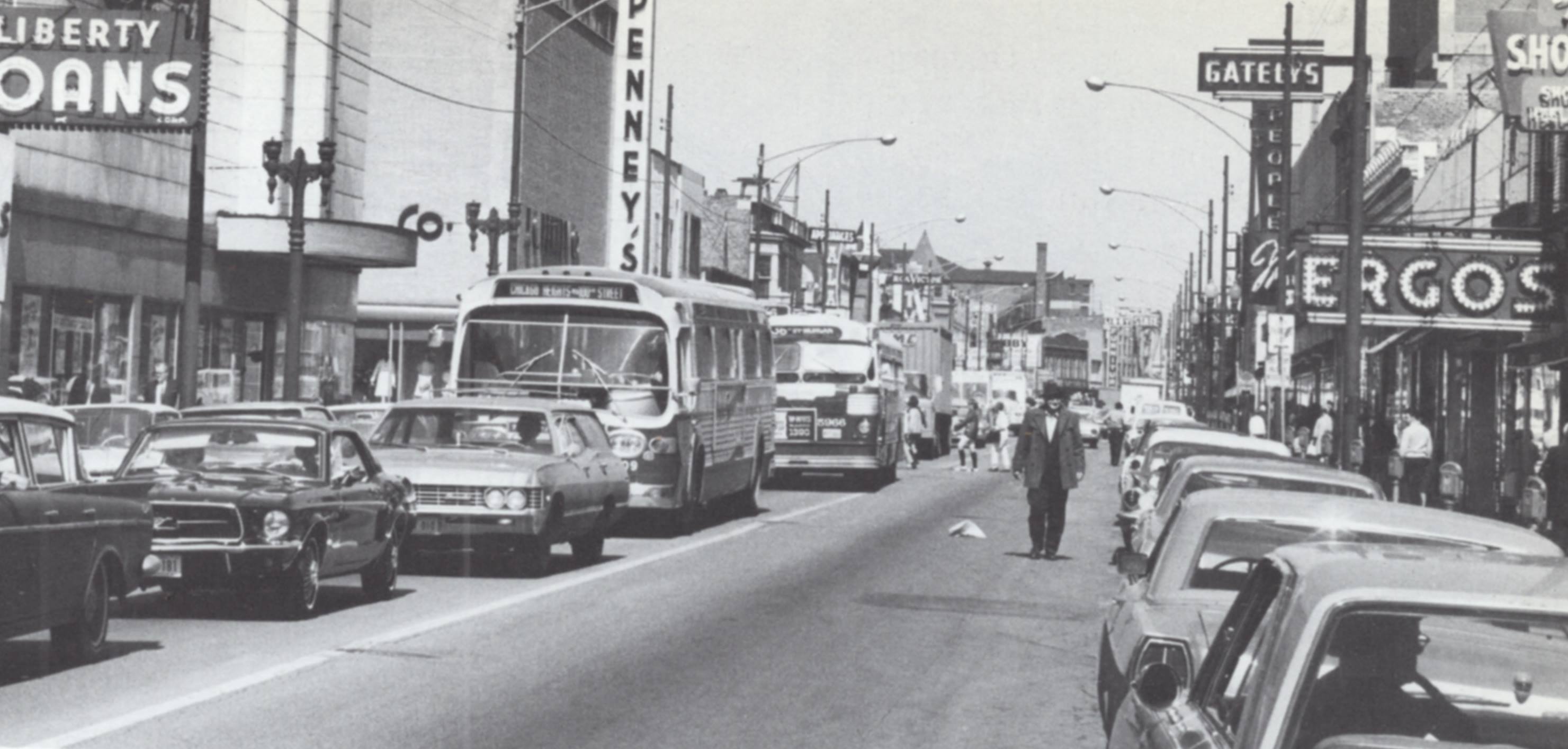
Roseland sits on Chicago's far South Side, approximately thirteen miles from the Loop, about as far south as the city goes before giving way to suburban Cook County. It is bounded by 87th Street to the north, 119th Street to the south, the Norfolk Southern rail line to the east, and Halsted Street to the west. Within those borders, a neighborhood of bungalows, brick cottages, and tree-lined streets holds a history far larger than its distance from downtown might suggest: a Dutch farming village, a booming industrial hub, a center of racial conflict, and now a community in the long, patient work of rebuilding.
Trivia Question
Long before Roseland was part of Chicago, the Dutch farming families who settled the area played a quiet but significant role in one of the most consequential moral struggles in American history. Several Roseland households served as active stations on a clandestine network helping freedom seekers travel north to Canada. What was that network called, and approximately how many people passed through the Roseland area on their journey to freedom?
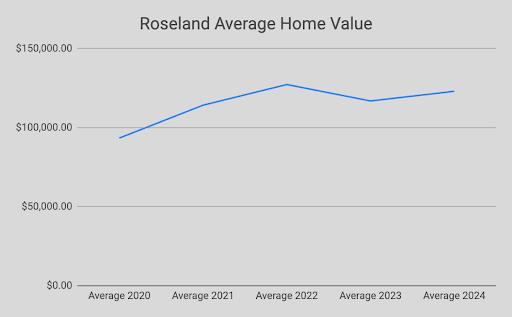
Roseland by the Numbers
The Hollanders of High Prairie
Roseland's story begins in 1849 with a group of Dutch immigrants who arrived from the villages of Eenigenburg and Schoorl in the Netherlands. Their ocean crossing was harrowing, cholera broke out aboard their ship, the Massachusetts of Boston, killing seventeen of the sixty-four passengers before they reached New York. The survivors pressed on, eventually making their way to Chicago by steamer and then traveling south along a road known variously as the Chicago-Thornton Road, the Holland Settlement Road, and the High Road, which would later become South Michigan Avenue.
The families settled on a natural ridge west of Lake Calumet, on ground that was notably drier and more elevated than the marshy lowlands around them. They called it "de Hooge Prairie" or the High Prairie. It was honest farmland, fertile enough for cattle and dairy and truck farming, and far enough from the city's chaos to feel like something of their own. They organized a church within weeks of arriving, built modest homes, and gradually turned the prairie into a working agricultural community.
In 1873, real estate developer James H. Bowen visited the area and was struck by the tidy gardens and abundant flowers the Dutch settlers had planted around their homes. He suggested renaming the village Roseland, and the name took hold. That same year, Bowen sold thousands of acres of the surrounding land to the Pullman Land Association, setting in motion the transformation that would define the area's next century.
Pullman, Industry, and the Boom Years
The construction of the Pullman model town in 1883 just east of Roseland, between the community and Lake Calumet changed everything. George Pullman's planned industrial city attracted skilled tradesmen from across Europe to manufacture his famous Palace railway coaches, and many of those workers chose to settle in nearby Roseland rather than in the tightly managed Pullman community itself. Italians, Swedes, and other European immigrants joined the Dutch to create a cosmopolitan neighborhood that bore little resemblance to the quiet farming village of a generation earlier.
South Michigan Avenue became one of the busiest commercial corridors on Chicago's South Side, serving not just Roseland but the surrounding communities of Pullman, Kensington, Burnside, and Fernwood. Stores, banks, theaters, and department stores lined The Ave, as residents called it, making Roseland one of the most important commercial centers outside the Loop. When the Pullman Car Works expanded with a major freight facility on 103rd Street in the early 1900s, the economic relationship between the two communities deepened further.
The neighborhood grew steadily through the first half of the twentieth century. The steel mills along the lakefront, the auto plants, and the continued operations of the Pullman company kept employment high and the housing stock well-maintained. Roseland earned a reputation as a solid, prosperous working-class neighborhood — far from downtown in miles, but full of the stability that came from steady industrial work.
Racial Conflict and the Fernwood Riots
The postwar years brought Roseland into a confrontation with Chicago's racial geography that it did not handle well. In August 1947, the Chicago Housing Authority attempted to move several Black veterans and their families into the Fernwood Park Housing Project at 104th and Halsted, on Roseland's western edge. The response from white residents was immediate and violent. A mob formed, a three-day riot ensued, and more than a thousand law enforcement officers were required to restore order. The Fernwood riot stands as one of the worst episodes of racial violence in Chicago history — made uglier by the fact that its targets were men who had served the country in war.
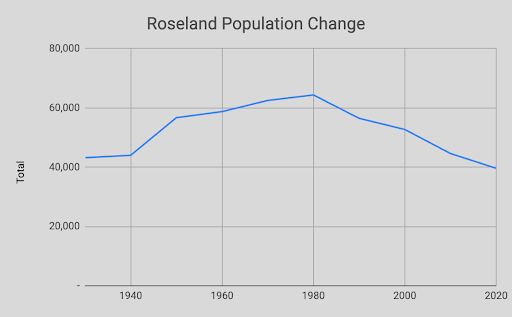
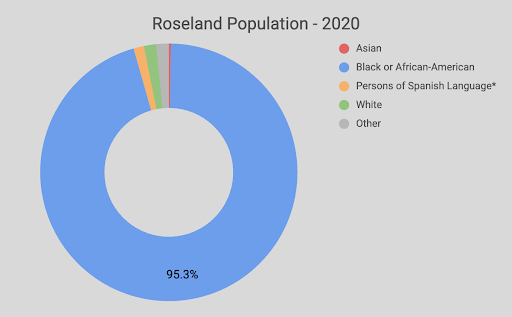
The riot was a preview of what was coming. As African-American families began moving into Roseland in the late 1950s and early 1960s, blockbusting real estate agents worked the neighborhood aggressively, stoking fear among white homeowners to generate rapid sales at below-market prices. The neighborhood that had been nearly entirely white in 1960 had flipped decisively by 1970. Some community leaders attempted to manage the transition encouraging property maintenance and discouraging panic selling, but the forces of disinvestment and white flight proved overwhelming.
The steel mills to the east began closing. The Pullman plant scaled back and eventually shut down for good in 1981. Jobs that had anchored working-class families for generations disappeared. The Michigan Avenue commercial corridor, which had thrived for nearly a century, entered a long decline that left stretches of its once-vibrant storefronts vacant or shuttered.
Legacies, Landmarks, and Old Fashioned Donuts
Against that difficult history, Roseland has produced people and institutions worth knowing. Dick Butkus who was arguably the most ferocious linebacker in NFL history and a member of the Pro Football Hall of Fame, grew up in Roseland before going on to dominate the game with the Chicago Bears. Gwendolyn Brooks, the Pulitzer Prize-winning poet and the first African American to win that honor, spent formative years on the South Side not far from Roseland; the neighborhood's high school now bears her name.
Chicago State University anchors the neighborhood's northeastern corner at 95th and Martin Luther King Drive, providing higher education access to South Side residents since its founding in 1867 under various names and locations. The Ray and Joan Kroc Center, operated by the Salvation Army at 119th Street, is the largest community center in Illinois, offering recreation, education, and social services to residents across the far South Side.
And then there is Old Fashioned Donuts at 11248 South Michigan Avenue, open since 1972 and arguably Roseland's most beloved institution. Founded by Burritt Bulloch, the shop makes its donuts by hand, every day, with a process unchanged for more than fifty years. People drive from across the city and the suburbs for them — glazed, powdered, chocolate-dipped. In a neighborhood that has seen large employers come and go, Old Fashioned Donuts has outlasted all of them by doing one thing exceptionally well and never stopping.
Roseland Today
Roseland today carries the weight of decades of disinvestment while showing genuine signs of the revitalization its residents have long advocated for. The neighborhood was designated one of the priority corridors in Mayor Lightfoot's INVEST South/West initiative, directing city resources toward the Michigan Avenue commercial strip and supporting new development at key sites including the historic Roseland Theater building and the former Gately's department store location.
A long-planned extension of the CTA Red Line south from its current 95th Street terminus (the Red Line Extension project) would add new stations at 103rd and 111th Streets in Roseland, dramatically improving transit access for residents who currently depend on bus service or Metra for commutes. Construction is projected to begin in 2026, with completion targeted for 2030.
The neighborhood's housing stock made up of bungalows, cottages, and two-flats built in the early twentieth century remains largely intact, maintained by homeowners who have stayed through cycles of disinvestment that drove others away. That stubbornness of attachment is Roseland's defining trait. A community that survived a cholera-stricken ocean crossing to plant roses on a prairie, that harbored freedom seekers heading north, that endured industrial collapse and racial violence, does not give up easily. The High Prairie is still here.
Trivia Answer
The network was the Underground Railroad, the clandestine system of routes, safe houses, and allies that helped enslaved people escape to free states and Canada before and during the Civil War. Several Roseland Dutch settler families served as active stations. Cornelius Kuyper, an abolitionist and local magistrate, sheltered freedom seekers at his home near 103rd and Michigan Avenue and guided them onward. The Ton family farm on the Little Calumet River became a regular waypoint, with Jan Ton transporting freedom seekers by wagon under cover of night to the next stop en route to Hammond, Indiana, and eventually Canada. Historians estimate that between 3,600 and 4,600 freedom seekers passed through the Roseland and Calumet corridor on their journey north — a remarkable chapter largely unknown outside the neighborhood itself.
Stay connected with news and updates!
Join our mailing list to receive the latest news and updates from our team.
Don't worry, your information will not be shared.
We hate SPAM. We will never sell your information, for any reason.
