
Questioning the Present: An Online Public Forum on Democracy and Beauty
Nov 26, 2025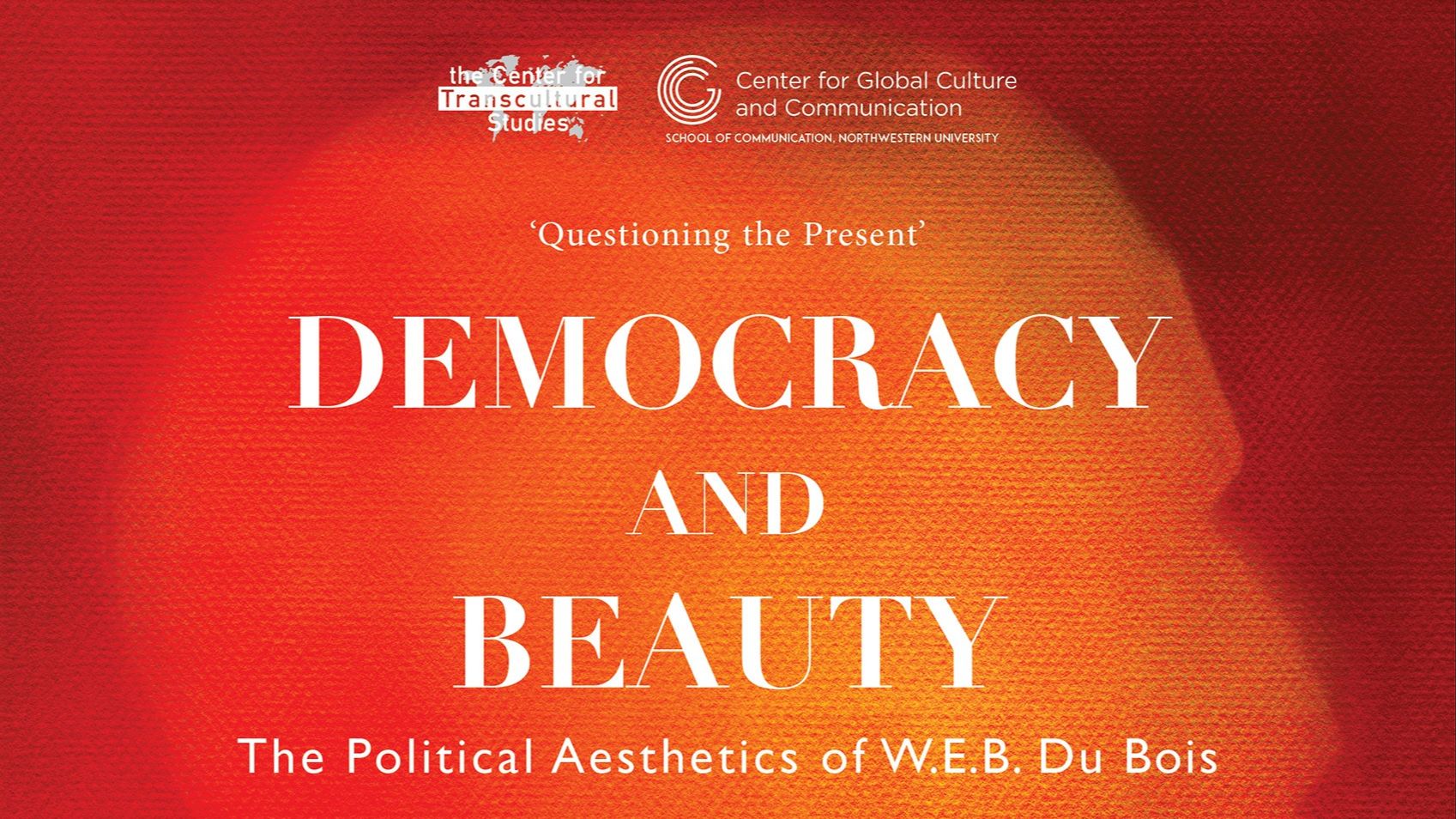
The Center of Global Culture and Communication
(An interdisciplinary initiative of Northwestern University's School of Communication)
and
The Center for Transcultural Studies
(A global intellectual network with an institutional base in Chicago)
Jointly present
Questioning the Present: An Online Public Forum (Session 22) on
Democracy and Beauty
The Political Aesthetics of W.E.B Du Bois
Robert Gooding-Williams
(Philosophy, Yale University)
Respondents:
Lawrie Balfour (Politics, University of Virginia)
Fred Moten (Performance Studies & Comparative Literature, New York University)
Shatema Threadcraft (Philosophy, Vanderbilt University)
ON ZOOM
Friday, December 5, 2025
10 a.m. to 12 p.m. CST
Convened by Dilip Gaonkar (Northwestern University)
To Register:
https://northwestern.zoom.us/meeting/register/EL-o4kUcSMe9oMIZxgVNWA
Please download the reading HERE
What is beauty, and what is its political function? In what ways might it help undermine white supremacy and cultivate a more democratic political culture?
Democracy and Beauty shines a light on W.E.B. Du Bois’s attempts to answer these questions during the decade surrounding the First World War and, in so doing, offers a groundbreaking account of the philosopher’s aesthetics. Robert Gooding-Williams reconstructs Du Bois’s defense of the political potential of beauty to challenge oppressive systems and foster an inclusive democracy.
White supremacy is a powerful force that defies rational revision, Du Bois argued, because it is rooted in the entrenched routines of its adherents. Beauty, however, has a distinctive role to play in the struggle against white supremacy. It can strengthen resolve and ward off despair by showing the oppressed that they can alter their social world, and it can unsettle and even transform the pernicious habits that perpetuate white supremacy.
Gooding-Williams also explores Du Bois’s account of the interplay among white supremacy, Christianity, capitalism, and imperialism as well as key tensions in his work. A rich engagement with Du Bois’s philosophy of beauty, this book demonstrates the relevance of his social thought and aesthetics to present-day arguments about Black pessimism, Black optimism, and the aesthetic turn in Black studies.
Stay connected with news and updates!
Join our mailing list to receive the latest news and updates from our team.
Don't worry, your information will not be shared.
We hate SPAM. We will never sell your information, for any reason.
