
Pope Leo XIV — Chicago's Own — Has Black Ancestry Rooted in New Orleans and Haiti
May 06, 2026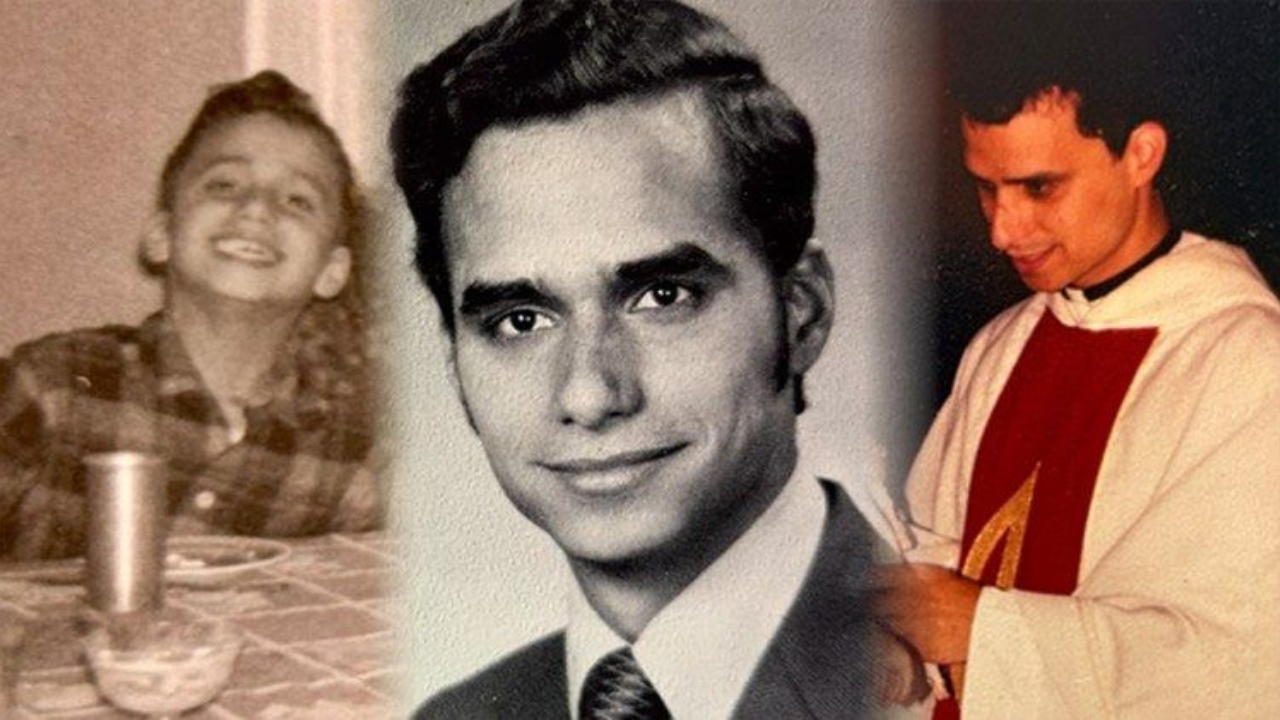
The world is still adjusting to the historic election of Pope Leo XIV — the first American Pope and a native of the Chicago area — but new revelations about his ancestry are drawing attention far beyond the Vatican.
According to leading genealogists, Pope Leo's family history reveals a deep and complex African American lineage, with roots stretching back to New Orleans and Haiti. And for Chicago's South Side community, which already claimed him as one of their own, this story has added a layer that is deeply personal, historically profound, and long overdue for telling.
A Name From Chicago's South Side
Robert Francis Prevost was born on September 14, 1955, at Mercy Hospital in the Bronzeville neighborhood of Chicago, Illinois, on the city's South Side. He was the youngest of three brothers, raised by two educators — his father, Louis, who served in the church as a catechist, and his mother, Mildred, who was a librarian.
The Prevost family attended St. Mary of the Assumption Church in Chicago's Riverdale neighborhood. Leo XIV was an altar boy at the church. The family lived in a modest red-brick Cape Cod house just over the Chicago city limits in Dolton, Illinois — the kind of home that tens of thousands of South Side and south suburban families called their own in the postwar years. The South Side of the 1950s and '60s was defined by unpretentiousness, hard work, and tight-knit Catholic communities. That is the world that made Robert Prevost.
His classmates remember him as smart — always sitting in the number one seat, which in those days meant the top student in the class. He felt the call to the priesthood early, and rather than following his brothers to Mendel Catholic High School, he chose an Augustinian seminary program in Holland, Michigan. He then went to Villanova University in Pennsylvania, where he majored in mathematics, before returning to Chicago to pursue his vocation fully — teaching math part-time at Mendel Catholic Prep High School in Chicago's Roseland neighborhood, where his mother worked as a librarian and his brothers had attended school.
None of that sounds like the beginning of a story about the first Black Pope in history. But that's exactly what the genealogists found when they started looking.
What the Records Showed
Shortly after Pope Leo XIV's election on May 8, 2025, genealogists began digging into his family history — and what they found was both remarkable and, for anyone who understands American racial history, entirely familiar.
Chicago-based genealogist Tony Burroughs, who has spent decades researching African American family histories, pulled birth certificates, death certificates, and U.S. Census records. What he found was a family whose racial identity on paper changed with each decade — not because the family changed, but because America forced them to navigate its racial categories in order to survive.
"I was able to go back to the 1850s," Burroughs said, "and they were listed as mulattos in 1850, 1860, 1870. Then when you get to 1880, they were listed as white. When you get to 1900, they were listed as Black, and then after that, they were listed as white."
That pattern — Black, then white, then Black, then white — is not confusion or error. It is the lived reality of mixed-race families in America who made painful calculations about how to be recorded, how to move through the world, and how to give their children the best possible chance at survival and opportunity in a country that made race a matter of life and death.
Both of Pope Leo's maternal grandparents, Joseph Martinez and Louise Baquié, are described as Black or mulatto in several census documents. On their 1887 marriage license, Martinez listed his birthplace as Haiti, and birth records show that he was born in Santo Domingo, Dominican Republic. On the 1900 census, while his family lived in New Orleans, both Leo XIV's maternal grandparents and his aunts were identified as Black. However, in 1920, after the family migrated to Chicago and had the Pope's mother Mildred, that decade's census reflected their race as white.
The Great Migration — the massive movement of Black Americans from the South to Northern cities between 1910 and 1970 — provided cover and opportunity for families like the Martinez family. In a new city, in a new neighborhood, with no one who knew their history, some families made the choice to cross the color line. The sociologists and historians who have studied this phenomenon call it "passing." The families who lived it called it surviving.
The World They Came From
To understand why the Martinez family made the choices they made, you have to understand where they came from.
Louisiana Creole expert Jari Honora traced the Pope's ancestry to the Black community of New Orleans. His maternal ancestors lived in the Crescent City before migrating to Chicago in the early 20th century. Specifically, they lived in the 7th Ward of New Orleans — a neighborhood that has been home to the city's Creole of color community for generations.
Creoles in New Orleans have been a part of Louisiana history for almost as long as it has been a state. The word Creole commonly describes mixed-race people of color. "To be Creole in Louisiana, to be a free person of color in New Orleans in that time really indicates that there was at some point an enslaved person that had to fight for their freedom," one genealogist explained.
Leo XIV's maternal grandparents were the Hispaniola-born mixed-race Joseph Martínez and the New Orleans-born Louise Baquié, a mixed-race Black Creole. They were property owners — part of the established free Black Creole community that had existed in New Orleans since the French and Spanish colonial era. They were not poor. They were not powerless. But they were living under a system — Jim Crow Louisiana — that was tightening around them with every passing year, that would strip away their rights, their safety, and their children's futures if given the chance.
When they moved to Chicago, they made a choice that thousands of other families made during that same era. They arrived in a new city, presented themselves as white, and did not look back. While John Prevost, the Pope's brother, knew about the family's connection to Haiti and New Orleans, he told ABC News that their family never discussed racial matters.
That silence is its own kind of testimony. It speaks to the weight of what was being carried — and what was being protected.
Mildred Martinez Prevost: The Woman Who Shaped the Pope
At the center of this story is a woman named Mildred Agnes Martinez, born in Chicago in 1911 to those New Orleans Creole grandparents who had made their journey north. She became an educator and librarian. She attended Immaculata High School on the North Side of Chicago, graduated from DePaul University with a bachelor's degree in library science in 1947, and earned a master's degree in education in 1949. She was an accomplished singer and performer, having recorded the Ave Maria, and competed in the 1941 Chicagoland Music Festival.
She was, by every account, a formidable woman. Leo's family home was a gathering spot for members of the clergy, who were equally excited to try Mildred's cooking. She raised three sons in that modest Dolton house. She worked at Mendel Catholic High School in Roseland — a South Side institution — as a librarian. Her youngest son, the future Pope, would later teach math in those same halls.
Mildred Prevost died of cancer in 1990. She never knew she would raise the first American Pope. She also never knew — or perhaps always knew, and chose not to speak of it — that her son would one day sit at the head of a global church carrying the bloodline of free Black Creoles from New Orleans's 7th Ward.
What It Means — and What It Doesn't
The question of whether Pope Leo XIV is the first Black Pope is one that requires nuance.
As Louisiana Creole expert Jari Honora explained: "I think that a person can be of Black ancestry or have Black roots, but to identify as Black, I think, is all about the lived experience." Pope Leo did not grow up identified as Black. He did not experience the world as a Black man. His family had crossed the color line before he was born, and he was raised in a white Catholic family in a white Catholic neighborhood in Dolton, Illinois.
At the same time, he is a member of a religious order named for the famous African saint Augustine of Hippo, and is the first Roman pontiff of African ancestry since the early days of the Church. His bloodline connects him to the enslaved and the free, to Haiti and New Orleans, to the Great Migration and Chicago's South Side, to a history that is woven into the very fabric of this city and this country.
Whether he claims that identity is his choice to make. What the rest of us can do is acknowledge what the records show — and honor the lives of the people who carried that history forward, often in silence, often at great cost.
The Chicago That Shaped Him
There is something worth sitting with here: Robert Prevost grew up on the South Side of Chicago during one of the most tumultuous periods in American racial history. The 1950s and '60s on the South Side were not abstract history — they were alive and immediate. The Civil Rights Movement was not a distant event; it was playing out in the streets, in the schools, in the parishes of the very neighborhoods where young Rob Prevost was serving as an altar boy and singing in the choir.
Dolton itself changed dramatically in the years after Prevost left — going from having 42 Black residents in 1970 to 14,000 by 1990, as the steel mills and factories closed and the racial composition of the south suburbs shifted entirely. The neighborhood where he grew up became, within a generation, a predominantly Black community. The church where he was an altar boy eventually closed. Mendel High School, where his mother worked and his brothers studied, graduated its last class in 1988.
The South Side shaped him — its humility, its faith, its tight-knit community life, its proximity to struggle. And perhaps, in ways that neither he nor anyone else fully understood at the time, the blood of the South Side's own history was moving through him all along.
A Pope Who Speaks to the Marginalized
What we know about Pope Leo XIV's convictions aligns, in ways both striking and moving, with the history now being uncovered in his family tree.
Following the precedent of Pope Leo XIII, who developed modern Catholic social teaching amid the tumult of the Second Industrial Revolution, Prevost chose the papal name Leo XIV — both to echo Leo XIII's concern for workers and fairness, and as a response to the challenges of a new industrial revolution and artificial intelligence.
As Pope, Leo has consistently opposed armed conflict and nationalism while advocating for the rights of immigrants. He has spoken forcefully about the value of every human life. He has stated, "We cannot build a just society if we discard the weakest — whether the child in the womb or the elderly in their frailty — for they are both gifts from God."
In his first address from the balcony of St. Peter's Basilica, he called for the Church to be a missionary church — "a church that builds bridges, that is always open to receive everyone."
A man with Black Creole blood from New Orleans, raised on Chicago's South Side, who has spent decades among the poor of Peru, who now leads the world's largest church and calls it to build bridges and welcome everyone — that is not a coincidence. That is a life that makes sense.
What the South Side Already Knew
Here at Bronzecomm, we have been telling the stories of this city — the South Side, the real Chicago — since 1997. We know that this part of the world has always produced people who carry more history than the world gives them credit for. People who hold complexity with grace. People whose roots go deeper than the surface story.
Pope Leo XIV — Robert Prevost, born at Mercy Hospital in Bronzeville, raised at St. Mary of the Assumption in Riverdale, educated at Mendel and Catholic Theological Union in Hyde Park — is one of ours. And now we know that in ways even his own family didn't speak of out loud, he carries some of the same history that so many of the families on this South Side carry.
That's not a footnote. That's the whole story.
Stay connected with news and updates!
Join our mailing list to receive the latest news and updates from our team.
Don't worry, your information will not be shared.
We hate SPAM. We will never sell your information, for any reason.
