
One Giant Leap — Again
Apr 08, 2026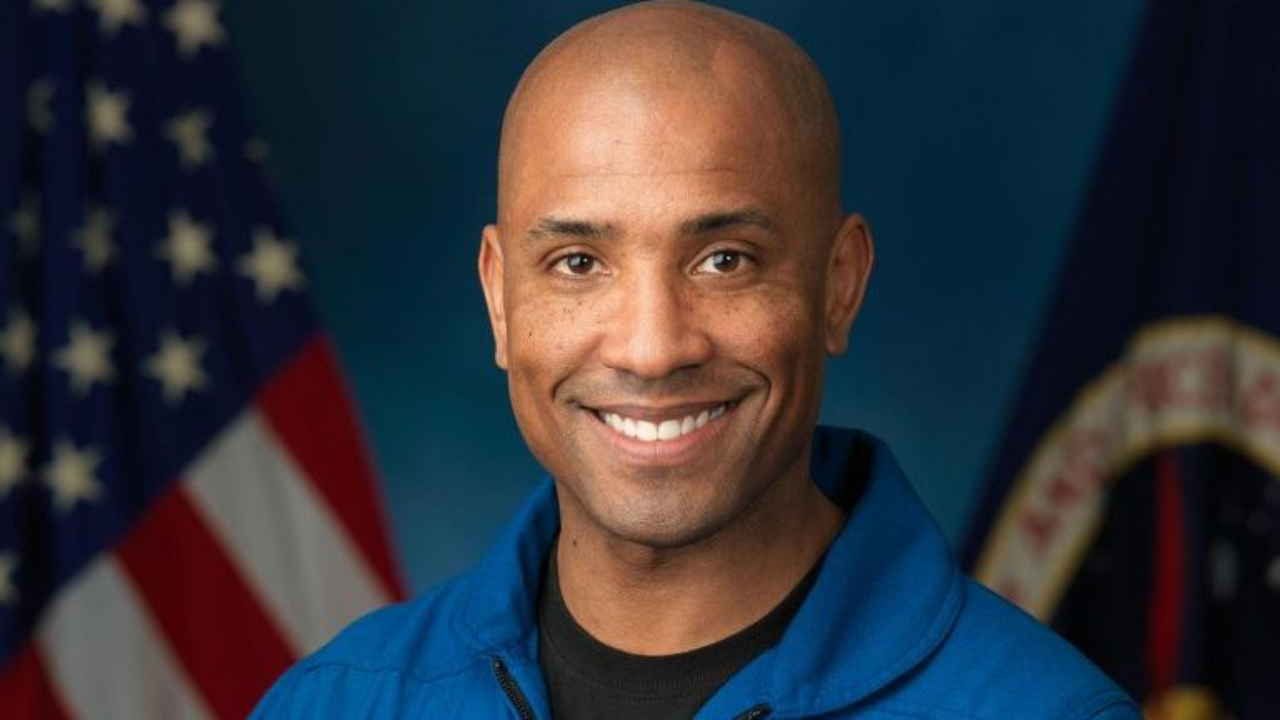
Victor Glover: Fighter Pilot, Father, Man of Faith, and the First Black Astronaut to Reach the Moon
On April 1, 2026, at 6:35 in the evening, a column of fire lit up the Florida sky and a rocket called the Space Launch System lifted four astronauts off the face of the Earth — bound for the Moon. Sitting in the left seat of the Orion spacecraft, hands on the controls, was a man from Pomona, California named Victor Jerome Glover Jr. A Navy captain. A combat veteran. A father of four daughters. A devoted Christian. A member of Phi Beta Sigma Fraternity. And on that Tuesday evening, the first Black man in history to travel to the Moon.
Bronzecomm has been proud of Black Chicago — and Black America — for a long time. But this week, as we watch Victor Glover pilot NASA's Artemis II spacecraft around the far side of the Moon and back toward Earth, we want to take a moment and tell his story properly. Because it is extraordinary. And it belongs to all of us.
Where He Comes From
Victor Glover was born on April 30, 1976, in Pomona, California — a working-class suburb east of Los Angeles. His father, Victor Glover Sr., was a police officer of African American heritage who pushed his son toward science and engineering from an early age. His mother, a bookkeeper, is Caribbean American. The family's connection to the sky went back a generation: Victor's grandfather had served in the Air Force during the Korean War era, but faced the barriers of his time and was never able to pursue the aviation career he wanted. The path that grandfather couldn't walk, his grandson would one day fly beyond the Moon.
As a boy, Victor watched the space shuttle launch on television and made up his mind. He wanted to be up there. He excelled in math and science, starred in football and wrestling at Ontario High School —earning Athlete of the Year in 1994 — and headed to California Polytechnic State University in San Luis Obispo, where he studied general engineering, joined Phi Beta Sigma Fraternity, played defensive back on the football team, and wrestled for the Mustangs.
College wasn't always smooth. In an interview, Glover recalled failing an engineering course — and the professor, Dr. Jim LoCascio, who refused to let him quit. "He said to me, 'You've got to put in the work. I'll help you, but you've got to put in the work.'" Glover has said that moment changed how he thought about everything. He graduated with his engineering degree in 1999 and has been putting in thework ever since.
The Making of a Pilot
After graduation, Glover commissioned into the United States Navy. His father had actually steered him away from his first instinct — the Navy SEALs — pointing out that an engineering degree made him a strong candidate for something even harder to reach: NASA. Glover took that advice to heart. He completed flight training in Pensacola and Kingsville, Texas, and earned his Naval Aviator wings of gold on December 14, 2001.
What followed was a military career of genuine distinction. Glover flew the F/A-18 Hornet, the F/A-18E/F Super Hornet, and the EA-18G Growler. He flew 24 combat missions, including deployments supporting Operation Iraqi Freedom aboard the aircraft carrier USS John F. Kennedy. He logged more than 3,500 flight hours across more than 40 types of aircraft and made over 400 carrier arrested landings — some of the most technically demanding flying in the world. His call sign, earned from an early commanding officer, was "Ike" — short for "I Know Everything." His colleagues meant it as a tease. History has made it feel almost prophetic.
Between 2007 and 2010, Glover earned three master's degrees from three different institutions: a Master of Science in Flight Test Engineering from Air University at Edwards Air Force Base, a Master of Science in Systems Engineering from the Naval Postgraduate School, and a Master of Military Operational Art and Science, again from Air University in Alabama. He was also selected for the United States Air Force Test Pilot School — one of the most selective programs in aviation — and spent time as a legislative fellow in the Washington office of Senator John McCain. That Senate fellowship, of all things, is what put him in position for NASA. In July 2013, while still serving on the Hill, Glover was selected as one of eight members of NASA's 21st astronaut class.
To the Space Station — and Into History
Glover completed astronaut candidate training in 2015 and spent several years in critical
behind-the-scenes roles — working as a capsule communicator (CapCom), the voice between Mission Control and the astronauts in space, and serving as operations officer and family escort for crews launching on Soyuz and Crew Dragon missions. Anyone who has watched a NASA launch knows how much trust goes into those roles.
In 2018, he received his first flight assignment: pilot of SpaceX Crew-1, the first fully operational crewed flight of SpaceX's Crew Dragon spacecraft — named Resilience. On November 15, 2020, Glover launched alongside NASA astronauts Michael Hopkins and Shannon Walker, and JAXA astronaut Soichi Noguchi. They arrived at the International Space Station two days later.
He spent 168 days in space. He completed four spacewalks, including one lasting more than six hours to upgrade the Columbus module. He conducted scientific experiments, maintained station systems, and carried communion supplies so he could worship aboard the ISS each week. In doing so, he became the first Black astronaut to complete a long-duration stay on the International Space Station — not a brief shuttle visit, but a real assignment, six months living and working in orbit.
On February 24, 2021, Vice President Kamala Harris called him on the station. The image of those two — a Black woman who would soon become the first female Vice President, speaking across the vacuum of space with a Black man floating in orbit above the Earth — is one for the history books.
Artemis II: Humanity's Return to the Moon
On April 3, 2023, NASA announced the crew of Artemis II: Commander Reid Wiseman, Pilot Victor Glover, Mission Specialist Christina Koch (the first woman on a lunar mission), and Canadian Space Agency astronaut Jeremy Hansen (the first Canadian). Glover was assigned as pilot — the person who would actually fly the Orion spacecraft.
The mission launched on April 1, 2026, at 6:35 p.m. EDT from Launch Pad 39B at Kennedy Space Center — the same pad from which the Apollo program launched to the Moon more than fifty years ago. The spacecraft, named Integrity by the crew, carried four human beings farther from Earth than any humans had traveled since the Apollo era. On April 6, 2026, they flew around the far side of the Moon — passing through a 45-minute communications blackout as they went dark behind the lunar surface. When President Trump later asked Glover what that blackout felt like, Glover said simply: "I said a little prayer, but then I had to keep rolling."
The mission set the record for the farthest humans have ever traveled from Earth. The crew is scheduled to splash down in the Pacific Ocean off the coast of San Diego on April 10, 2026 — ten days after launch, having circled the Moon and returned to tell the story.
The Easter Message That Stopped the World
On April 4, 2026 — Good Friday, with Easter Sunday two days away — a CBS News reporter asked Victor Glover if he had a message for those of us watching from Earth.
"I don't have anything prepared," Glover began. "I'm glad you brought it up, though. I think these observances are important."
"You guys are talking to us because we're in a spaceship really far from Earth.
But you're on a spaceship called Earth — created to give us a place to live in
the universe. In all of this emptiness — this is a whole bunch of nothing, this
thing we call the universe — you have this oasis, this beautiful place that we get
to exist together."
He continued: "I think, as we go into Easter Sunday, thinking about all the cultures all around the world — whether you celebrate it or not, whether you believe in God or not — this is an opportunity for us to remember where we are, who we are, and that we are the same thing. And that we've gotta get through this together."
NASA shared the video on Instagram. It went viral within hours. Commenters from around the world called it one of the most moving things they had ever heard from space. Many compared it to the famous Christmas Eve broadcast from Apollo 8 in 1968, when astronaut Frank Borman read from the Book of Genesis as the spacecraft circled the Moon for the first time. Like that broadcast — which reached an estimated 25 percent of the world's population — Glover's Easter message spoke to something larger than the mission itself.
Watch Victor Glover's Easter message from space at:
https://www.cbsnews.com/video/artemis-ii-astronaut-easter-message-earth-special-emptiness/
NASA also shared the full message on their Instagram @NASA — search #VictorGlover #Artemis2
Who He Is Beyond the Cockpit
Victor Glover is married to Dionna Odom Glover. They have four daughters and have been married for more than two decades. He has said that before every flight — from a Navy jet to a rocket to the Moon — he says a short prayer and sends his family a message telling them he loves them. "Our families are outside the building when we walk out," he said before the Artemis II launch. For a man who has flown combat missions and spacewalked above the Earth, the most important thing he does before a mission is still that.
His faith is not background noise — it is woven through everything he does. He carried a Bible and communion supplies to the International Space Station. He attends a Church of Christ congregation in Friendswood, Texas, with his family. From lunar orbit, he read scripture and looked at the Earth and felt awe. He has said he sees no conflict between being a scientist and believing in God. "I believe in both," he has said. "And I don't find them to be in conflict."
He is also a man who thinks carefully about race and representation — and chooses his words with intention. Before the Artemis II launch, when asked what it meant to be the first Black man on a lunar mission, he gave an answer worth sitting with: "I live in this dichotomy between happiness that young, Brown boys and girls can look at me and go, 'Hey, he looks like me, and he's doing what?' And that's great. I love that. But I also hope we are pushing the other direction — that one day we don't have to talk about these firsts. That one day, this is just human history. It's the story of humanity — not Black history, not women's history — but that it becomes human history."
That is a man who understands exactly what he represents — and is already imagining a future where no child has to feel like a first.
One More Thing About His Grandfather
Victor Glover's grandfather served in the Air Force during the Korean War period. He wanted to fly. The doors of his time would not open for him.
His grandson just piloted a spacecraft around the Moon.
That is not just one man's story. That is our story. The story of what happens when the doors finally open — and what a people can do when they have always been ready.
We Are So Proud of You, Vic.
From Black Chicago to Black America to everyone following the light of that rocket across the Florida sky on April 1st — we see you, Victor Glover. We are proud of you. We are grateful for you. And we cannot wait to welcome you home.
The Artemis II crew is scheduled to splash down in the Pacific Ocean on April 10, 2026. Follow the mission live at https://www.nasa.gov/humans-in-space/artemis/.
Follow Victor Glover on social media: @AstroVicGlover on X (Twitter) and Instagram
Stay connected with news and updates!
Join our mailing list to receive the latest news and updates from our team.
Don't worry, your information will not be shared.
We hate SPAM. We will never sell your information, for any reason.
