
“Okay, so you know what? We’re calling Jesse Jackson!”
Feb 24, 2026
I remember when those words could shift the atmosphere in a corporate office.
You’d be sitting across from someone who had just told you there was no budget, no opportunity, no position available. Then someone in the group would rise as if to exit and calmly say, “Okay, so you know what? We’re calling Jesse Jackson. We’ll be in touch.” Suddenly, the tone changed. Schedules opened up. Meetings were arranged. “What was it you wanted to discuss?”
That wasn’t folklore. That was power. Organized power.
But before he was a national figure—before the presidential runs and international diplomacy—Jesse Jackson was a young man with a calling.
From Greenville to Chicago
Born in 1941 in Greenville, South Carolina, Jackson grew up in the segregated South. He attended North Carolina A&T State University and graduated in 1964. That same year, he moved to Chicago on a Rockefeller grant to study at Chicago Theological Seminary.
In March 1965, when Martin Luther King Jr. called for supporters to come to Selma, Jackson organized fellow students and answered the call. He was there in the thick of the voting rights struggle. And on April 4, 1968, he was on the balcony of the Lorraine Motel in Memphis when the assassin’s bullet took King’s life.
Before returning to Chicago, Jackson asked Ralph Abernathy, who succeeded King as head of the Southern Christian Leadership Conference (SCLC), for a staff position. He wanted to lay the groundwork for a Chicago campaign. And that is exactly what he did.
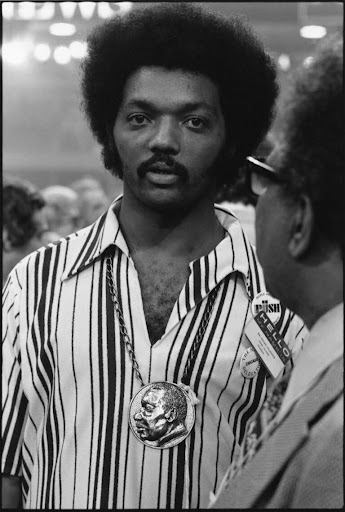
Operation Breadbasket and “I Am Somebody”
Under the umbrella of SCLC, Jackson built a powerful Chicago organization. Out of that work grew Operation Breadbasket, headquartered on the South Side. Operation Breadbasket wasn’t just rhetoric. It was strategy.
Jackson saw clearly what many of us were living: Black communities were major consumers, yet almost invisible in corporate leadership. We stocked shelves. We cleaned floors. We worked the assembly lines. But we were rarely in management, never in the front office, and almost never in ownership.
It was during this period in the late 1960s and early 1970s—while organizing workers and church congregations—that Jackson popularized the affirmation:
“I Am Somebody.”
He would lead crowds in a rhythmic chant:
I am somebody.
I may be poor.
I may be on welfare.
But I am somebody…
It was more than a slogan. It was psychological reconstruction. In a time when Black workers were told—directly and indirectly—that they were expendable, Jackson made dignity part of the movement.
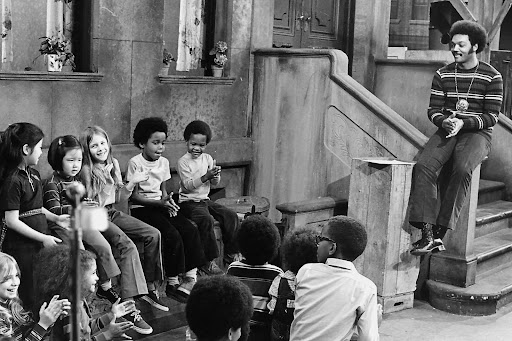
That message reached millions when he brought it to children on Sesame Street in the early 1970s, leading a group of Black children in the chant. It was a powerful cultural moment: civil rights language entering children’s television. Click here to see that historic clip.
He understood something critical: before you can negotiate wages, contracts, and management positions, people must believe they are worthy of them. And then he negotiated.
Through organized boycotts, picket lines, and media pressure, Jackson forced companies like PepsiCo, The Coca-Cola Company, McDonald's, KFC and many more to come to the table.
Out of those negotiations came promotions into management, expanded hiring pipelines, distributorship opportunities, and the birth of the National Black McDonald's Operators Association (BMOA). Corporate America began to change—not from charity, but from organized leverage.
PUSH and Expanding the Vision
In 1971, Jackson founded Operation PUSH—People United to Save (later Serve) Humanity.
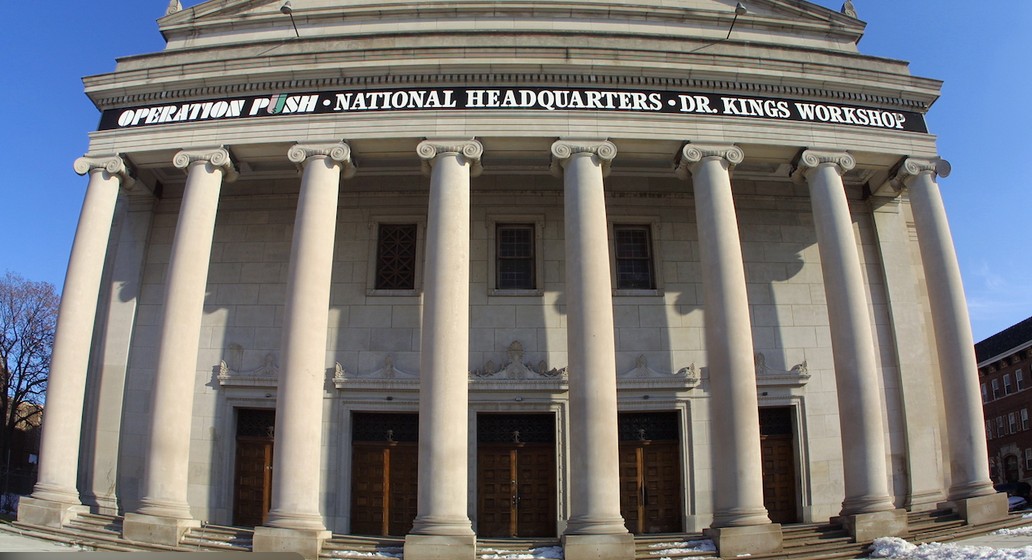
PUSH expanded the mission beyond corporate negotiations to voter registration, scholarships, job training, youth mentorship, and economic development. Churches became the backbone. Pastors mobilized congregations. Families were fed. Students were supported.
The PUSH Expo, launched in Chicago and later expanded to other major cities, showcased Black-owned businesses and connected entrepreneurs to capital and networks. It was economic self-determination on display.
“Keep Hope Alive” and the Presidential Runs
By the 1980s, Jackson’s work had moved onto the national political stage.
In 1984, he ran for President of the United States. At the Democratic National Convention that year, he delivered a speech that would echo through American politics. Near the end, he told supporters:
“Keep hope alive.”
That phrase became the heartbeat of his campaign.
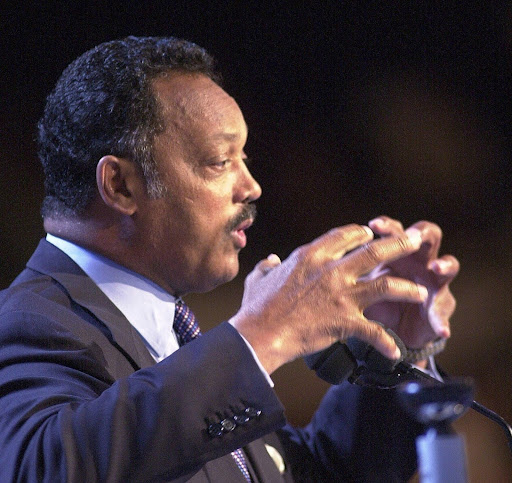
It was not naïve optimism. It was disciplined resilience. At a time when many Black Americans felt politically marginalized, “Keep Hope Alive” was a refusal to disengage. It said: stay in the fight.
In 1988, he ran again, winning primaries and caucuses and earning millions of votes. He pushed for reforms in how delegates were allocated in Democratic primaries, making the system more proportional and accessible.
Years later, when Barack Obama secured the Democratic nomination and the presidency, he did so on ground Jackson had helped level.
International Work and Global Reach
Jackson’s influence extended beyond U.S. borders. In 1979, he traveled to Iran and negotiated the release of American hostages. He later helped secure releases in Syria and Cuba.
He stood in solidarity with leaders like Nelson Mandela and maintained a global presence in human rights struggles.
His diplomacy sometimes drew criticism, but it reflected a consistent belief: dialogue could open doors that rigid politics could not.
Legacy at Home
Operation PUSH eventually evolved into the Rainbow/PUSH Coalition, headquartered in Chicago. Even in later years, Jackson remained active—speaking on economic justice, voting rights, and education.
Along with his partner for He watched his children grow into leaders of their own. Jesse Jackson Jr. and Jonathan Jackson both served and are serving, respectively, in the United States Congress. Santita Jackson is a respected voice in public life.
Why Those Words Still Matter
“I Am Somebody.”
“Keep Hope Alive.”
“Okay, so you know what? We’re calling Jesse Jackson.”
Each phrase came from a different season of his life. One built dignity. One sustained political courage. One signaled organized economic power. Together, they tell the story.
We live in a time when many young people don’t remember grocery stores without Black cashiers or corporate offices without Black managers. They don’t remember when franchise ownership was a closed door.
But that memory lives in Chicago.
It lives in businesses born from negotiation.
It lives in political pathways widened.
It lives in the understanding that moral argument must be paired with strategy.
We owe him for that. We owe him for teaching that protest without leverage is noise—but protest with organization is change. We owe him for showing that hope is not passive. It is disciplined.
So when we say, “Okay, so you know what? We’re calling Jesse Jackson,” we are really saying something deeper.
We are saying: organize.
We are saying: affirm your worth.
We are saying: keep hope alive.
We are saying: leverage your power.
And as we honor his passing, the question is not whether we can call him. The question is whether we learned how to speak with the same authority when it is our turn to stand up.
Stay connected with news and updates!
Join our mailing list to receive the latest news and updates from our team.
Don't worry, your information will not be shared.
We hate SPAM. We will never sell your information, for any reason.
