
New Documentary Offers Fresh Look at Civil Rights Icon W.E.B. Du Bois
May 06, 2026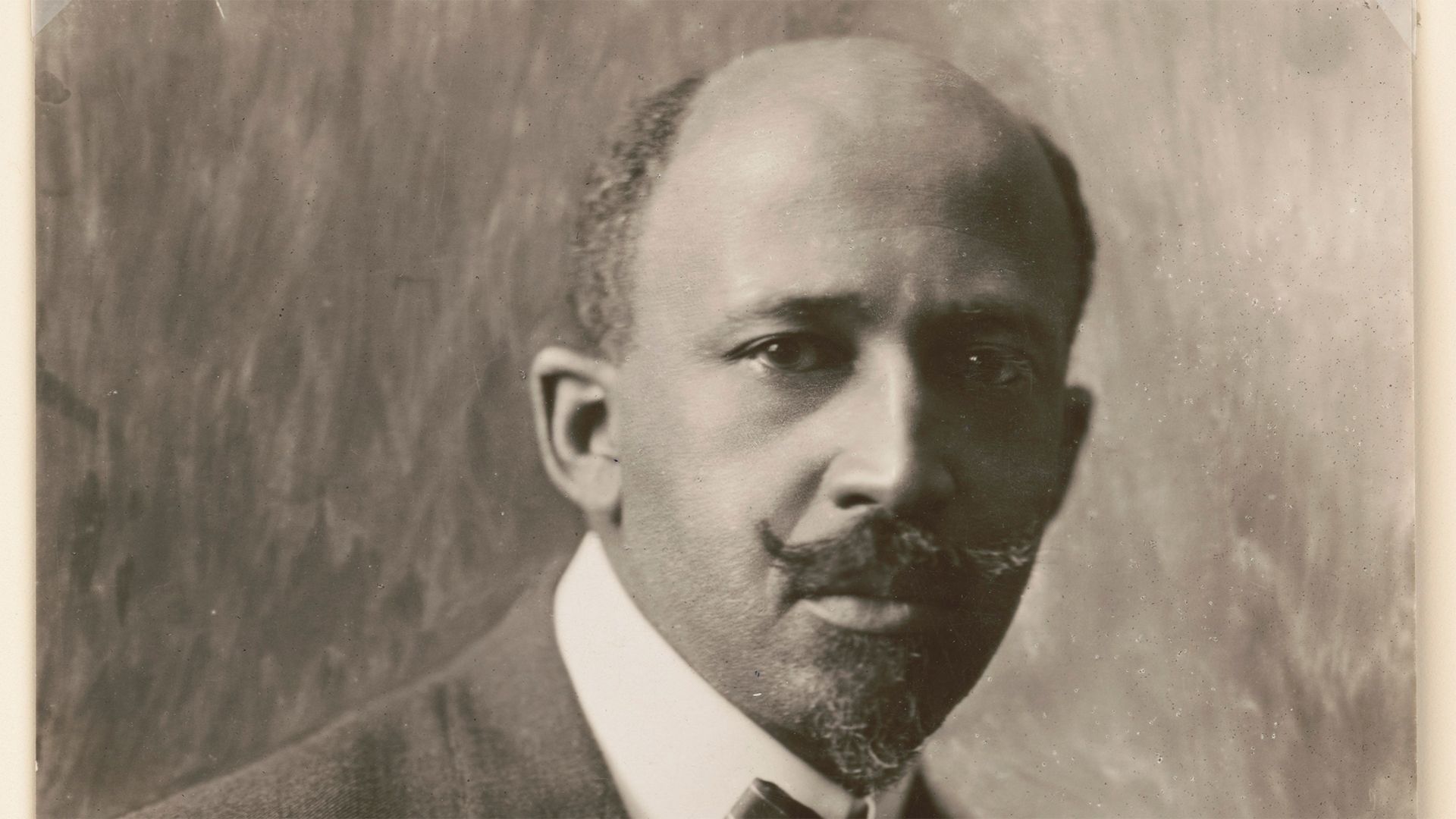
Peabody and Emmy Award-winning producer Rita Coburn is offering a fresh way to look back on the legacy of civil rights pioneer and sociologist W.E.B. Du Bois. (Click here for Coburn's PBS interview.)
By Blake Thor| April 30, 2026, 7:05 pm, WTTW
In her new documentary, “W.E.B. Du Bois: Rebel With a Cause,” Coburn set out to explore parts of Du Bois’ story she felt had been neglected.
“I thought it was important to be expansive about this man,” Coburn said.
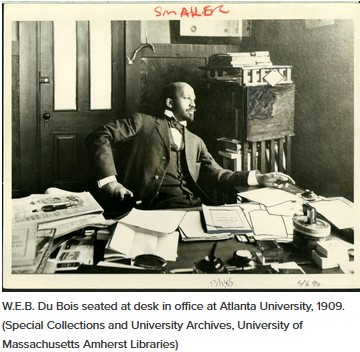
Coburn said Du Bois filled a unique niche in the history of civil rights activism, having been born just years after the Emancipation Proclamation, but dying on the eve of the 1963 March on Washington.
“(He was) not hampered by the rest of the Blacks, for the most part, in the South who were digging their way out of enslavement,” Coburn said. “He had generations of being free. … He took this massive intellect that he had and used it to go for civil rights.”
The documentary first explores Du Bois as a scholar. He was the first Black man to earn a Ph.D. from Harvard, and his 1899 study “The Philadelphia Negro” is widely considered the first sociological study focused exclusively on an African American community.
“Of course, we’re in Chicago, so a lot of us know about ‘Chicago the Great Metropolis,’” Coburn said, referring to Horace Cayton’s landmark 1945 study. “But prior to that, the very first time that people went door to door and gathered data and research about Black people was with W.E.B. Du Bois, when he did that for Philadelphia.”
Du Bois leveraged the scientific method and empiricism, what the documentary refers to as “their (the White intelligentsia’s) weapons,” to challenge those who subjugated Black Americans, Coburn said.
“That was a throughline throughout all his work, the systematic gathering of data to prove his points about Black people in society,” Coburn said.
Coburn also sought to investigate how Du Bois moved from academia to activism.
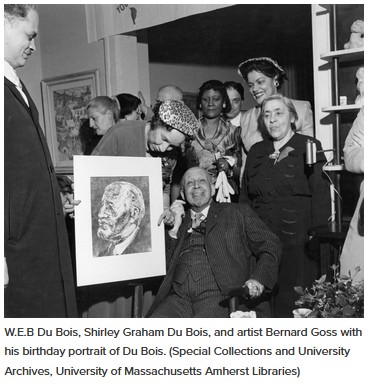 Du Bois was deeply shaken by the 1899 lynching of Sam Hose. Accused of killing a White man, Hose, a young Black man, was murdered by a White mob of up to 2,000 just hours from where Du Bois worked as a professor at Atlanta University.
The lynching’s brutality, which reportedly saw members of the mob remove Hose’s fingers and peel skin from his face, pushed Du Bois into activism, Coburn said.
“Here’s where W.E.B. Du Bois is a scientist — he’s been to Berlin, he’s been to Harvard,” Coburn said. “But now what he has to do is realize that he is a Black man in the South and that Black men in the South are lynched, dismembered, burned.”
The documentary also combs over Du Bois’ extensive literature, pulling out letters and memos that paint a picture of his personality. For Coburn, reconstructing Du Bois’ thinking was a central goal.
Actors Jeffrey Wright and Courtney B. Vance narrate Du Bois’ writings, helping to present him as a complex figure, Coburn said.
“We call that breaking the story,” Coburn said. “At what point do I reach a breaking point that the common person, who hadn’t studied him, would understand him?”
The documentary is scheduled to premiere Tuesday, May 19, and you can watch it on WTTW.
Check out the trailer here.
Stay connected with news and updates!
Join our mailing list to receive the latest news and updates from our team.
Don't worry, your information will not be shared.
We hate SPAM. We will never sell your information, for any reason.
