
Mitochondrial Eve: Expanding the Picture
May 06, 2026I ran across this Facebook post by Neil deGrasse Tyson and thought I'd investigate a little further to bring you this very informative and more in-depth explanation of "Mitochondrial Eve". (First Dr. Tyson's blog.)
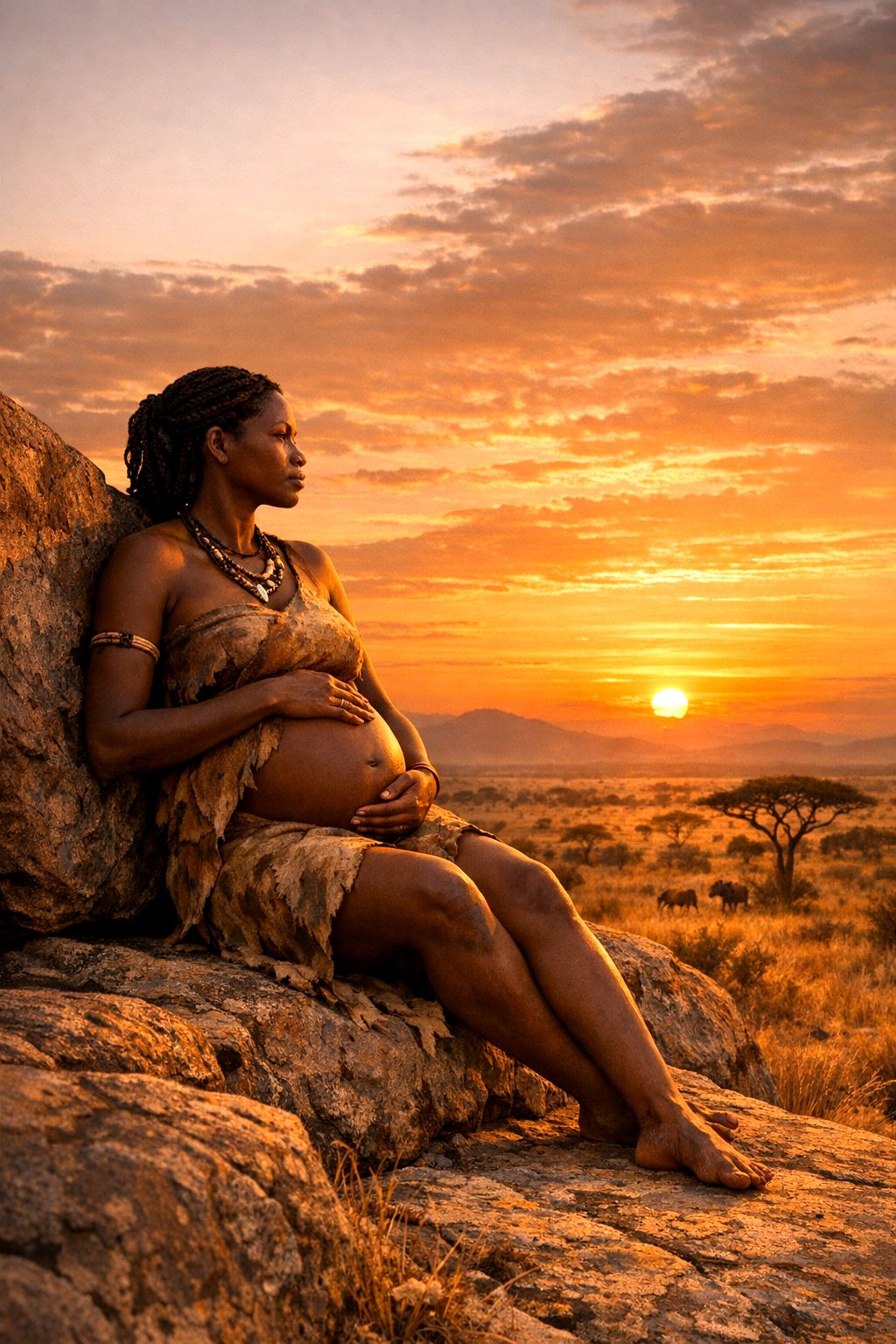
"Genetic studies over the past four decades have revealed a remarkable truth about our species: every human alive today carries mitochondrial DNA that can be traced back to a single woman who lived in Africa roughly 150,000 to 200,000 years ago. Scientists call her Mitochondrial Eve, not because she was the first woman, nor the only woman of her time, but because her mitochondrial lineage is the only one that survived unbroken to the present.
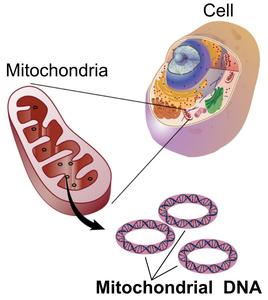
Mitochondrial DNA is passed from mothers to their children, unchanged except for small mutations. Many women of that ancient era had daughters, but over tens of thousands of years, their maternal lines ended; through chance, through having only sons, or through extinction of small groups. The line of one woman, however, continued. Her descendants spread across Africa, and eventually across the entire planet.
Importantly, Mitochondrial Eve was not the only human, nor even the only human‑like female alive in her age. She lived among thousands of other Homo sapiens, and possibly alongside related hominin groups. Genetic evidence shows that early humans interbred with other lineages; such as Neanderthals and Denisovans; and it is entirely plausible that her own descendants interacted and reproduced with populations outside the strict boundaries of early Homo sapiens. Yet through the complex mathematics of ancestry, only her mitochondrial branch survived to reach all living humans.
This does not make her a “mother of humanity” in a mythical sense. Instead, she represents a profound scientific insight: all humans share a single, continuous maternal thread stretching back to one ancient African woman.
And so, every person on Earth is a distant cousin. Every nation, every culture, every face is part of the same extended family. Any individual who insults another person; or another “race”; is, knowingly or not, insulting their own brothers and sisters."
Mitochondrial Eve: Expanding the Picture
The blog by Neil DeGrasse Tyson makes a solid, well-grounded argument. Here's a deeper look at the key dimensions.
Who Made This Discovery and How
The concept emerged from a landmark 1987 study published in Nature by geneticists Allan Wilson, Rebecca Cann, and Mark Stoneking at UC Berkeley. They analyzed mitochondrial DNA from 147 women representing diverse global populations and, using mutation rates as a molecular clock, traced all the lineages back to a single common ancestor in sub-Saharan Africa.
The term "Mitochondrial Eve" was actually coined by science journalists covering the study — the researchers themselves were careful to frame it in purely genetic terms. The methodology has been refined dramatically since 1987. Modern whole-genome sequencing and vastly larger sample populations have only strengthened the core finding while narrowing and adjusting the estimated timeframe. Today's scientific consensus places her at roughly 150,000–200,000 years ago, most likely in eastern or southern Africa — regions modern-day Ethiopia, Tanzania, and South Africa occupy now.
The decision to call her "Eve" was partly a communications choice that has been both celebrated and criticized. It's evocative, but it consistently misleads people into thinking she was alone or first — neither of which is true.
Her World: Level of Civilization
By any modern definition, she had none — and that framing actually undersells how remarkable her world was.
She was a Middle Stone Age human, living in small, mobile bands likely numbering 25–150 people. What her community probably had:
- Sophisticated stone tool technology — the Levallois and related techniques required planning multiple steps ahead, a marker of genuine cognitive complexity
- Fire use and control, which reorganized social life, diet, and protection
- Ochre use — red ochre pigment found at sites like Blombos Cave in South Africa dating to ~160,000–100,000 years ago suggests symbolic thinking, possibly body painting or ritual
- Shellfish and marine resource exploitation, indicating she or people very like her understood seasonal patterns and environmental planning
- Language — almost certainly some form of it, though its complexity is debated. The cognitive architecture for language was in place
What she almost certainly did not have: agriculture, permanent settlements, written records, metallurgy, or formal governance. But the cognitive hardware that eventually produced all of those things was already running. She was, neurologically, essentially us.
The Other Hominins Around Her
This is where the story gets genuinely remarkable. She was not living in an empty world.
Neanderthals (Homo neanderthalensis) were well-established across Europe and western Asia during her lifetime — a separate species that had been diverging from our line for roughly 500,000–700,000 years. They were not primitive brutes. They buried their dead, cared for injured individuals, used pigments, and made tools of real sophistication. Modern non-African humans carry 1–4% Neanderthal DNA, meaning her descendants absolutely interbred with them — likely beginning when Homo sapiens first moved into the Middle East and Europe.
Denisovans are known primarily from fragmentary remains found in Siberia's Denisova Cave, but their genetic fingerprint is enormous. Melanesians and some Southeast Asian and Pacific Islander populations carry 4–6% Denisovan DNA. The full geographic range of Denisovans is still being mapped — a jawbone found in Tibet suggests they ranged across a stunning swath of Asia.
Homo heidelbergensis or related archaic humans may still have been present in parts of Africa during her lifetime — the boundary between "archaic" and "modern" Homo sapiens is genuinely blurry in the fossil record around 200,000 years ago.
There is also growing evidence of now-unidentified "ghost lineages" — archaic human populations that interbred with early Homo sapiens in Africa itself, whose identity we haven't yet pinned down in the fossil record but whose genetic traces appear in some present-day African populations.
She may have encountered some of these groups, lived near them, traded with them, or had descendants who reproduced with them. The old image of evolution as a single clean line has been completely replaced by something that looks more like a braided river — multiple streams merging, diverging, and merging again.
One Critical Clarification Worth Adding to the Blog
The blog is scientifically sound, but one nuance is worth making explicit: Mitochondrial Eve is not our most recent common ancestor in a total genetic sense. She is only our most recent common matrilineal ancestor — traced exclusively through the mother's mother's mother chain.
We also have a "Y-chromosomal Adam" — the most recent patrilineal common ancestor of all living men — who lived at a different time, currently estimated at roughly 200,000–340,000 years ago. Adam and Eve, in the genetic sense, never met.
And our most recent common ancestor when all lineages are considered — not just mitochondrial — lived far more recently, perhaps only 3,000–5,000 years ago, due to the mathematics of how ancestry fans out exponentially backward through time.
The Blog's Closing Point
The final paragraph lands exactly right. Whatever people construct around the concept of racial difference, the underlying biological architecture of every living human being traces to the same small community on the same continent — including, through her line, to one woman. The diversity we see today accumulated in a geological eyeblink. The shared foundation is ancient, deep, and unbroken.
Stay connected with news and updates!
Join our mailing list to receive the latest news and updates from our team.
Don't worry, your information will not be shared.
We hate SPAM. We will never sell your information, for any reason.
