
Kenwood: From 19th-Century Enclave to Modern South Side Neighborhood
Jan 27, 2026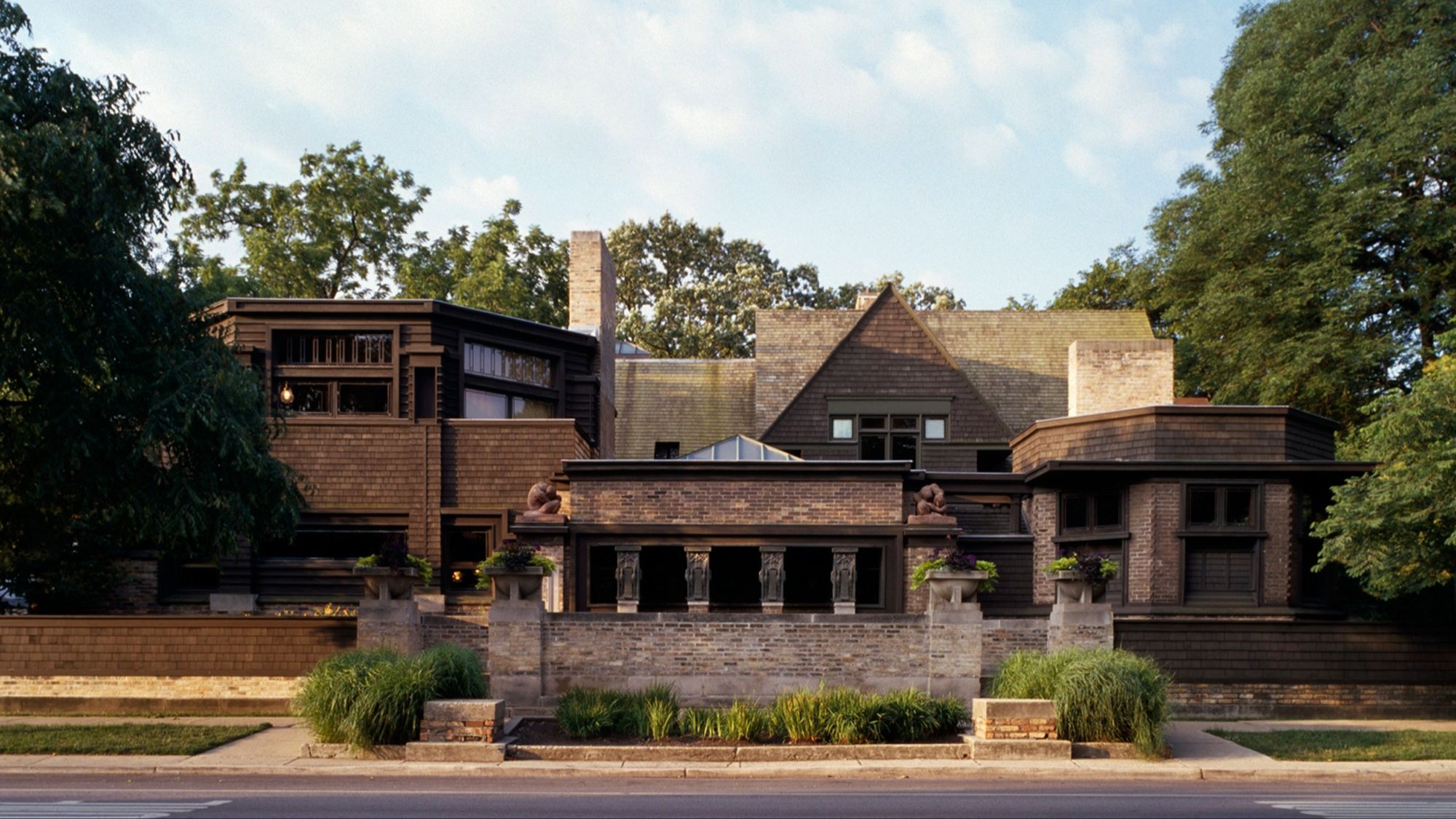
Introduction
Kenwood is a South Side neighborhood located just north of Hyde Park. It is bounded by 43rd Street to the north, 51st Street to the south, Cottage Grove Avenue to the west, and Lake Michigan to the east. Known for its historic mansions, early suburban development, and long association with Chicago’s professional and political class, Kenwood has played a distinct role in the city’s residential history.
Trivia Question:
Who is credited with building the first home in the area in the 1850s, naming it after his family's land in Scotland?
Kenwood by the Numbers
Early Landscape and Settlement
Before large-scale development, the land that became Kenwood consisted of prairie and lake shore terrain. Its proximity to Lake Michigan and higher elevation made it attractive for early residential development during the mid-19th century. As Chicago expanded southward, the area began to draw interest from wealthy residents seeking space outside the crowded city center.
Kenwood developed earlier than many nearby neighborhoods and was closely tied to the growth of Hyde Park Township. Developers marketed the area as an exclusive residential district, with large lots and landscaped streets designed to attract affluent families.
Subdivision and Growth
Residential development accelerated in the 1870s and 1880s as rail and streetcar lines improved access to the area. Large single-family homes and mansions were built along streets such as Greenwood Avenue and Lake Park Avenue. These residences reflected national architectural trends and the growing wealth of Chicago’s elite.
Kenwood’s development followed a suburban pattern, with emphasis on privacy, green space, and architectural distinction. This pattern contrasted with denser working-class neighborhoods developing closer to industrial corridors.
Annexation and Civic Life
Kenwood became part of the City of Chicago through the annexation of Hyde Park Township in 1889. Annexation brought municipal services and infrastructure while preserving the neighborhood’s residential character. By the turn of the 20th century, Kenwood had become one of Chicago’s most prestigious addresses.
Residents included business leaders, professionals, and civic figures whose influence extended beyond the neighborhood. Churches, schools, and social institutions supported a stable community rooted in homeownership and civic engagement.
Architecture and Historic Landmarks
Kenwood is known for its historic housing stock, particularly its late 19th and early 20th century mansions. The Kenwood Historic District includes a significant collection of these residences and reflects the neighborhood’s early prominence.
One of the most notable landmarks is the Hannah and Alfred Smart House, designed by Frank Lloyd Wright in 1905. The home represents Wright’s Prairie School style and remains one of the neighborhood’s architectural highlights.
The streetscape itself serves as a historical record, with mature trees, wide lots, and a variety of architectural styles that illustrate the area’s development over time.
Demographic Change and Continuity
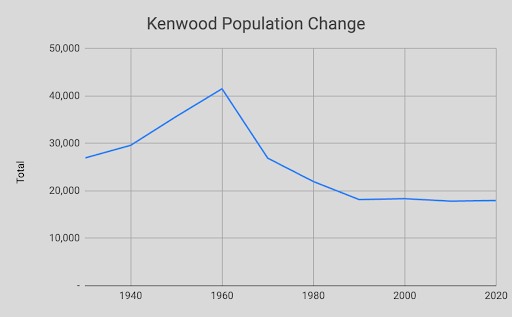
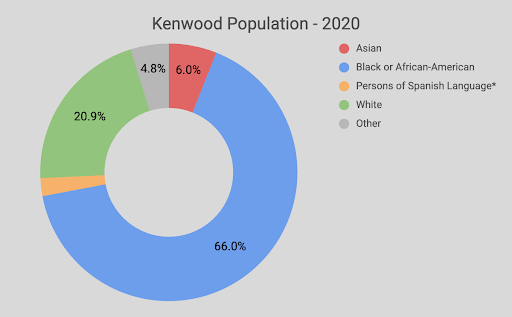
In the early 20th century, Kenwood was predominantly white and affluent. Demographic change began mid-century as Black families, many of them professionals and civic leaders, moved into the neighborhood. Unlike areas that experienced rapid turnover, Kenwood maintained a high level of residential stability.
By the late 20th century, Kenwood had become a predominantly Black neighborhood with a strong base of homeowners and long-term residents. The presence of well-maintained historic housing contributed to continued investment and neighborhood continuity.
Housing and the Built Environment
Kenwood’s housing stock includes large single-family homes, greystones, and smaller apartment buildings. Many properties date from the late 1800s and early 1900s and have been preserved or restored over time.
The neighborhood’s layout reflects early planning decisions that emphasized spacious lots and residential cohesion. Limited commercial development has helped maintain its quiet character.
Kenwood Today
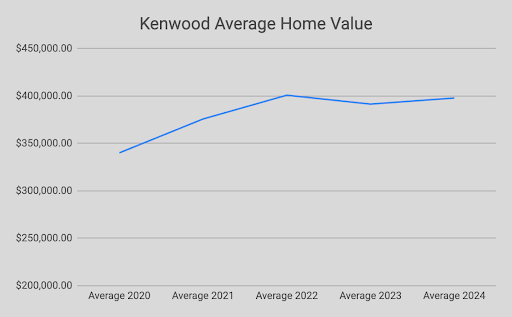
Today, Kenwood continues to balance historic preservation with contemporary urban pressures. Rising property values and renovation activity reflect renewed interest in the neighborhood, while residents and organizations work to maintain its character and accessibility.
Kenwood’s location near Hyde Park, the lakefront, and the central city continues to shape its role within Chicago. Kenwood provides insight into Chicago’s early suburban development and the long-term impact of residential planning. Its history reflects broader patterns of wealth, migration, and continuity on the South Side.
Trivia Answer
In 1836, Dr. John Kennicott, a medical physician, brought his family, including Mary and sons Charles and Robert, here from New Orleans. Eventually there would be seven children. All lived in a log cabin, which was enlarged as the family grew, before building the Kennicott House in 1856.
Stay connected with news and updates!
Join our mailing list to receive the latest news and updates from our team.
Don't worry, your information will not be shared.
We hate SPAM. We will never sell your information, for any reason.
