
Katherine Dunham: The Scholar Who Changed American Dance Forever
Jun 18, 2026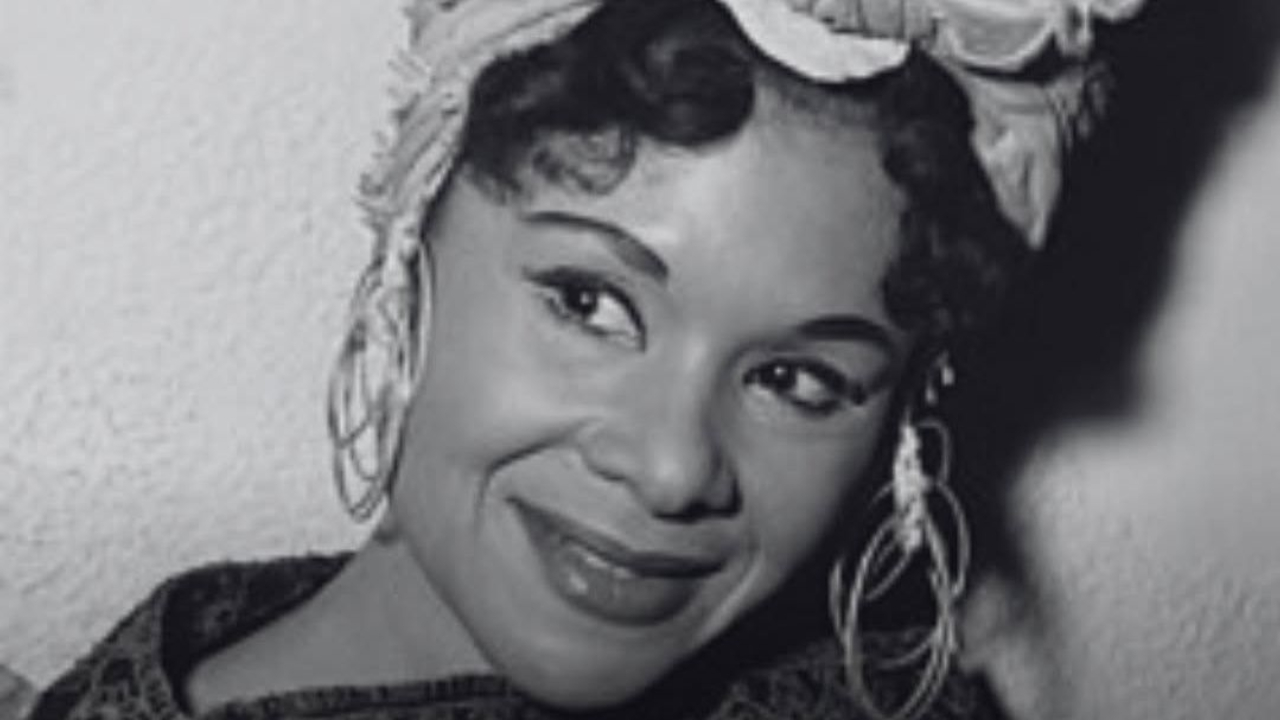
She was a 27-year-old Black woman who showed up in Haiti in 1936 with notebooks and a fellowship—not to perform, but to study. What she brought back changed American dance forever. She also refused to perform for segregated audiences. When a Kentucky venue turned away Black ticket holders, she stopped the show mid-performance and announced from the stage: "I will never perform in Louisville again." She kept that promise for 20 years.
Port-au-Prince, Haiti. 1936.
Katherine Dunham stood at the edge of a Vodou ceremony, watching. She wasn't a tourist. She wasn't an entertainer looking for exotic inspiration. She was a trained anthropologist from the University of Chicago, holding a Rosenwald Fellowship, carrying notebooks and a scholar's eye.
What she saw that night would change everything she understood about dance, culture, and what it meant to be a Black woman in America.
The ceremony moved in ways European ballet never had. The bodies weren't just performing—they were communicating. The polyrhythmic footwork, the articulated torsos, the grounded stances. This wasn't primitive movement. This was sophisticated, codified, ancient knowledge stored in muscle and memory.
Katherine wrote it all down. And then she asked to participate. Because that's what made Katherine Dunham different from every other researcher who'd come before her: she didn't just observe. She joined in. She learned. She let the tradition enter her body as well as her notebooks.She understood something most scholars of her era didn't: you can't fully document movement by watching it. You have to feel it. That understanding would build an empire.
Katherine Dunham was born in 1909 in Glen Ellyn, Illinois, to a father who ran a dry-cleaning business and a mother who died when Katherine was three. She was raised partly by her brother Albert, who recognized her intelligence early and pushed her toward education. Katherine was brilliant—curious, voracious, determined.
She enrolled at the University of Chicago in the early 1930s, studying anthropology at a time when the discipline was almost entirely white and male. The standard academic approach treated African and Caribbean cultures as distant objects of study—primitive societies to be analyzed from a safe, scholarly distance.
Katherine thought that was wrong. And she said so. She believed dance wasn't just entertainment or ritual. Dance was data. Movement was memory. The way a culture moved its body revealed what it believed, what it remembered, who it was. Her professors were skeptical. What could a Black woman from Illinois possibly contribute to anthropological scholarship?
She ignored them and applied for a Rosenwald Fellowship—a grant specifically designed to fund African American scholars. She got it.
In 1935, at age 26, Katherine Dunham sailed to the Caribbean. She spent months in Jamaica. Then Martinique. Then Trinidad. Each island had its own traditions—its own rhythms, ceremonies, ritual dances that carried African heritage filtered through centuries of colonial history, slavery, and survival.
Katherine documented everything. She recorded rhythms, mapped gestures, catalogued ceremonial patterns. She connected what she saw to broader anthropological frameworks—tracing how these movements preserved cultural memory when written history had been systematically destroyed by slavery.
Then she arrived in Haiti.
Haiti was different. The Vodou tradition was older, deeper, more complex than anything she'd encountered elsewhere. And unlike most Western researchers who approached Vodou with fear or condescension, Katherine approached it with respect.
The participated in ceremonies. Learned the spiritual protocols. Built relationships with community members who trusted her because she treated their traditions as the sophisticated knowledge systems they were.
One ceremony changed her forever.
She witnessed the possession ritual—practitioners entering altered states through music and movement, their bodies expressing spiritual presence through specific, precise physical patterns.
Most Western scholars called this "primitive trance." Katherine recognized it for what it was: a codified performance tradition that required years of practice, deep cultural knowledge, and extraordinary physical control.
"These people are doing something we don't have words for in Western dance," she wrote in her notebooks. "They're using their bodies to speak a language that predates writing."
She came home with stacks of research, dozens of notebooks, and a conviction that would define her life: This knowledge was too important to stay in academic journals. It needed to be on stage.
Back in Chicago, Katherine made a radical decision. She would bridge scholarship and performance. She would take everything she'd learned in the Caribbean—every rhythm, every gesture, every cultural context—and bring it to American audiences. Not as imitation. Not as appropriation. As education.
She formed the Katherine Dunham Company: a dance troupe that combined the ballet technique Katherine had studied in Chicago with the Caribbean and African-derived movements she'd documented firsthand.
The company performed unlike anything American audiences had seen. The dancers moved differently. European ballet floated—bodies lifted off the ground, defying gravity. Dunham Technique GROUNDED. The weight was low, the connection to the earth deliberate. The torso moved independently of the legs. The hips articulated in ways European dance considered indecorous.
These weren't just aesthetic choices. Each movement carried lineage.
That hip rotation came from specific Caribbean ceremonies. Those polyrhythmic footwork patterns preserved African drumming traditions when instruments had been banned during slavery. That grounded stance reflected a worldview about the relationship between humans and the earth.
When Katherine Dunham's company danced, they weren't just performing. They were teaching.
Audiences who'd never left America were encountering the living memory of Haiti, Jamaica, Trinidad, Martinique—in motion, on stage, impossible to ignore.
In 1940, Katherine opened the Dunham School of Dance and Theatre in New York City.
She formalized what she'd been developing into the Dunham Technique: a complete system of dance education that integrated physical training, cultural history, and anthropological context.
Students didn't just learn steps. They learned WHERE the steps came from. Why they existed. What cultural work they performed.
A student studying Caribbean movement in Katherine's school might spend weeks learning the history of slavery in Haiti before they learned the corresponding dance forms. Because Katherine insisted: you can't perform cultural movement without understanding cultural context.
"Choreography carries lineage," she told her students. "When you move this way, you're connected to everyone who moved this way before you. Honor that."
The school attracted students from across America and eventually from around the world.
Among them: Eartha Kitt, Marlon Brando, James Dean, José Ferrer. Yes—those names. Katherine Dunham's school taught some of the most celebrated performers of the 20th century.
Because her technique wasn't just about dance. It was about embodied presence. How to inhabit your body fully. How to move with intention and cultural awareness.
Hollywood noticed. Broadway noticed. Film producers came calling.
The Katherine Dunham Company performed on Broadway and in films throughout the 1940s and 1950s. They toured internationally—Europe, Latin America, Asia.
Everywhere they went, they challenged the assumption that African diasporic movement was primitive. They showed it was disciplined, sophisticated, and worthy of serious attention.
But Katherine Dunham refused to let performance be separated from politics.
In a country where Jim Crow segregation was law and custom, she turned every performance into an act of resistance.
She refused to perform in venues that barred Black audiences.
She refused to stay in hotels that wouldn't accept her Black dancers.
She refused to eat in restaurants that served white customers and turned away Black ones.
When venues told her these were just "local customs" she'd have to accept, she told them to find another performer.
Then came Louisville, Kentucky. 1944.
The company was mid-performance when Katherine learned that Black audience members had been turned away at the door. White ticket holders inside. Black ticket holders who'd paid the same price: turned away. Katherine stopped the show. She walked to the front of the stage and addressed the audience directly. "I have learned that Black members of our audience were not permitted to attend this performance. I find this unacceptable. I will not perform under these conditions." Then she said: "I will never perform in Louisville again."
The theater manager was furious. The white audience members were confused—some angry, some ashamed. Her booking agency was horrified.
Katherine Dunham didn't care.
She kept that promise for 20 years.
She toured the world. Performed in Europe, Latin America, Asia. Earned international acclaim.
She did not return to Louisville.
And everywhere she performed, she made her policies clear in advance: integrated seating or no show. For Black performers, no separate entrances, no segregated hotels. Equal treatment or find someone else.
"I will not make art for audiences that consider some human beings inferior," she said. "The art itself becomes a lie if it's performed in service of inequality."
The Dunham Technique spread far beyond her school.
Dancers trained in her method went on to work in modern dance companies, Broadway productions, Hollywood films. They taught in universities, opened their own schools, trained new generations.
Elements of Katherine's technique—the isolation of body parts, the polyrhythmic movement, the grounded stances, the expressive torso—became absorbed into American theatrical dance so thoroughly that many practitioners used them without knowing the origin. When you watch a Broadway musical with performers moving their hips and torsos in ways that feel both natural and electric—that's Katherine Dunham's lineage. When you see a modern dancer whose movement is simultaneously earthy and sophisticated—that's her influence. When you encounter a dance class that teaches cultural context alongside movement—that's her philosophy. She built a foundation so strong that it held up the entire floor above it—even after most people forgot who'd laid the foundation.
In 1983, Katherine Dunham moved to East St. Louis, Illinois—one of the most economically devastated cities in America—and started working with young people there. She was 74 years old. She opened the Dunham Centers for Arts and Humanities. She hired local people. She trained young dancers who'd never had access to professional instruction.
When politicians and funders questioned whether arts investment was appropriate for a city struggling with poverty and violence, Katherine said: "The arts are not a luxury. They're how communities understand themselves. How young people find dignity. How a people remember what they're worth."
She worked in East St. Louis for over two decades. Katherine Dunham died on May 21, 2006. She was 96 years old. She had danced. She had researched. She had taught. She had refused segregation. She had trained generations. She had moved to a struggling city at 74 and spent her final decades giving back.
She never completed her doctorate from the University of Chicago—the fieldwork transformed her before she finished the dissertation. But the University of Chicago awarded her an honorary degree eventually. As did universities worldwide.
Her archive—notebooks, films, photographs, costumes, correspondence—was donated to Southern Illinois University. It fills entire rooms.
The Rosenwald Fellowship that sent her to the Caribbean in 1935 invested in Katherine Dunham. The return on that investment was incalculable.
Here's what Katherine Dunham proved:
Black movement is not primitive. It is sophisticated, codified, historically rich, and deserving of scholarly attention.
Dance is not just entertainment. It is cultural memory. Historical record. Living scholarship.
Art and activism are not separate. When you perform for segregated audiences, you participate in segregation. When you refuse to perform for segregated audiences, art becomes resistance.
And perhaps most importantly: knowledge belongs in the community, not just the academy.
Katherine Dunham could have written her dissertation, become a professor, published papers that a few hundred scholars would read. She chose instead to put her knowledge on stage, where thousands—eventually millions—could encounter it.
She chose movement over manuscripts. And in doing so, she changed American culture from the ground up. She was 27 years old when she arrived in Haiti with notebooks and a fellowship.
She came to study. She learned to feel. She came as a scholar. She returned as a revolutionary.
She built a technique taught in dance schools worldwide. She trained Eartha Kitt and Marlon Brando. She stopped shows mid-performance rather than perform for segregated audiences.
She moved to a struggling city at 74 and spent two decades teaching young people that their bodies carried dignity.
She lived 96 years and used every single one.
Katherine Dunham didn't just study Caribbean dance traditions. She brought them home, put them on stage, refused to let them be dismissed as primitive, and built a foundation that holds up American dance to this day.
She proved that movement is memory. That art is scholarship. That performance is resistance.
And that when you show up somewhere as a student—notebooks open, ready to learn—you might end up changing everything. Including yourself.
Stay connected with news and updates!
Join our mailing list to receive the latest news and updates from our team.
Don't worry, your information will not be shared.
We hate SPAM. We will never sell your information, for any reason.
