Johnson Warns Chicago is Headed for Shutdown Amid Budget Deadlock
Dec 11, 2025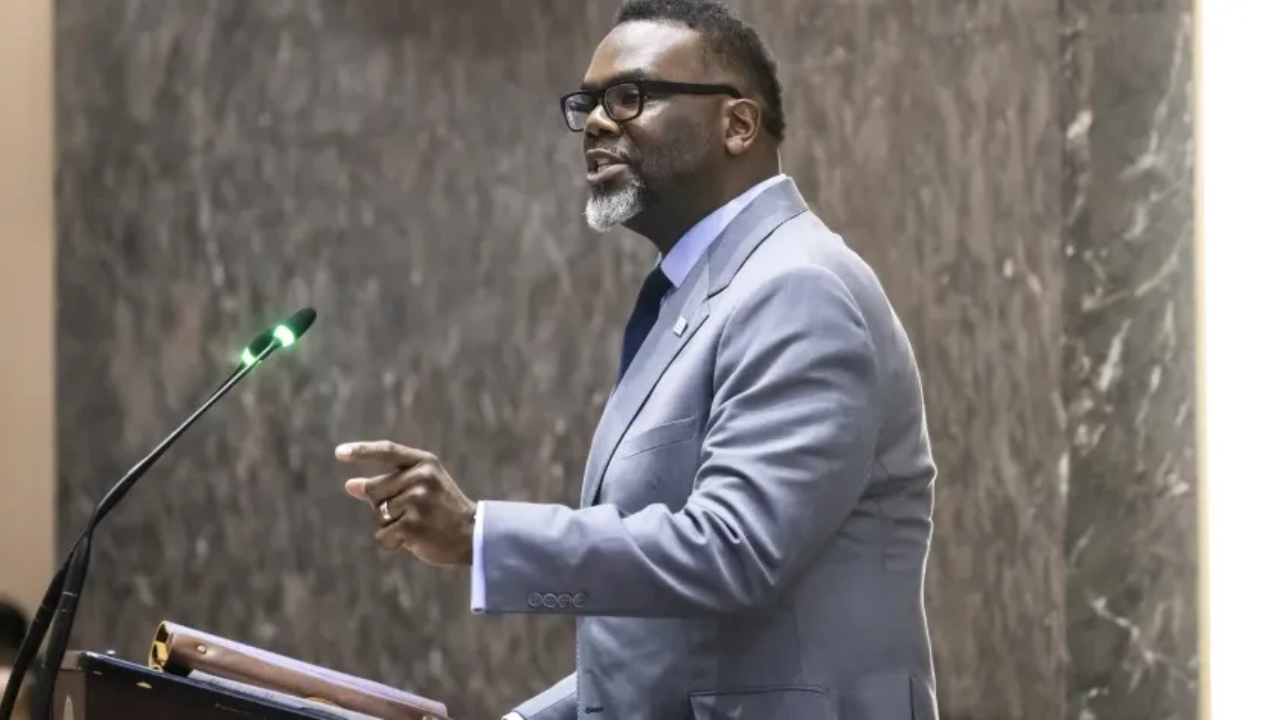
By Heather Cherone, December 8, 2025, 2:09 pm
Mayor Brandon Johnson warned Monday morning that Chicago was headed for its first-ever government shutdown after a marathon weekend meeting failed to break the budget deadlock gripping the city.
In a letter to the 26 members of the Chicago City Council who have signed on to a plan to bridge Chicago’s $1.19 billion budget gap without hiking taxes on large firms, Johnson said he was open to new ideas and continuing negotiations but said he would not allow the city’s budget to be balanced “on the backs of working people.”
“These proposals by some members of the Council are not ‘shared sacrifice’; it is only the poor who are sharing the sacrifice,” Johnson wrote. “Doubling garbage fees, cutting youth employment, and selling Chicagoans’ debt to the highest bidder puts significant additional financial strain on those with the least ability to afford it.”
“We will not sacrifice the poor and working people of Chicago to balance this budget,” Johnson said, pledging to do everything possible to avoid a shutdown.
The latest back-and-forth between the mayor’s office and Johnson’s critics leaves no clear path to a deal with just 22 days left before the deadline to avoid an unprecedented shutdown of city government.
Ald. Samantha Nugent (39th Ward), who participated in the weekend sessions, said in a letter to her colleagues sent Sunday that the mayor’s office “has no interest in working collaboratively to pass a responsible budget that better positions Chicago’s financial future.”
“Instead, they doubled down on their own budget proposal, which borrows to pay for operations, shorts our pensions, is absent critical efficiencies, and pushes a tax on jobs that will kill economic growth,” Nugent said.
In a news conference hours after the mayor addressed reporters, seven alderpeople said they would not back down.
Johnson told reporters the rival budget plan was “negligent and irresponsible” and challenged his critics to put their proposal up to a vote, sounding skeptical that while 26 out of 50 members of the City Council had signed on to the complicated plan, voting for it would be another matter.
Much of the debate over Johnson’s 2026 budget, which would impose $623 million in new taxes on the wealthiest Chicagoans and largest firms, has centered on his call to reimpose the head tax to generate $100 million to fund violence prevention and youth employment programs.
While Johnson and his allies have defended the head tax as the best way to continue funding the programs they credit with reducing Chicago’s homicide rate by approximately 29% and the city’s overall violent crime rate by more than 22%, opponents contend the tax will kill jobs and stifle economic growth.
With the prospect of a shutdown looming, each side of the debate sought to blame the other for the stalemate.
Officials cannot pass a short-term ordinance to keep City Hall functioning while negotiations continue, officials said. That means without a budget agreement, more than 30,000 workers will not be paid and city services will stop.
“A shutdown benefits no one,” Johnson said, noting that the last time the Chicago City Council attempted to override a mayoral veto of a budget was in 1984, in the midst of what has become known as Council Wars, when a block of White alderpeople — led by now-convicted former Alds. Ed Burke (14th Ward) and Ed Vrdolyak (10th Ward) — thwarted initiatives from former Mayor Harold Washington, the city’s first Black mayor, at every turn.
“We don’t want history to repeat itself,” Johnson said.
Ald. Matt O’Shea (19th Ward) called that comparison “utterly ridiculous” and accused the mayor of bullying his opponents with “name calling” and “finger pointing.”
“It’s insulting that this mayor would say things like that,” O’Shea said.
Nugent said the city “cannot afford a Johnson-imposed shutdown taken straight from a page out of the Trump playbook.”
In her letter, Nugent told her colleagues that she would work to develop a formal budget proposal that could be voted on by the City Council. Neither she nor others offered a clear explanation on how that would work.
While Ald. Bill Conway (34th Ward) said Chicagoans should not fear that their city government would shut down, neither he nor his allies could detail a path forward toward a spending plan for 2026.
Johnson said he was open to altering his proposal to impose a $21 per month per employee tax on companies with more than 100 employees but said he remains opposed to raising homeowners’ garbage fees.
Johnson specifically mentioned the proposal from 2017 that would have imposed a $33 per month per employee tax on companies with more than 50 employees, which was backed by some of the alderpeople who have been Johnson’s most vocal critics.
One of the co-sponsors of that proposal, Ald. Gilbert Villegas (36th Ward) said he no longer supports that plan, especially after the shift to remote work triggered by the COVID-19 pandemic.
While Chicago homeowners now pay $9.50 per month to have their trash and recyclables picked up once a week, it costs the city $37.50 per month to haul away each home’s garbage, according to a task force report. The alternative budget plan would have the city reduce that subsidy.
Most Chicagoans would see their monthly garbage fee rise to $18 under the proposal that Johnson has promised to veto, according to the letter. It would take 34 alderpeople to override that veto.
Senior Chicagoans would be charged $9 per month, an increase from the current fee of $4.50 per month for those homeowners who also get a break on their property taxes because they are older than 65, according to the letter.
Stay connected with news and updates!
Join our mailing list to receive the latest news and updates from our team.
Don't worry, your information will not be shared.
We hate SPAM. We will never sell your information, for any reason.
