Jefferson Park: The Gateway to Chicago and the Neighborhood That Never Stopped Moving
Jul 15, 2026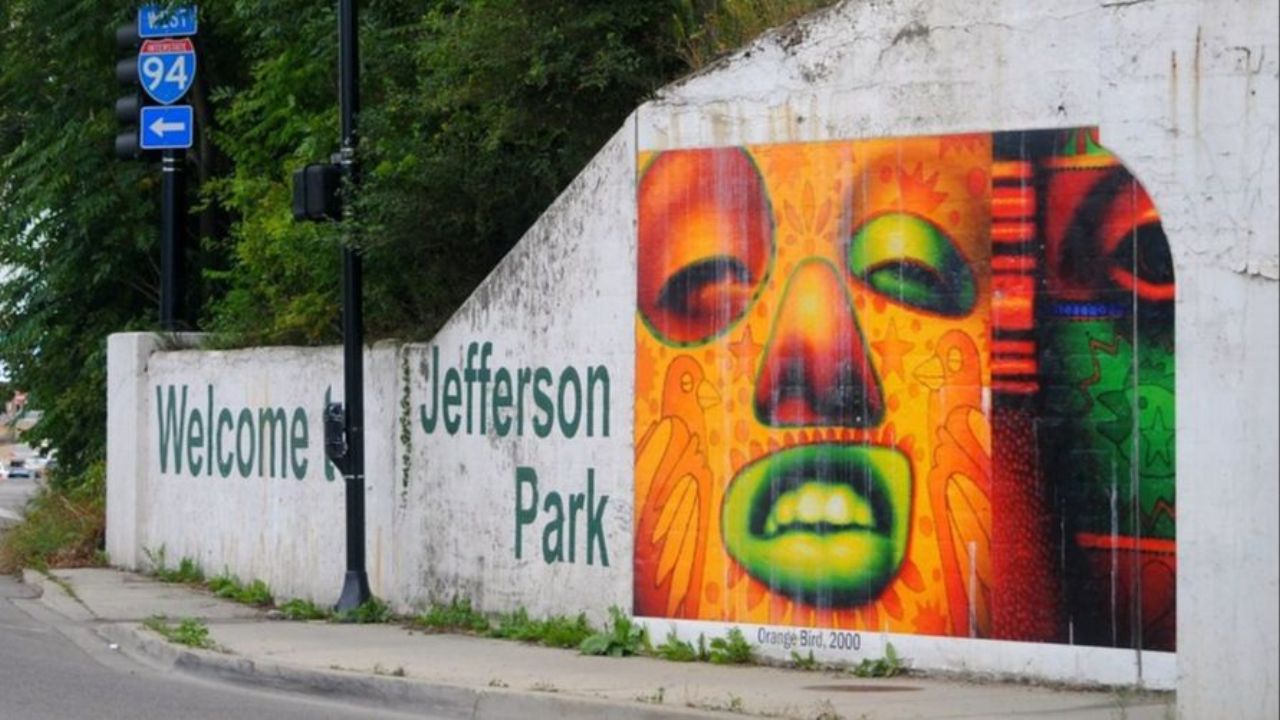
Jefferson Park occupies Chicago's Northwest Side, roughly ten miles from the Loop, and has carried the same nickname for more than a century and a half: the Gateway to Chicago. It is bounded by Foster Avenue to the north, Montrose Avenue to the south, Austin Avenue to the east, and Nagle Avenue to the west, though in common usage the neighborhood extends somewhat beyond the official community area boundaries into adjacent blocks that residents consider their own. Within those borders sits the most heavily used transit hub on Chicago's Northwest Side, a neighborhood of bungalows and two-flats with one of the highest concentrations of city workers in the city, a half-century-old Polish cultural institution housed inside a 1930 movie palace, and a history that stretches back to a tavern keeper named Elijah who built his log inn on a sand ridge eight miles from a city that barely existed yet.
Trivia Question
A movie palace that opened on Lawrence Avenue in Jefferson Park in June 1930 holds a distinction almost no other theater in Chicago can claim: it was the first movie house in the city designed and built exclusively for talking pictures rather than silent films. It was also designed in a rare style in which the theater's interior ceiling was painted to resemble a night sky, complete with twinkling lights, so that audiences sitting inside felt as though they were watching a film outdoors under the stars. What is this architectural style called, and what famous firm designed the theater?
Jefferson Park by the Numbers
Sand Ridge, Native Trails, and a Tavern Keeper's Gamble
Long before Jefferson Park was a neighborhood, the land it occupies was a crossroads. Native American tribes including the Potawatomi, Odawa, and Ojibwe traveled through the area on well-worn trails, the most prominent of which ran along a glacial sand ridge formed by the ancient shoreline of Lake Michigan when the lake extended much further west than it does today. That ridge ran south along what is now Milwaukee Avenue through Jefferson Park and toward the city center, making it one of the primary natural corridors in the region.
In 1830, a man named Elijah Wentworth Sr. made a decision that would define the area for generations. He traveled eight miles northwest of Chicago to the sand ridge, purchased land just south of the Northern Indian Boundary Line, and built a two-story log tavern at what is now the intersection of Milwaukee and Lawrence Avenues. The tavern served travelers, traders, and hunters moving between Chicago and the northwest prairie. Wentworth named his establishment the Jefferson Tavern, though it was later known as the Jefferson Hotel, and the intersection around it became the seed of a future community.
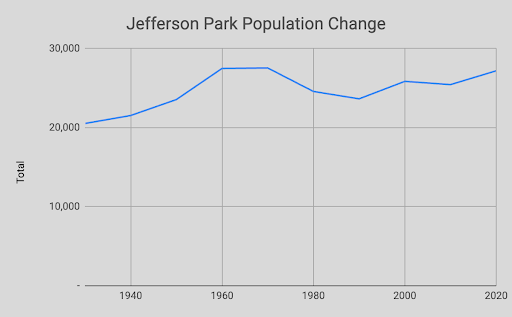
Other settlers followed. John Kinzie Clark, a trader, also established a claim in the area in the early 1830s. Small farms took shape along the sand ridge and the Chicago River's North Branch. The community that grew up around the Wentworth Tavern went through several proposed names, including Monroe, before settling on Jefferson in honor of Thomas Jefferson, the third president. The State of Illinois formed Jefferson Township in 1850 and the Town of Jefferson incorporated in 1872. By 1855, the village had roughly 50 buildings. By 1870, the population had reached about 800. In 1889, Jefferson Park was annexed into Chicago as part of the city's largest single territorial expansion, which added 125 square miles and 225,000 residents in one stroke and made Chicago the largest city by area in the United States.
The Plank Roads, the Railroad, and the Making of a Hub
Jefferson Park's identity as a transit center was not an accident of city planning. It was a function of geography and early infrastructure that locked the neighborhood into a transportation role it has never relinquished. The two most important roads into the northwest hinterland from Chicago both ran through Jefferson Park: Milwaukee Avenue, which followed the sand ridge trail northwest toward Wisconsin, and Elston Avenue, which ran diagonally from the city's interior toward the northwest corner of the county. Both became toll plank roads in the 1850s, and Jefferson Park sat at the tollgate where Milwaukee Avenue crossed what was then Leland Avenue.
The Chicago and North Western Railway built its tracks through the area and established a station that drew commuters, farmers, and freight. When the Milwaukee Road Depot opened a second rail connection, Jefferson Park found itself served by two rail lines simultaneously, an unusual advantage for a community of its size. Annexation in 1889 brought streetcar service on Lawrence Avenue in 1909, followed by the extension of Elston streetcar tracks to Lawrence in 1911. The railroad tracks were elevated in 1927, removing dangerous grade crossings and opening up cross streets like Montrose that the tracks had previously blocked.
The result of this layered infrastructure was a neighborhood that functioned as a major transfer point: a place where roads met rail lines, where suburban communities connected to the city, and where goods, people, and commerce moved in multiple directions at once. The 1907 Encyclopedia of Chicago entry for Jefferson Park noted the community's access to long-established Native American trails as the origin of its Gateway nickname. That gateway function, established by geography and reinforced by every infrastructure decision made over the following century, remains the defining fact about Jefferson Park today.
Polish Jefferson Park and the Copernicus Center
The immigrant populations that shaped Jefferson Park in the early and mid-twentieth century arrived in the same pattern as those in neighboring Northwest Side communities: Swedish, German, and Irish families first, followed by substantial Polish and Czech immigration in the 1910s and 1920s as the neighborhood's transit connections made it accessible from factory jobs further east and south. The Polish community, in particular, put down roots that proved remarkably durable. By the late twentieth century, Jefferson Park was one of the largest Polish-American communities in Chicago, and the annual Taste of Polonia festival held at the Copernicus Center over Labor Day weekend had become one of the premier Polish cultural events in the United States.
The Copernicus Center today serves the Polish-American community and the broader Jefferson Park neighborhood as a performing arts venue, community meeting space, cultural education center, and festival host. It operates the theater an average of 48 weeks per year, hosting concerts, theatrical performances, dance showcases, community programming, and ethnic events from communities that include Polish, South Asian, East Indian, Korean, Filipino, and Latin American audiences. Lech Walesa, the Nobel Peace Prize-winning leader of Poland's Solidarity trade union movement, visited the center during his historic American tours. Presidents and vice-presidential candidates have appeared at the Taste of Polonia to court the Polish community vote.
The Kennedy Expressway and the Hub That Survived It
The construction of the Kennedy Expressway through Jefferson Park in the late 1950s and early 1960s was the most physically disruptive event in the neighborhood's modern history. When the highway was cut through, it displaced hundreds of residents and businesses, severing streets and fundamentally reshaping the neighborhood's layout. Development that had been building steadily slowed sharply as suburbanization drew families outward along the new expressway's corridors toward communities that the highway made suddenly accessible.
The transit center that grew up around the Blue Line station placed in the median of the Kennedy Expressway at Milwaukee and Gale Street partially offset the expressway's damage. The Jefferson Park Transit Center, which opened in stages through the 1970s, became the largest multimodal hub on Chicago's Northwest Side, linking the CTA Blue Line, Metra's Union Pacific Northwest Line, and more than a dozen bus routes that served communities across the northwest suburbs. An estimated 10,000 or more commuters pass through the station on a typical weekday. The Jefferson Park transit center is the start or end point for hundreds of express and local bus routes, connecting Chicago's northwest neighborhoods to the O'Hare corridor, the Kennedy, and the suburban communities that Elijah Wentworth's tavern customers once reached only by horse.
The transit center also reinforced Jefferson Park's identity as a community of city workers. The ease of commuting to and from any point in the city made the neighborhood attractive to police officers, firefighters, teachers, and city employees who wanted to maintain a Chicago address while living in a neighborhood that felt manageable and residential. That character has persisted across demographic transitions and remains one of the neighborhood's most consistent traits.
A Neighborhood Slowly Changing
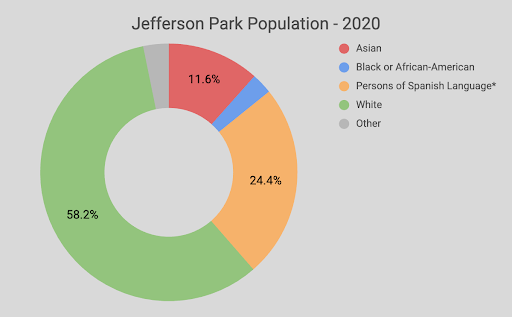
Jefferson Park's demographic profile began shifting in the 1990s and has continued moving in a consistent direction. The predominantly white, Polish-American community that defined the neighborhood through most of the twentieth century has gradually given way to a more diverse population as Mexican-American, Guatemalan, and other Latino families have moved in, alongside growing South Asian and Eastern European immigrant communities. The Guatemalan consulate is located in Jefferson Park at 5559 North Elston Avenue, reflecting the presence of a significant Guatemalan community that is part of a larger Central American population on the Northwest Side.
The Ho-Chunk Nation has maintained a presence in Jefferson Park since the 1990s, headquartered on Milwaukee Avenue and serving as a resource for the broader Native American community in the Chicago area. The presence of a tribal nation's offices in a Northwest Side bungalow neighborhood is the kind of quietly remarkable fact that Jefferson Park contains without making much of it.
The neighborhood today is roughly 54 percent white and 36 percent Hispanic, with a growing South Asian population concentrated near Devon Avenue to the north. The Polish community, while smaller in proportion than it once was, remains institutionally anchored through St. Constance parish, the Copernicus Foundation, and a network of Polish-American organizations and businesses that have maintained their presence on Milwaukee Avenue for generations. More than a quarter of the neighborhood's residents have first or second-generation ties to Poland.
Jefferson Park Today
The Milwaukee and Lawrence intersection at the heart of Jefferson Park is among the most active commercial corners on Chicago's Northwest Side, ringed by restaurants, bakeries, travel agencies, real estate offices, Polish delis, and the transit connections that define the neighborhood's economic identity. The intersection where Elijah Wentworth built his tavern in 1830 is now where commuters transfer between trains, buses, and expressway ramps on their way to and from downtown Chicago.
Jefferson Memorial Park, the neighborhood's namesake seven-acre green space on the site of the Esdohr Farm, is listed on the National Register of Historic Places and offers athletic fields, a fieldhouse, and community programming that draws residents across the neighborhood's generational and ethnic mix. Jeff Fest, the neighborhood's June street festival along Milwaukee Avenue, and the Taste of Polonia over Labor Day weekend give the community its two signature annual gathering moments.
The Gift Theatre Company, a professional theater company founded in 2001 by Jefferson Park native Michael Patrick Thornton, operates at 4802 North Milwaukee Avenue and has won numerous Jeff Awards for productions that have established it as one of Chicago's most respected small theater companies. Its presence gives the neighborhood a cultural institution that is thoroughly of the place, not merely located in it.
Jefferson Park's identity has always been shaped by movement through it as much as settlement within it. People and goods and ideas arrived here because the roads and the rail lines and eventually the expressway made this the most logical place to stop, transfer, and continue on. The neighborhood that grew up around a tavern on a sand ridge has spent nearly two centuries as the place where Chicago begins for people arriving from the northwest and the place where the city ends for people heading out. That geography has not changed, and neither has the neighborhood's fundamental function. The gateway is still open.
Trivia Answer
The architectural style is called Atmospheric theater design, in which the interior of the auditorium was built to resemble an outdoor courtyard or garden at night, with a dark blue ceiling painted to look like a sky and small electric lights embedded in it to simulate stars. The effect was intended to make audiences feel as though they were watching a performance outdoors, regardless of the weather or the season outside. The theater was the Gateway Theatre at 5216 West Lawrence Avenue in Jefferson Park, designed by architect Mason Rapp of the legendary Chicago firm Rapp and Rapp. The firm also designed the Chicago Theatre, the Oriental Theatre, the Bismarck Theatre, and many other celebrated venues across the country. The Gateway was the only atmospheric-style theater Rapp and Rapp built in Chicago that still survives. It opened on June 27, 1930, as the first Chicago movie house built exclusively for talking pictures rather than silent films. In 1979 the Copernicus Foundation purchased the building, renovated the interior, added the Solidarity Tower to the roofline in 1985 to resemble Warsaw's Royal Castle, and renamed it the Copernicus Center, where it continues to serve the community today.
Stay connected with news and updates!
Join our mailing list to receive the latest news and updates from our team.
Don't worry, your information will not be shared.
We hate SPAM. We will never sell your information, for any reason.
