
How Many Times Does a People Have to Win the Vote?
Oct 21, 2026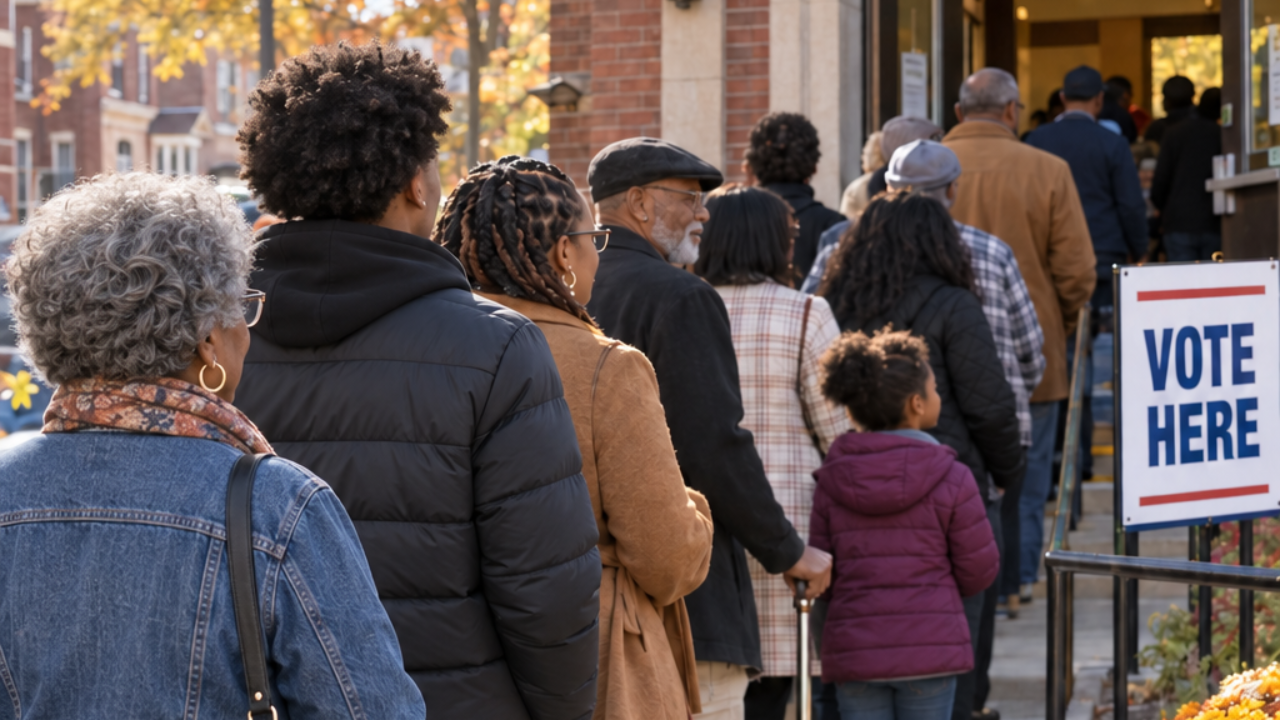
Black Americans have won it on paper at least three times: with the 13th, 14th and 15th Amendments after the Civil War, with the Civil Rights Act of 1964, and with the Voting Rights Act of 1965. Each time, somebody found a way to chip at it.
CNN's Brandon Tensley laid out that long history in a May 2021 timeline. It's an analysis piece with a clear point of view, and it's worth your time. Read the full CNN timeline here. Below is the short version in plain language, followed by what has happened since, including the Supreme Court decision this April that changes the ground we're standing on.
1863–1877: Rights won, then met with violence
The 13th Amendment ended slavery in December 1865. The 14th made us citizens with equal protection in 1868. The 15th, in 1870, said states can't deny the vote because of race. That's real progress, and it was answered fast.
In September 1868, white men in Opelousas, Louisiana, killed around 250 people, mostly Black, after the state ratified a constitution that gave Black men the vote. In 1873, a mob of about 150 armed white men in Colfax, Louisiana, killed somewhere between 60 and 150 Black Americans who were defending a courthouse. Then in 1877, a deal to settle a disputed presidential election pulled federal troops out of the South. Reconstruction was over.
1890–1944: Can't ban us outright? Build obstacles.
Because the 15th Amendment blocked an outright ban, Southern lawmakers built a maze: registration rules, poll taxes, literacy tests and “understanding” clauses. Mississippi's 1890 constitutional convention was the model, and other states followed. In 1898, a white mob in Wilmington, North Carolina, overthrew a legitimately elected biracial government. As many as 60 people were killed.
The courts chipped in slowly. In 1915, the Supreme Court struck down Oklahoma's grandfather clause, though the state just found other tricks. The ruling did help establish the NAACP as the lead voting rights advocate. In 1944, Smith v. Allwright ended the all-white Democratic primary in Texas.
1964–2006: The breakthrough
On March 7, 1965, up to 600 marchers set out from Selma toward Montgomery and were beaten with clubs and tear gas by state troopers on the Edmund Pettus Bridge. John Lewis said he thought he was going to die. The images shook the country. On August 6, 1965, President Lyndon Johnson signed the Voting Rights Act. President George W. Bush signed the most recent extension in 2006, for 25 more years.
2013–2021: The umbrella comes down
In 2013, the Supreme Court decided Shelby County v. Holder by a 5-4 vote. It freed states with a history of voting discrimination from having to get federal approval before changing their election rules. In her dissent, Justice Ruth Bader Ginsburg said it was like “throwing away your umbrella in a rainstorm because you are not getting wet.” Texas enacted a strict voter ID law the very day the decision came down.
Then came 2020, when Black voters helped deliver the White House and the Senate. By March 24, 2021, lawmakers in 47 states had introduced more than 360 bills with restrictive voting provisions, according to the Brennan Center for Justice. Back in February 2020, the count was 35 bills in 15 states. Georgia's SB 202, signed March 25, 2021, added ID requirements for absentee ballots, curbed drop boxes, let the state take over local election boards, and made it a crime for outsiders to hand food or water to people waiting in line. Florida's SB 90 followed on May 6. Senator Raphael Warnock compared the moment to the Jim Crow era, and Tensley argues this is the latest chapter in a very old story.
What CNN couldn't have known in 2021
CNN's timeline ends in May 2021. Here's what has happened since.
- July 2021: Brnovich v. DNC. The Supreme Court sided with Arizona on two voting policies and made it harder to use Section 2 of the Voting Rights Act against discriminatory voting rules. The Brennan Center says that decision, along with Shelby County, set up the weakened protections we have today.
- 2021–2022: Federal voting bills stall. The House passed the John Lewis Voting Rights Advancement Act in both years, but the Senate filibuster killed it.
- June 2023: Allen v. Milligan. In a rare win, the Supreme Court left in place a ruling that Alabama had to draw a second district where Black voters could elect their choice, and Alabama used that map in 2024.
- 2025–2026: Proof-of-citizenship push. The House passed the SAVE Act in April 2025 and an expanded SAVE America Act in February 2026. Both stalled in the Senate. A federal court also blocked an executive order that would have required proof of citizenship on the federal registration form. Supporters say it protects confidence in elections. Opponents, including the Brennan Center, warn it could keep millions of eligible citizens from registering.
- April 29, 2026: Louisiana v. Callais. By a 6-3 vote, the Supreme Court struck down Louisiana's congressional map, which had two majority-Black districts, and sharply narrowed how Section 2 of the Voting Rights Act can be used against maps that weaken Black voting power. Justice Elena Kagan, in dissent, said it leaves Section 2 “all but a dead letter.” The majority's view is that the Act shouldn't be read to guarantee racial groups proportional representation, and that using race to draw districts raises serious constitutional problems.
- May 2026 to now: The maps change. Louisiana enacted a new congressional map on May 29 that eliminates one of its two majority-Black districts, and the map is being challenged in court. Tennessee redrew the Memphis-based 9th District, its only majority-Black district. Georgia's legislature wrapped up a June special session without redrawing its map for now. Other Southern states have been weighing or fighting over similar moves.
- The other direction: state voting rights acts. A growing list of states has passed its own version of the Voting Rights Act, including Virginia in 2021, New York in 2022, Connecticut in 2023, Minnesota in 2024, Colorado in 2025 and Maryland in 2026.
What this means for us
Many South Side families trace their roots to Mississippi, Louisiana and Alabama, the same states at the center of this fight. We know this history because our grandparents lived it.
The courts and legislatures draw the lines. What we control is whether our neighborhoods, our young people and our elders show up in numbers too big to ignore. Early voting is open in Chicago now, and Election Day is Nov. 3. You can confirm your registration and find your early voting site through the Chicago Board of Elections.
People can reasonably disagree about the motives behind these laws and rulings. But the pattern in Tensley's timeline is hard to miss: every time Black voting power has grown, someone has moved to shrink it.
So who in your family hasn't been asked to vote yet? Tell them the history of our fight for the right to vote, then, get them registered and to the polls.
Sources
- CNN, Brandon Tensley, “A timeline of new and old efforts to limit the political power of Black Americans and other voters of color” (May 2021): https://www.cnn.com/interactive/2021/05/politics/black-voting-rights-suppression-timeline/
- NAACP Legal Defense Fund, Louisiana v. Callais: https://www.naacpldf.org/case-issue/louisiana-v-callais/
- Congressional Research Service, Louisiana v. Callais (May 14, 2026): https://www.congress.gov/crs-product/LSB11431
- Legal Defense Fund, Redistricting Watch 14.0 (Oct. 9, 2026): https://legaldefensefund.substack.com/p/redistricting-watch-140-continuing
- PolicyMap, Redistricting Tracker (as of Sept. 25, 2026): https://www.policymap.com/blog/redistricting-tracker
- Brennan Center, Strengthening the Voting Rights Act: https://www.brennancenter.org/topics/voting-elections/voting-reform/strengthening-voting-rights-act
- Brennan Center, A Pivotal Time for Voting Rights (SAVE Act): https://www.brennancenter.org/our-work/analysis-opinion/pivotal-time-voting-rights
- Congress Vote Tracker, SAVE America Act House vote: https://congressvotetracker.org/articles/save-america-act-house-vote-breakdown-march-2026.html
- NAACP Legal Defense Fund, State Voting Rights Acts: https://www.naacpldf.org/state-voting-rights-acts/
Stay connected with news and updates!
Join our mailing list to receive the latest news and updates from our team.
Don't worry, your information will not be shared.
We hate SPAM. We will never sell your information, for any reason.
