
East Side: The Neighborhood That Named Itself After a River
May 27, 2026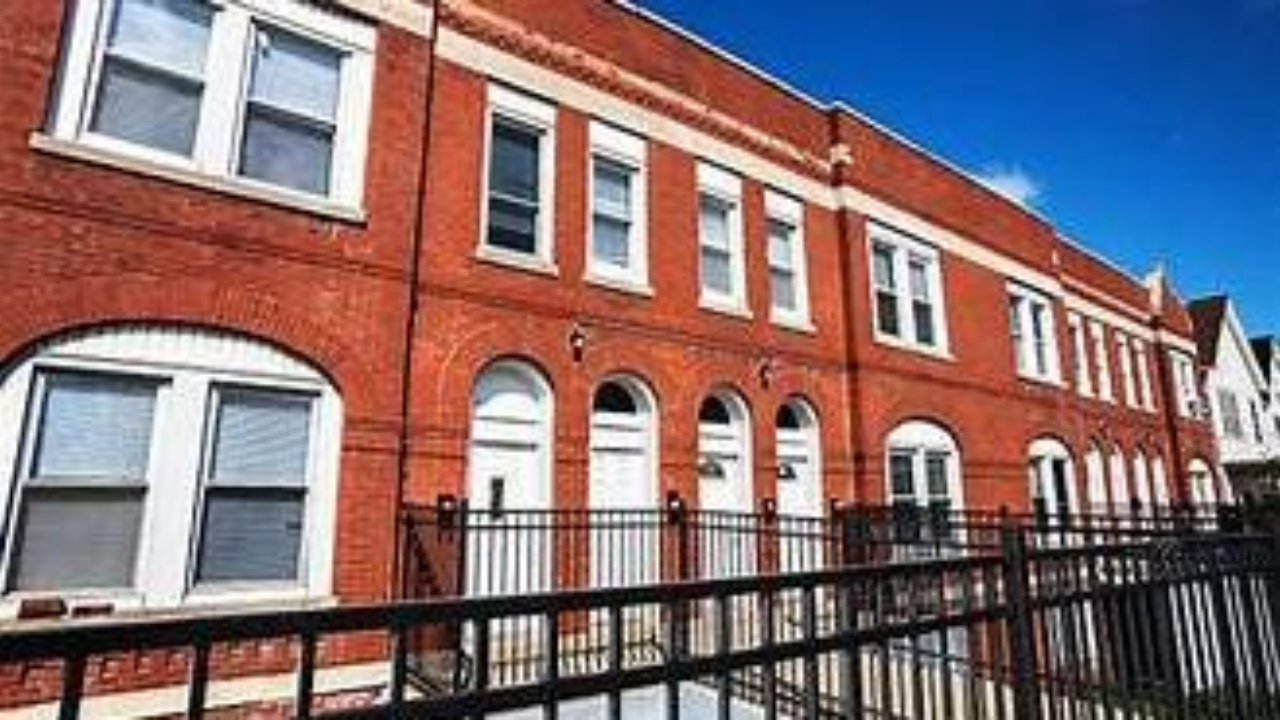
East Side occupies Chicago's far southeastern corner, thirteen miles from the Loop and hemmed in on nearly every side by water and industry. It is bounded by the Calumet River to the north and west, the Illinois-Indiana state line to the east, and 126th Street to the south. A compact 2.8 square miles of bungalows, docks, parks, and the remnants of a steel economy that once defined everything here. Most Chicagoans assume the neighborhood takes its name from its position on the eastern side of the city. In fact, the name refers to something more local and more telling: East Side sits on the east bank of the Calumet River, and it was the river that gave the neighborhood its identity, its livelihood, and ultimately its character for well over a century.
Trivia Question
A small smokehouse restaurant has operated on the 95th Street Bridge over the Calumet River since 1928, using the same wood-burning smoking process its founders brought from Eastern Europe nearly a century ago. It is one of the last traditional smoked-fish operations in Chicago, has been listed on the National Register of Historic Places, and sits on a bridge that became briefly famous when a Hollywood film crew came to East Side to shoot a scene that involved a car jumping a raised drawbridge. What is the name of this restaurant, and what was the film?
East Side by the Numbers
The River That Built a Neighborhood
Long before European settlement, the Calumet River and the wetlands surrounding it sustained the Potawatomi people, who hunted, fished, and traveled the water corridors of the southeastern Lake Michigan shore for generations. French fur traders passed through in the seventeenth and eighteenth centuries, but the region remained sparsely populated until the industrial era arrived with decisive force in the 1870s.
The Calumet River's geography made it irresistible to industry. It ran parallel to the lakeshore, connected to the inland canal system, and offered sheltered docking for the ore boats and bulk carriers that moved raw materials from the Great Lakes to the furnaces. Grain elevators appeared first, then a steel mill opened near 109th Street in 1875, the seed of what would become one of the great industrial corridors in North America. Republic Steel began operations on the East Side specifically in 1901, joining a growing concentration of mills, foundries, and fabricating operations that lined the river's east bank. At their peak, the mills and related industries employed some 40,000 workers across the Southeast Side.
It was the jobs that built the neighborhood. Workers needed somewhere to live within reach of shift times that did not accommodate long commutes, and the blocks east of the Calumet filled in steadily from the 1880s onward. Most of the neighborhood north of 108th Street was built out by the 1930s, with expansion southward through the 1940s and 1950s as new industrial operations opened along the Little Calumet River.
The Men Who Came for Steel
East Side's immigrant story is one of the most specific in Chicago — a neighborhood shaped not by the broad tides of any single nationality but by the particular labor demands of the steel mills and the men those demands summoned from specific corners of Europe. Slovenian, Croatian, and Serbian immigrants dominated the early settlement, drawn by word from relatives and countrymen who had already found work along the Calumet. They built churches that reflected their origins with precision: St. Simeon Mirotočivi, a Serbian Orthodox church, rose on the East Side and served a congregation that maintained its liturgical and cultural traditions with the intensity of people far from home.
Later waves brought Polish families, Greeks, Italians, and then, beginning in the 1920s, Mexican workers who arrived to fill the labor gaps left by immigration restrictions that had curtailed the flow from Europe. By 1925, Mexican steelworkers were a significant presence in the mills of the Southeast Side, and their communities — centered on parishes like Our Lady of Guadalupe in nearby South Chicago — formed the cultural foundation from which today's majority-Latino East Side would eventually grow.
What these successive waves shared was the rhythm of mill life: shift work, union politics, the constant noise and heat of the furnaces, the physical risk that came with the job, and the particular solidarity of men who understood that the work would kill you slowly if the machinery didn't kill you suddenly. The Memorial Day Massacre of 1937 — detailed in the adjacent Hegewisch post — took place on the prairie just west of the East Side's Republic Steel mill and was as much an East Side story as a Hegewisch one. The union organizing drive that followed eventually succeeded, and the United Steelworkers established the kind of contract protections that gave mill families a genuine claim on the middle class.
The Skyway Cuts the Neighborhood in Two
In 1958, the Chicago Skyway, a privately financed toll road connecting the Dan Ryan Expressway to the Indiana Toll Road was built directly through the middle of East Side, elevated on concrete pylons over the neighborhood's residential streets. The Skyway did not demolish homes the way urban expressways typically did; it was built high enough to pass above the existing grid. But its psychological and physical effect on the neighborhood was still divisive. An elevated highway cutting across a community at rooftop height changes the character of every block it touches, adding noise, shadow, and the visual intrusion of a structure built for people passing through rather than people who live there.
The Skyway also reinforced East Side's already pronounced geographic isolation. The Calumet River boxed the neighborhood on two sides. The state line closed it to the east. Now a toll road bisected it from west to east. For a neighborhood already accustomed to operating as a self-contained world, the Skyway simply deepened the insularity. East Siders developed the same quiet pride in their distinctness that marks Hegewisch to the south — a community that knows it is overlooked and has decided that is fine.
Steel's Collapse and the Long Aftermath
The steel industry that had sustained East Side for a century began its collapse in the 1970s and accelerated brutally through the 1980s. Wisconsin Steel closed in 1980. U.S. Steel's South Works shuttered in 1992. Republic Steel — the mill that had operated on the East Side since 1901, the mill outside whose gates the Memorial Day Massacre had unfolded — closed its Chicago operations. Tens of thousands of jobs vanished from the Southeast Side in the space of a decade, and the ripple effects were devastating: businesses closed, tax revenues collapsed, young people left, and the neighborhoods that had been built around the mills were left to renegotiate their identities without the economic engine that had always defined them.
East Side weathered the collapse better than some of its neighbors, in part because its housing stock was owner-occupied and well-maintained, and in part because its geographic insularity had made it less vulnerable to some of the speculative pressures that accelerated decline elsewhere. But the wounds were real. The commercial corridors thinned. The population declined from its mid-century peak. As Rosemary Arias, a longtime resident who now runs the Southeast Side Food Pantry on 114th Street, put it plainly: "Once the steel mills left, everything else started falling apart."
The demographic transition that had been building since the 1920s completed itself in the decades after the mills closed. Mexican-American families, many of them descendants of the steelworkers who had arrived generations before, became the neighborhood's majority. Today, East Side is roughly 86 percent Hispanic and is one of the most homogeneously Latino communities in Chicago. The character of the neighborhood, however, remains what it has always been: working-class, family-oriented, homeowner-focused, and deeply local.
Calumet Park, the Bridge, and a Small Town at the City's Edge
What East Side has that most Chicago neighborhoods do not is a direct relationship with Lake Michigan. Calumet Park, at the neighborhood's northeastern edge along Avenue G, provides nearly a mile of lakefront — sandy beach, a field house, picnic grounds, and open water that in summer draws families from across the Southeast Side. The park is a Chicago Landmark and listed on the National Register of Historic Places, recognized both for its 1924 field house and for its role as one of the rare lakefront green spaces on the South Side available to communities that have historically been separated from the lakeshore by industry. There are plans, slowly advancing, to extend the lakefront bicycle path southward to connect Calumet Park to Rainbow Beach, the South Shore Cultural Center, and Jackson Park — a connection that would give East Side a continuous lakefront link to the rest of the city for the first time.
The 95th Street Bridge over the Calumet River is the neighborhood's most famous landmark, though most people who know it know it from a movie rather than from geography. The bridge has been in continuous use since the 1920s and remains a working drawbridge, rising periodically to allow vessel traffic in and out of the Port of Chicago. On its south bank, a smokehouse restaurant has occupied the same spot since 1928, serving smoked chubs, shrimp, and salmon to generations of Southeast Siders who treat it as a neighborhood institution as much as a restaurant. The wood-burning smokehouse uses the same process brought from Eastern Europe nearly a century ago. It has been on the National Register of Historic Places since 2013.
The Port of Chicago, which operates along the Calumet River just north and west of East Side, remains one of the most active freshwater ports in North America, handling more than 19 million tons of cargo annually. Ships from around the world navigate the Calumet's docks, loading and unloading in a river that once lined its banks with furnaces and now handles grain, steel coils, and container freight. The industry is quieter now, less visible than the mills were, but the Calumet is still working.
East Side Today
East Side today carries the feel of a small town that has absorbed a century of industrial history and emerged, somewhat improbably, still intact. Its population is around 22,700 which is modest by city standards, but dense enough to feel like a neighborhood rather than a suburb. The bungalows are well-kept. The streets are quiet. Real estate taxes are among the lowest in Chicago. Calumet Park beach fills on summer weekends with families who have been coming there for generations, now joined by newer arrivals whose connections to the neighborhood are still being made.
Local businesses along Commercial Avenue and the surrounding blocks reflect the community's Mexican-American majority with taquerias, panaderías, quinceañera shops, and the kind of family-run operations that anchor a neighborhood without attracting much attention beyond it. Newer restaurants like Chi Burger Babi, opened by a son of a Salvadoran immigrant who grew up on East Side and wanted to put his restaurant nowhere else, represent the neighborhood's ongoing process of building new institutions from its working-class foundation.
Eggers Grove Forest Preserve, tucked into the neighborhood's southeastern corner near the Indiana line, offers hiking trails, picnic grounds, and birdwatching in a remnant woodland that predates the mills and will likely outlast whatever comes next. It is one of the stranger places in Chicago — old-growth trees and birdsong within earshot of the Skyway and the port — and it is very East Side in that way: a place that contains more than it appears to from the outside, insisting quietly on its own fullness in a corner of the city most people drive past without stopping.
East Side named itself after a river. The river is still there, still working, still defining the neighborhood's western and northern edge. Everything else has changed from who works the docks, who lives on the blocks, to what the mills have become. But the Calumet made this place, and the Calumet remains. That continuity is what East Side has always built on.
Trivia Answer
The restaurant is Calumet Fisheries, located at 3259 East 95th Street on the south bank of the Calumet River. Founded in 1928 by two brothers-in-law of Eastern European descent, it has operated continuously ever since, using a wood-burning smokehouse to produce smoked chubs, salmon, shrimp, and other seafood in the traditional manner. In 2013, it was added to the National Register of Historic Places, one of the very few food establishments in the country to receive that designation, recognized specifically for its cultural significance as one of the last surviving traditional smoked-fish operations in Chicago. The film was The Blues Brothers (1980), in which a stunt driver piloted the Bluesmobile across the raised 95th Street drawbridge in one of the movie's most memorable sequences. The bridge, Calumet Fisheries, and the working port behind them are all still there.
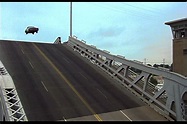
Click on the image to see a clip of the stunt.
Stay connected with news and updates!
Join our mailing list to receive the latest news and updates from our team.
Don't worry, your information will not be shared.
We hate SPAM. We will never sell your information, for any reason.
