
Calumet Heights: Tradition, Transformation, and Progress
Nov 26, 2025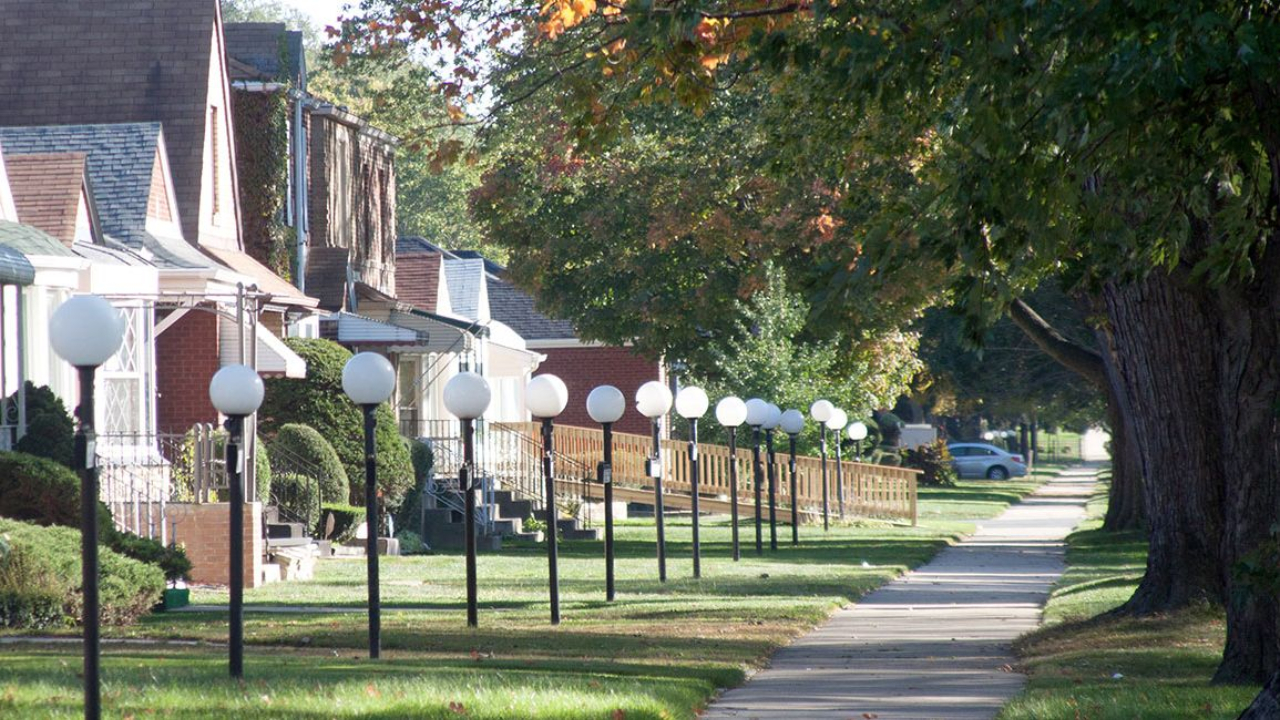
Introduction
Calumet Heights, located on Chicago’s far Southeast Side, is a neighborhood defined by resilience, historic Black homeownership, and a strong middle-class legacy. Bordered by 79th Street to the north, South Chicago Avenue to the east, 95th Street to the south, and the Illinois Central Railroad tracks to the west, this community has long been one of Chicago’s most stable and self-sufficient areas.
Calumet Heights offers quiet tree-lined streets, well-maintained brick homes, and a proud tradition of civic engagement. From its roots in European immigrant settlement to its transformation into a thriving, predominantly Black middle-class community after the 1950s, Calumet Heights continues to be one of the Southeast Side’s anchor neighborhoods.
Trivia Question of the Day
Which well-known Chicago artist won an Academy Award for Best Original Song and grew up in Calumet Heights,
(Answer at the end!)
Calumet Heights by the Numbers
A Brief History of Calumet Heights
Early Settlement & Industrial Influence
The swampy Calumet Heights region remained largely unoccupied throughout much of the nineteenth century. Though travelers passed through, few settled. In the 1870s, the Calumet and Chicago Canal and Dock Company acquired property in what was by then part of the incorporated Township of Hyde Park, holding it for future use. In 1881, the New York, Chicago & St. Louis railroad built rail yards at the area's western border, and a small settlement began to develop nearby.
Calumet Heights originally developed as a working-class residential community for European immigrants primarily Irish and German workers employed in the nearby steel mills and industrial corridors of the Calumet Region. Its proximity to major rail lines and industrial jobs shaped the early built environment: sturdy brick bungalows, Georgian homes, and worker cottages.
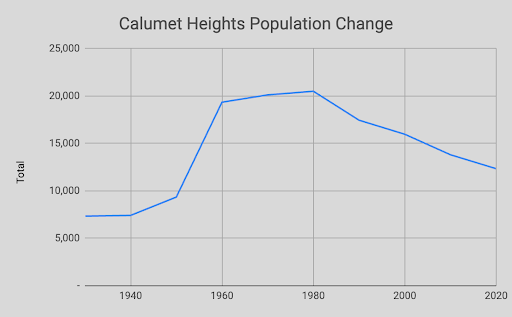
By 1920, Calumet Heights had 3,248 residents, many of them, especially in the eastern section, foreign-born. During the following decade, the community experienced a surge in residential building, and population more than doubled, to 7,343 by 1930. The large foreign-born population included many Poles, Italians, Irish, and Yugoslavians. The new housing included many single-family homes, though an area of apartments also developed west of Stony Island Avenue, between 87th and 91st Streets.
Transition to a Black Middle-Class Neighborhood
By the late 1950s and early 1960s, Black families seeking upward mobility began moving into Calumet Heights, especially the “Pill Hill” enclave near Stony Island Avenue. These families included doctors, teachers, government workers, military officers, lawyers, postal workers, and skilled tradespeople.
Despite larger patterns of disinvestment across Chicago’s South and Southeast Sides, Calumet Heights remained one of the city’s most stable areas thanks to:
- High homeownership rates
- Strong block clubs and civic associations
- Active churches and community organizations
- A tradition of reinvestment and home maintenance
The result is a neighborhood with a long reputation for excellence, professionalism, and community pride.
Historical Landmarks & Structures
Pill Hill District (Centered near 91st & Cregier)
Not an official landmark district, but widely recognized for its distinctive architecture and socioeconomic history. Pill Hill became known as a prestigious enclave for Black medical professionals in the 1960s–1980s. Large raised ranches, tri-levels, and Georgian homes make it one of the most architecturally unique pockets on the Southeast Side.
St. Felicitas Catholic Church (1526 E. 84th St.)
An anchor of the neighborhood’s spiritual life since the early 20th century. Its parish played a key role during Calumet Heights’ racial transition, modeling peaceful integration and community stability.
Bronzeville Children's Museum (9301 S. Stony Island Avenue)
It is the first and only African American children's museum in the United States. Founded in 1998, the museum moved to its current location in 2008.
Jesse Owens Park (8800 S Clyde Ave)
When Chicago's Calumet Heights neighborhood experienced a building boom after World War II, the Chicago Park District established a new park there to meet the area's increasing recreational needs. The Park District acquired more than 17 acres of property between the years 1947 and 1950. Initially known as Stony Island Park for nearby Stony Island Avenue. In the 1980s, the Women's Committee for a Chicago Black Athletic Hall of Fame, the 87th Street Businessman's Association, and park district vice-president Margaret T. Burroughs suggested that the park be renamed in honor of world-renowned athlete Jesse Owens.
Historical Figures from Calumet Heights
These individuals are verifiably connected to Calumet Heights either by residence or significant life history:
Former Mayor Harold Washington (Early Life Ties to Southeast Side)
While Washington grew up primarily in Bronzeville and later represented Hyde Park, he had deep political and organizational ties to the Southeast Side, including Calumet Heights residents who formed a major power base in his early campaigns. He frequently credited Southeast Side civic leaders especially in Calumet Heights as instrumental in building his reform coalition.
Edward Gardner, Founder of Soft Sheen Products
Though Gardner’s main business operations were headquartered in nearby South Chicago/Avalon Park, many prominent Soft Sheen executives and employees lived in Calumet Heights during the 1970s–1990s, making it part of the neighborhood’s Black entrepreneurship story.
Fun Facts
- The neighborhood gets its name from the glacial ridge running through the area (the “heights”).
- One of Chicago’s highest concentrations of split-level and tri-level homes is found in Pill Hill.
- Calumet Heights is one of the few neighborhoods where Black homeownership remained consistently high for more than 50 years.
Trivia Answer
Common (Lonnie Rashid Lynn Jr.), the rapper and actor, was raised in Calumet Heights. He is known by his middle name, Rashid, to his family and friends. Lynn's godfather is basketball player Spencer Haywood who was a teammate of his father on the Denver Rockets.
Stay connected with news and updates!
Join our mailing list to receive the latest news and updates from our team.
Don't worry, your information will not be shared.
We hate SPAM. We will never sell your information, for any reason.
