Boley, Oklahoma: The Town That Wouldn't Be Taken
Apr 22, 2026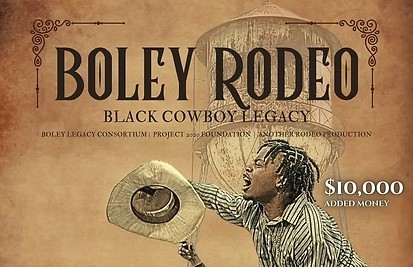
Had you heard of Boley, Oklahoma before today? If not, that's about to change — because Boley is exactly the kind of story that should never have been kept quiet.
A Town Built on Purpose
Boley, Oklahoma stands as one of the most remarkable and enduring examples of African American self-determination in U.S. history. Nestled in Okfuskee County, the historic all-Black town was founded in 1903 on land allotted to Abigail Barnett, the daughter of Creek freedman James Barnett. It was incorporated in 1905, and it grew fast. By the early 1900s, Boley had become a thriving hub of Black enterprise — banks, grocery stores, hotels, restaurants, cotton gins, a college, its own newspaper, its own electric plant. At its peak around 1911, the town boasted a population exceeding 4,000 residents.
Booker T. Washington visited Boley twice and was so impressed by what he found that he wrote about it in Outlook Magazine in 1908. He described it in glowing terms, calling it "the most enterprising and in many ways the most interesting of the Negro towns in the United States." That wasn't flattery. That was an honest assessment of what Black people had built for themselves in the heart of Oklahoma — with no help, and against every kind of resistance.
Oklahoma once boasted over 50 all-Black towns. Boley is the largest of the 13 that remain today. The others fell away over the decades. Boley held on.
The Day Gangsters Learned Their Lesson
Now. Let's talk about November 23, 1932.
The country was deep in the Great Depression. Bank robbers were almost folk heroes in some corners of America — none more so than Charles "Pretty Boy" Floyd, the most wanted man in the country and something of a Robin Hood figure in rural Oklahoma. His right-hand man was George Birdwell, and it was Birdwell who came up with what he thought was a good idea: rob the Farmers and Merchants Bank in Boley.
Floyd objected to the proposal, pointing out that they would likely stand out in the heavily Black town and that local residents would most likely rush to the aid of the bank in the event of a robbery. He also reportedly told them there wasn't much money in that bank anyway, and that the people of Boley all had guns and weren't afraid to use them.
Birdwell didn't listen.
Birdwell, armed with a .45-caliber pistol, and Patterson, armed with a shotgun, burst into the bank that morning. Birdwell announced they were robbing the bank and warned everyone not to pull the alarm.
Bank president D.J. Turner looked the men dead in the eye — and calmly reached over and pulled the alarm anyway.
From inside the vault, bookkeeper H.C. McCormick grabbed a gun and fired at the would-be thief, and his aim was deadly. Birdwell was shot through the heart. Mortally wounded, he managed to kill Turner before collapsing — and Turner gave his life knowing exactly what he was doing. He pulled that alarm to save his town. He succeeded.
Outside, the people of Boley had heard the alarm and had gathered outside the bank with their squirrel rifles and bird guns aimed at the fleeing outlaws. When the surviving gang members tried to run, they ran straight into the entire community. Glass was killed and Patterson received multiple wounds. All the money was recovered.
McCormick received a $500 reward from the state for killing Birdwell and was made an honorary major on the Governor's staff. Townspeople who participated in the shootout split another $500 reward.
Pretty Boy Floyd, still at large, reportedly threatened revenge. He was gunned down by law enforcement in Ohio less than two years later. He never came back to Boley.
That wasn't just a robbery gone wrong. That was a community sending a message that has echoed through history: You don't come here and take what we built.
The Rodeo: 123 Years and Still Going
Here's what makes Boley's story even more remarkable. Through the Great Depression, through the collapse of the rural economy, through decades of population decline and neglect, one tradition has never stopped.
The Historic Boley Rodeo is celebrating 123 years as the oldest and longest Black rodeo in the nation. It has been held every year since the town was founded in 1903 — making it not just a rodeo but a living piece of American history.
Held every Memorial Day weekend, the Boley Rodeo is an open rodeo featuring thrilling rodeo competitions, live entertainment, and family-friendly activities, showcasing the unique history of this historic town. It draws thousands of visitors from across the country — former Boley residents who moved away decades ago making the trip back, new visitors discovering the town for the first time, cowboys and cowgirls competing for the love of the sport.
The rodeo incorporates Western heritage, music, fashion shows, and line dancing — a full cultural celebration that goes far beyond the arena. As rodeo producer and MC Tiffany Guess describes it: "It's just a piece of culture. Black rodeos incorporate the Western heritage that we've been a part of. It's a family fun event that I think everybody should get to experience."
And there's history in that arena worth knowing. The word "cowboy" was originally used for African Americans on the open ranges, while white cowboys were called "cowhands." Many of the original cowboys were born into slavery but found greater freedom and faced less racial discrimination on the open range. The Black cowboy tradition is as old as the American West itself — and Boley has been honoring it since day one.
Several Black rodeo cowboys from Oklahoma have gone on to win world championships in bareback riding, steer wrestling, calf roping, and bull riding, according to the Oklahoma Historical Society.
This Year's Rodeo
The Historic Boley Rodeo officially returns on Saturday, May 23, 2026. This year, the celebration expands with a kickoff event — Boley Rodeo Day — held Friday, May 22 at the National Cowboy and Western Heritage Museum in Oklahoma City, running from 10 a.m. to 5 p.m. The day includes live art and roping demonstrations, heritage exhibits highlighting Boley's history, and a cowboy concert headlined by Grammy Award-winning artist Tony Williams.
On Saturday, May 23 in Boley itself, the day starts at 9 a.m. with a Shop Talk Car Show, followed by the Boley Rodeo Parade at 3 p.m., the arena opening at 5 p.m. for pre-show activities, and the Historic Boley Rodeo beginning at 7 p.m.
Why This Matters
Boley's Historic District was designated a National Historic Landmark in 1975, featuring 14 buildings dating from 1903 to 1921. The town has survived everything history threw at it. Andrea Reed, executive director of the Greater Roseland Chamber of Commerce, once said of businesses like Boley's anchors: "Buildings are like pictures. They tell stories." Boley itself is that picture — a story of what Black people built when they had land, autonomy, and the will to protect what was theirs.
The rodeo every Memorial Day weekend is proof that the story isn't over.
If you've never been to Boley, Oklahoma — now you know why you should go. For tickets and information on the 2026 Boley Rodeo and Rodeo Day events, visit thetownofboley.org.
Stay connected with news and updates!
Join our mailing list to receive the latest news and updates from our team.
Don't worry, your information will not be shared.
We hate SPAM. We will never sell your information, for any reason.
