
Before There Were Therapists, There Were Barbers
Apr 08, 2026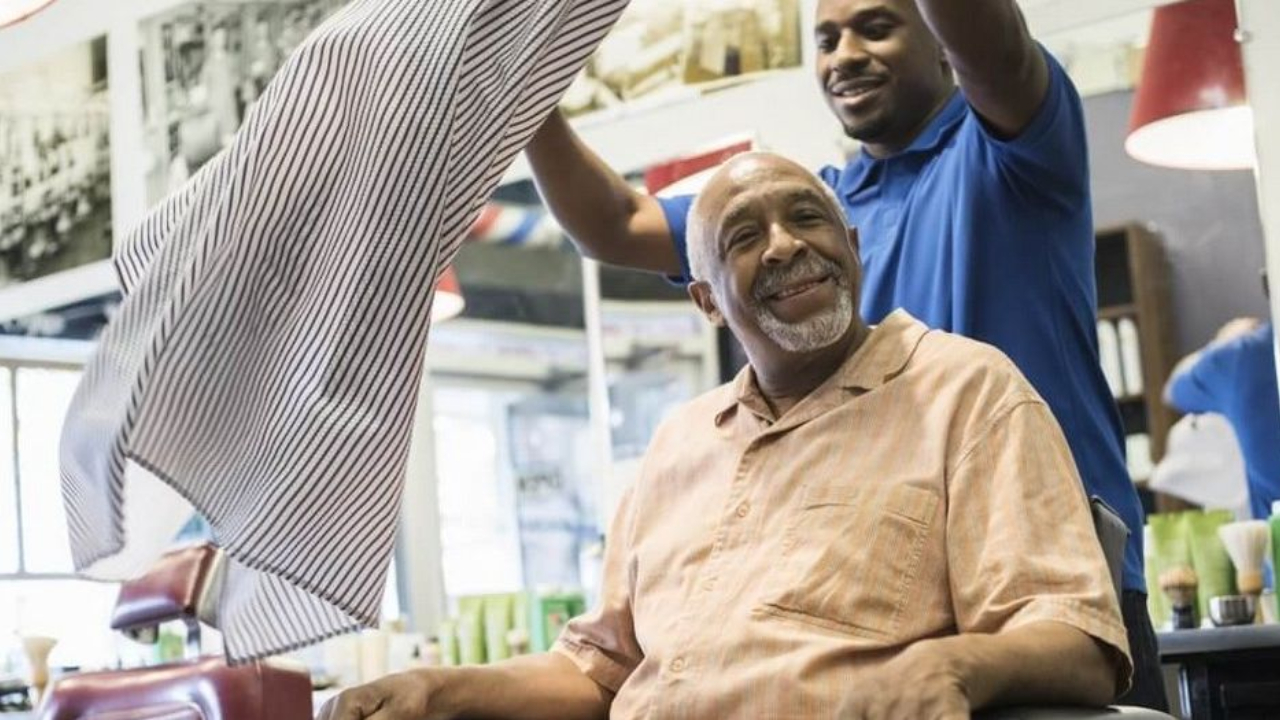
Part 1 of 4 | By Kiné Corder | Bronzecomm Hub
The Barbershop Was Never Just About the Hair
Chicago already knows this. The rest of the world is finally catching up. If you have spent any real time in a Chicago barbershop, you already understand something that researchers, city councils, and national nonprofits are now spending serious money to prove. The chair is a confessional. The clipper is a catalyst. And the barber, whether he or she has a single credential in mental health or not, has been doing the work of a counselor since before counseling was a profession.
Black barbershop culture in Chicago is not a trend. It is infrastructure. It has been organizing, healing, and holding men together through every era of this city’s history, from the Great Migration to the civil rights movement to right now, in 2026, when the mental health crisis among men is front-page news and elected officials are finally asking who is already trusted enough to help.
The answer is, the barber. And though the barbershop in Chicago has always been a sanctuary for men, this goes back further than Chicago. The barbering profession traces to ancient Egypt, where barbers served pharaohs and priests and were considered skilled practitioners of their craft, not service workers. In ancient Rome, the barbershop, called the tonstrina, was where news traveled, philosophy got argued, and a young man’s first shave marked his passage into adulthood. The barber was not peripheral to community life. He was central to it.
By the Middle Ages, barbers across Europe had expanded their role entirely. They were performing bloodletting, pulling teeth, setting bones, and treating wounds. Physicians at the time considered surgery beneath their dignity. It was barbers, with their steady hands and community access, who tended to soldiers, peasants, monks, and anyone else who could not afford a doctor’s consultation. When formal systems were inaccessible or inadequate, the barber stepped in.
Barbers have been doing that for over a thousand years.
What That Looked Like in Black America
In African American communities, the barbershop took on a dimension that went beyond grooming and far beyond surgery. It became the room where men could speak freely, think out loud, and be themselves without performance. During the civil rights era, barbershops across the country, including in Chicago’s South and West Side communities, served as meeting spaces, organizing hubs, and safe houses for information that could not travel through official channels.
“Barbershops have always been seen as a way to get information out. It’s been done like this since the 60s, during the civil rights era when they organized in barbershops.”
That quote is from a barber in The Confess Project, one of the most significant mental health initiatives currently operating in the country. But it could have come from any barber who has been behind the chair in Chicago for more than a few years. The knowledge is not new. The formal recognition of it is.
The Movement Is Already in Motion
What is happening right now across the country is not a new idea. It is an old idea with new institutional support. The Confess Project of America has trained over 6,000 barbers and frontline workers across 65 cities and 35 states, reaching more than 6 million people. Harvard University has validated their methodology through peer-reviewed research.
The Arthur Ashe Institute for Urban Health has partnered with more than 170 barbershops in New York to train barbers in mental health literacy and crisis referral. Cities in Arizona, Michigan, Oregon, Florida, and the UK have launched their own versions of barber mental health certification programs in the past 18 months alone.
In March 2025, New York State introduced Senate Bill S7007, which would make mental health first aid training mandatory for every licensed barber and cosmetologist in the state. It has not passed yet. But the direction is not ambiguous. Legislatures are looking at barbers and seeing something they missed before: a licensed, trusted, community-embedded professional who already has the relationship.
The question is no longer whether barbers should be involved in mental health conversations. The question is how to prepare them properly.
Chicago Has Always Been Ahead of This
Two of the first well-known female barbers in both Chicago and New York got their license in the 1990s, trained at Molar Barber School on the city’s west side, one of the few Black-owned barber schools in Chicago at the time, before the owner passed and the school closed.
Marla Jackson invited Kiné Corder to work with her at Washington Heights Barbershop on 103rd. Kiné took her up on it but then decided to take her skills to a barbershop in New York run by a record executive who told her straight: if he sat in her chair, every other man in that shop would trust her. He was right. She built a reputation, came back to Chicago, and kept building. Marla then took her skills to New York and made a name for herself there.
But they were more than just two female barbers working in two big cities. They were women who had gained the trust of many men. They were women who knew the power they had in their hands and they used their power for good.
Marla went on to get her barber instructor license and taught in the Chicago Public School system while running her own barbershop. Kiné put barbering second and eventually became a Morgan Stanley-trained financial planning specialist, a nationally certified mental health counselor, and a Financial Hypnotherapist now with almost 30 years of experience sitting across from people whose suffering, more often than not, had money at its root.
While working across all three disciplines, she spent years asking why no one had built a system that addressed money and mental health. Then she built it.
Her system is called SelfSync. And the reason this series exists is because the movement described above is real, it is growing, and it is still missing something critical. Not the mental health piece. That conversation has started. What it is missing is the money piece, and what happens when you leave that out.
That is Part 2. I’ll tell you more next week about what I’m building, why I’m building it in the UAE as well as the USA, and what barbers and clients can look forward to. There are celebrities and athletes talking about mental health and their struggles, but nothing will change until the man of the house starts talking about his struggles with mental health.
This is a four-part series and Part 2 will address what’s already out there and how it’s working. It will also tell you more about how the money piece is missing and why it’s critical to make the movement even more powerful.
If you know a barber who has been playing the role of therapist without any support, share this article with them. I have a free resource that can help barbers strengthen their deep and meaningful conversations with clients, and it comes with a resource to help barbers take care of themselves mentally.
FREE RESOURCE FOR BARBERS
Before a barber can hold someone else’s heavy load, they must first lift their own burdens. Tell them to join the Wise Barber Network here. No training required to start. I give them the questions, and I explain how to use them in a simple way. As barbers answer the question for themselves it helps them understand the impact the question can have on a client.
It’s the kind of thing that you have to experience, not explain. Send it to your favorite barber.
______
If you are a barber reading this, join the Wise Barber Network free. You will get the five questions every barber should be asking and a bonus resource to go deeper.
Stay connected with news and updates!
Join our mailing list to receive the latest news and updates from our team.
Don't worry, your information will not be shared.
We hate SPAM. We will never sell your information, for any reason.
